

Next-Gen App & Browser Testing Cloud
Trusted by 2 Mn+ QAs & Devs to accelerate their release cycles


Understanding SDLC and STLC: A Comprehensive Guide
Dive deep into the world of SDLC and STLC with this comprehensive guide. Understand their phases, differences, and integration strategies to improve your software development process and ensure quality.

Poornima Pandey
December 24, 2025
Software development involves multiple stages, each with its own set of practices aimed at ensuring the software is functional, reliable, and scalable.
Two critical processes within this journey are SDLC and STLC, which stand for Software Development Life Cycle and the Software Testing Life Cycle, respectively. While SDLC focuses on the entire development lifecycle, STLC zeroes in on the testing phase to ensure software quality.
Overview
The SDLC and STLC are two critical processes in software development. While SDLC focuses on creating the software, STLC ensures it is tested for functionality, security, and performance. Understanding their integration helps build better, bug-free software.
Key Points:
Here are the key elements that define SDLC and STLC:
- SDLC: Covers all stages from planning, design, coding, testing, deployment, to maintenance.
- STLC: Focuses on testing phases, ensuring software works as expected and meets quality standards.
- AI in SDLC & STLC: TestMu AI’s AI-native tools like KaneAI and HyperExecute enhance testing by automating repetitive tasks, enabling faster feedback.
Benefits of Integrating SDLC and STLC:
Here are a few benefits of integrating SDLC and STLC:
- Faster Defect Detection: Early testing within the SDLC reduces bug fixing costs.
- Better Collaboration: Continuous feedback between developers and testers leads to a more efficient process.
- Automation: Automating testing speeds up the process and improves test coverage, ensuring high-quality releases.
- Optimized Development: Integrating SDLC and STLC with AI helps teams deliver better products faster, reducing risk.
What is Software Development Life Cycle (SDLC)?
The Software Development Life Cycle (SDLC) is a systematic process used by software developers to design, develop, test, and deploy software. Its goal is to produce high-quality software that meets customer needs, is delivered on time, and remains within budget.
By following SDLC, organizations can streamline software development, reduce risks, and ensure the final product is reliable and scalable.
What are 6 Phases of SDLC?
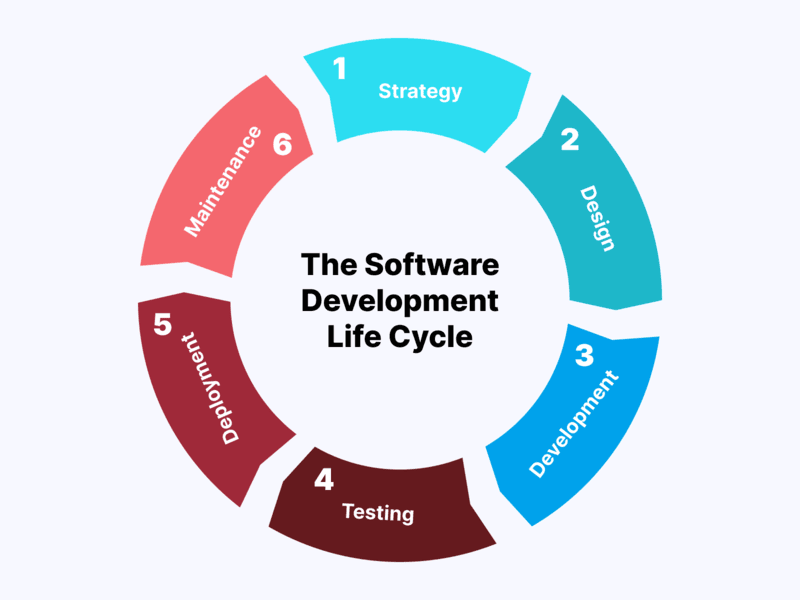
The SDLC process involves a series of clearly defined steps, each of which plays a key role in delivering a functional software product.1. Requirement Gathering and Analysis
In this phase, the project team gathers requirements from the customer or stakeholders. It is crucial to fully understand the software’s needs before moving forward. This helps avoid costly changes later in the process.
2. System Design
Once requirements are established, the design phase begins. Architects and designers create the system architecture, focusing on both high-level design (structure) and detailed design (modules, interfaces).
3. Implementation (Coding)
During this phase, developers write the actual code that will power the software. This is the phase where most of the development work is done based on the specifications created during the design phase.
4. Integration and Testing
This phase involves combining all individual software components into a unified system and conducting tests to ensure everything functions correctly. Both developers and testers collaborate to detect bugs and ensure the product works as expected.
5. Deployment
Once the software passes testing, it is deployed to the production environment, making it available to users. This phase may also include training and support for end users.
6. Maintenance
After deployment, the software enters the maintenance phase, which involves fixing bugs that arise, updating the software, and adding new features as needed.

Note: Run your automated tests across 3000+ environments. Try TestMu AI Today!
What is Software Testing Life Cycle (STLC)?
The Software Testing Life Cycle (STLC) is a series of phases that guides the process of testing software to ensure its functionality, performance, and security. Unlike SDLC, which covers the development of the software, STLC specifically focuses on the process of verifying and validating the software.
Testing is a crucial phase in the SDLC, and STLC ensures that the software performs as expected before it reaches the end user.
What are 6 Phases of STLC?
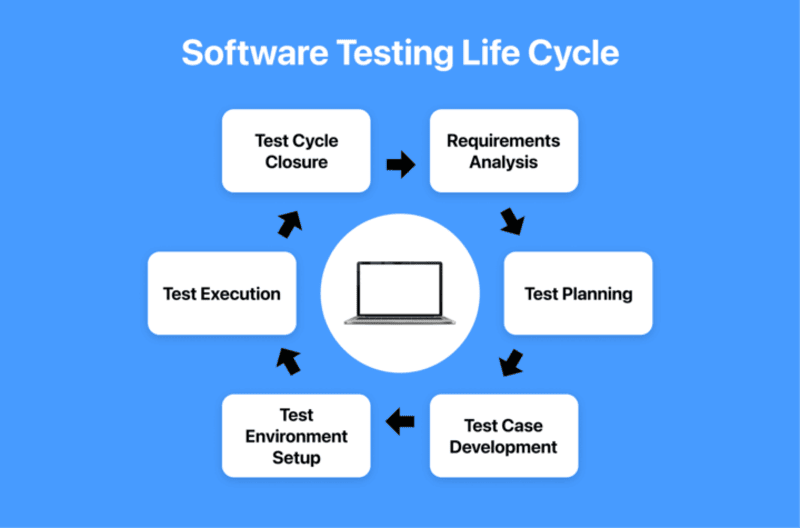
STLC follows a structured process similar to SDLC, but specifically targets testing. Each phase is essential in ensuring software quality.
1. Requirement Analysis
In this phase, the testing team reviews the requirements and identifies testable aspects. Test cases are created based on these requirements, and the scope of testing is defined.
2. Test Planning
The test planning phase involves creating a detailed test plan that outlines the scope, approach, resources, and schedule. This helps ensure that all necessary tests are performed and provides a clear roadmap for the testing process.
3. Test Design
Test cases and scripts are designed during this phase. Test data is also created, ensuring that all test conditions are covered.
4. Test Environment Setup
Before executing tests, the required test environment is set up. This may involve configuring hardware, software, and networks to replicate real-world conditions.
5. Test Execution
Test cases are executed in this phase. Testers identify defects and log them for resolution. Any deviations from expected results are documented and communicated to the development team.
6. Test Closure
Once testing is complete, the final test reports are generated. These reports summarize the results of testing, including defect analysis and recommendations for improvements.
SDLC vs STLC: Key Differences
While both SDLC and STLC are vital to software development, they serve different purposes. Here’s a quick comparison:
| Aspect | Software Development Life Cycle | Software Testing Life Cycle |
|---|---|---|
| Focus | Entire software development process | Primarily focused on the testing phase |
| Scope | Encompasses all stages from analysis to maintenance | Covers only the testing phase (test planning to test closure) |
| Objective | To produce a functional, reliable, and scalable software | To validate that the developed software works as intended |
| Outcome | A working software that is deployed and ready for use by end users | A detailed report on the quality of the software(with defects and issues) |
| Phases | Requirement gathering, design, coding, testing, deployment, and maintenance | Requirement analysis, test planning, test design, execution, and closure |
| Role of Testing | Testing is one phase in the SDLC process | Testing is the central activity in various phases of STLC |
| Process Flow | Linear, but often iterative (e.g., Agile SDLC) | Iterative and often parallel with SDLC, particularly in Agile environments |
| Tools Used | Development tools (IDEs, frameworks, and libraries), version control systems, CI/CD tools | Testing tools (Selenium, JUnit, TestNG, LambdaTest, etc.) for automation, bug tracking systems |
| Dependencies | Dependent on the completion of previous phases (e.g., coding must finish before testing starts) | Dependent on the completion of the development process |
| Duration | Can span from weeks to months or even years, depending on the project size | Usually lasts for a shorter time frame but is continuous throughout SDLC |
| Deliverables | Functional software product ready for deployment | Test reports, defect logs, test case results, and validation documents |
| Performance Metrics | Focused on the efficiency of the entire software development process | Focused on the efficiency and effectiveness of testing, such as test coverage, defect density, and test execution time |
| Risk Management | Risk management in SDLC focuses on project planning, scope, and timelines | Risk management in STLC is focused on identifying potential defects, gaps in test coverage, and software vulnerabilities |
| Feedback Loop | Feedback typically comes during the testing phase or after deployment | Feedback is immediate, especially in Agile or continuous integration testing |
Summary:
- SDLC is a broad framework that spans the entire lifecycle of software development, from requirements gathering to maintenance. It involves a variety of roles and phases, ultimately delivering a functional software product.
- STLC, on the other hand, is specifically focused on the testing activities within the SDLC. Its goal is to ensure that the developed software meets the required standards and performs as expected.
By integrating SDLC and STLC effectively, teams can ensure not only that the software is developed correctly but also that it is thoroughly tested, meeting both functional and quality expectations.
Integrating SDLC and STLC
Integrating SDLC and STLC leads to smoother development and testing workflows. By including testing early in the SDLC, teams can detect defects early, reducing the cost of fixing issues later in the development process.
TestMu AI offers a comprehensive suite of AI-native tools that seamlessly bridge the gap between SDLC and STLC, enabling teams to automate testing processes, gain real-time insights, and accelerate release cycles.
- TestMu AI HyperExecute: An AI-native test orchestration platform that accelerates test execution by up to 70%, ensuring faster feedback and quicker release cycles.
- TestMu AI KaneAI: The world’s first GenAI-native testing agent that assists in planning, authoring, and evolving tests using natural language, streamlining the testing process.
- Test Insights: Provides AI-driven analytics to detect flaky tests, identify error trends, and offer actionable insights, enhancing test reliability and efficiency.
- Cloud-Based Automation: Allows for scalable, cloud-based automation testing across 3,000+ real browsers and devices, facilitating comprehensive cross-browser testing.
- Real Device Cloud: Enables testing on real mobile devices, ensuring accurate performance and usability across a wide range of devices for a comprehensive evaluation of mobile applications.
- Test Manager: An AI-native unified test management platform that integrates with over 120 CI/CD and project management tools, streamlining test planning, execution, and reporting.
By leveraging these tools, teams can integrate SDLC and STLC processes more effectively, leading to enhanced collaboration, reduced defects, and faster delivery of high-quality software.

Common Challenges in SDLC and STLC
While both SDLC and STLC contribute to a successful software release, there are challenges that teams often face:SDLC Challenges:
- Scope Creep: Changes in project requirements during development can lead to delays and cost overruns.
- Poor Communication: Miscommunication between teams may result in misaligned expectations and delayed delivery.
STLC Challenges:
- Limited Test Environments: Differences between the test environment and the production environment can result in inconsistent test results.
- Time Constraints: Testing teams may face time pressures to complete testing within tight deadlines, potentially compromising test coverage.
Best Practices for Effective SDLC and STLC Implementation
To achieve success in both SDLC and STLC, teams should follow best practices that streamline both processes:
SDLC Best Practices:
- Adopt Agile methodologies: Agile allows teams to adapt to changes quickly, promoting flexibility and continuous delivery.
- Maintain clear documentation: Proper documentation ensures all team members are aligned and helps track project progress.
STLC Best Practices:
- Start testing early: Incorporate testing activities early in the SDLC to identify defects sooner.
- Automate testing: Use tools like TestMu AI for automation to save time and increase test coverage.

Conclusion
In the fast-evolving world of software development, embracing both SDLC and STLC with modern practices and tools is not just an option, it’s essential for staying competitive and delivering exceptional software. By following best practices, adopting automation, and aligning both processes, teams can optimize software development and testing, delivering better products faster.
Ultimately, understanding and applying SDLC and STLC holistically not only results in better software quality but also drives faster innovation, helping businesses meet customer demands and stay ahead in the market.


Frequently asked questions
Did you find this page helpful?
More Related Hubs
TestMu AI forEnterprise
Get access to solutions built on Enterprise
grade security, privacy, & compliance
- Advanced access controls
- Advanced data retention rules
- Advanced Local Testing
- Premium Support options
- Early access to beta features
- Private Slack Channel
- Unlimited Manual Accessibility DevTools Tests