

Next-Gen App & Browser Testing Cloud
Trusted by 2 Mn+ QAs & Devs to accelerate their release cycles


Preparing for the EU Accessibility Act 2025: Everything Businesses Need to Know
The new EAA 2025 mandates accessible digital products in the EU. Facing the deadline? Learn how to comply, gain a competitive edge, and achieve a more inclusive digital landscape

Laveena Ramchandani
December 24, 2025
As we are all aware accessibility testing plays a big role in software development. I have created a mantra for myself, the minute I know a product will be made available to clients or internal staff I have to perform some sort of accessibility check.
The big question is how much accessibility testing are you doing? How much of it is satisfying the upcoming law? In this blog, I will take you over the important aspects of the European Accessibility Act 2025 (EAA 2025) and just because it says “European” does not mean we can escape the fact that we may not need this shortly.

Note: TestMu AI Accessibility DevTools Extension helps developers integrate accessibility testing seamlessly into their workflows, meeting EAA compliance and promoting inclusivity. Download Now!
What is the EAA 2025?
Let’s understand first what this new law entails and how can we start working towards it. The EU Accessibility Act 2025 is a new law that mandates day-to-day products/applications/services to be made accessible for people with disabilities. By doing so, the EAA has already mentioned that this new change would help 87 million individuals which is about 1 in 5 Europeans with a disability. Furthermore, this Act is not only for those who have a disability but also for those who have a temporary impairment. As you may remember from my last blog on the importance of accessibility testing the following image explains that a disability can be situational, temporary, or permanent. The main focus of services includes:
- E-books
- Websites
- Computers
- Online Retail platforms
- Banking services, etc.
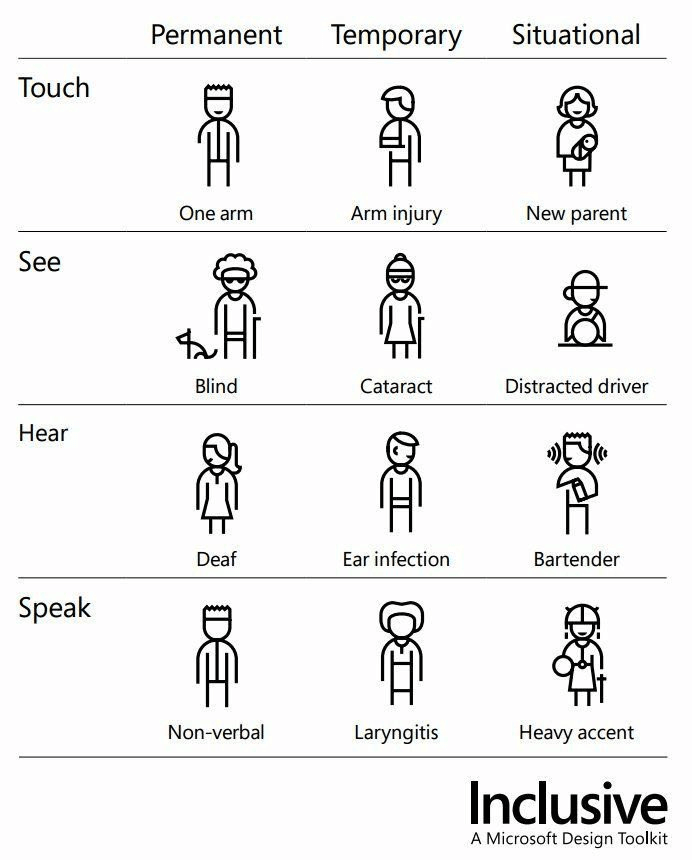
Image: Source
If you think about it, many companies will have to follow this as a norm therefore, it’s a great benefit to be inclusive and socially aware. If you think about companies who are building a product for the EU market, they will also have to adopt this law and make sure all their designs are inclusive, their code is accessible with ARIA standards, and comply with the law.
Can you imagine systems like ATMs with audible and visual assistance? I feel this would be so much more user-friendly and inclusive. It may seem hard work for many companies who already have a monolith of a system, however thinking about the innovation, and offering customers a broader and more socially inclusive range of products is a big win.
What are the Benefits of EAA 2025 Compliance?
This new act will be quite useful to engineering teams in general as it’s aimed to bring Legal Compliance, User inclusivity, Market access, risk mitigation, Alignment with corporate social responsibility, and future-proofing which are all quite important.
- Legal Compliance: Legal Compliance will allow and reinforce legal requirements to perform accessibility checks on all digital products. Therefore software testing would play a crucial role here.
- User Inclusivity: Inclusiveness will mean the system is usable by individuals with disabilities.
- Market Access: This would mean that the firm would be quite competitive in terms of their accessibility standards leading to enhanced market access with a competitive edge in the European market.
- Risk Mitigation: The firms will be safe as accessibility standards are met and cannot pose legal risks like fines and penalties. Therefore following this Act would help a lot of organisations with potential accessibility risks.
- Social Responsibility: This is a must when it comes to accessibility, therefore this Act would ensure equal access to digital resources and/or services.
- Reduced Costs: Anticipating and acting sooner on the Act would mean that every company is future-proofing its services and remaining compliant with evolving regulations in the future. This also means costs will be reduced as a lot of re-work/engineering won’t be required.
Does EAA apply to all Businesses?
Company size-wise this may be slightly different let’s see how. A microenterprise (fewer than 10 employees and €2 million annual turnover) for instance won’t need to comply with the act, However, irrespective of the size of an enterprise, the main goal for every business is to reach a bigger audience, better reputation and be innovative.
Always remember to think not just about the functional side of testing but non-functional too. It will at the end of the day not only bring a good quality product, but also good revenue.
Even though exempt, microenterprises can gain a competitive edge by prioritizing accessibility. This can be achieved through free online training and tools, focusing on easy wins like alt text for images, and encouraging user feedback. Partnering with accessibility specialists for complex projects is also an option.
Accessibility Areas You Need to Address for a More Inclusive Digital Space: Scope of EAA 2025
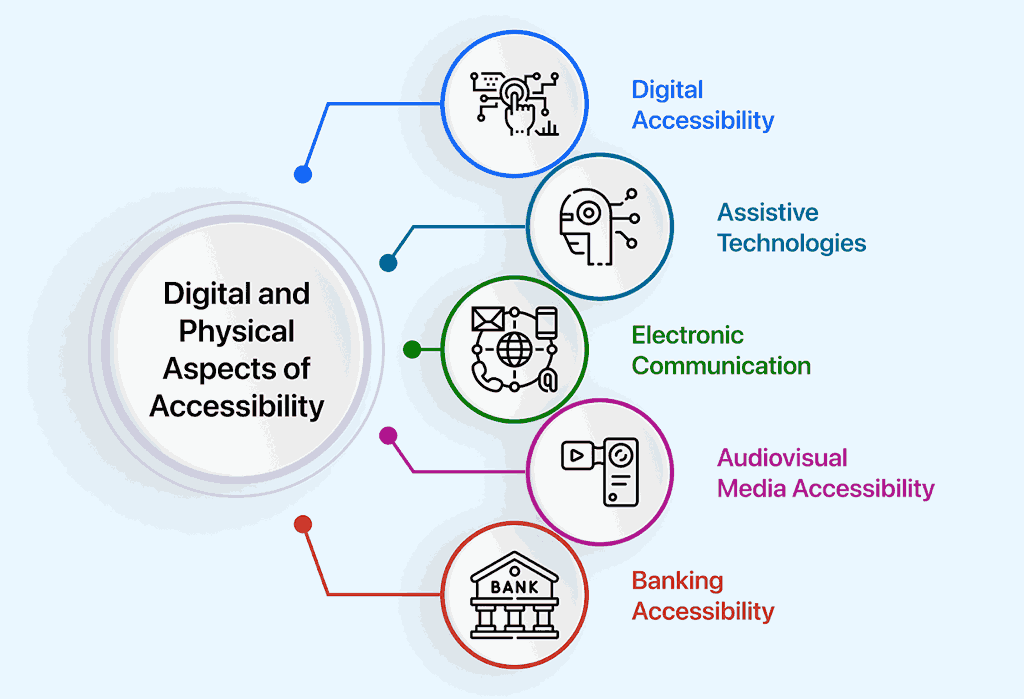
The Accessibility Act is a serious one to act upon especially if you are in the digital technology sector providing services. The new law has its scope that is to do with digital accessibility, assistive technologies, electronic communication, audio-visual accessibility, and banking accessibility. Let us understand what each of them will include and how will this impact the digital world in the EU.
- Digital Accessibility: All digital platforms need to be WCAG-compliant for accessible and inclusive content.
- Assistive Technologies: This is an area that the EEA recognizes the importance of, and aims to make services compatible via tools such as screen readers, and voice recognition tools both desktop and mobile. This would then mean your code has to be ARIA compatible. Digital accessibility means all digital platforms need to be accessible which means complying with the WCAG guidelines to make digital and inclusive content.
- Audiovisual Media Accessibility: Audiovisual media accessibility which means all the media we watch today including TV equipment and services will offer and accommodate people with hearing and visual support.
- Electronic Communication Accessibility: Making electronic communication more accessible means the new devices we use these days such as telephone and mobile services will be more accessible as per the law.
- Banking Accessibility: Finally, EEA is quite strong about including the financial market making sure banking services are made accessible and with priority. This will help people with disabilities manage their finances easily and independently.
How can you Ensure your Website meets EAA Accessibility Standards?
Everyone is wondering how long they have to embed this into their applications, well the answer is the EAA 2025 is going live on June 28th, 2025. This means you have just over a year to plan this and put things into action. As we know bigger systems need time to engineer accessibility and test it thoroughly before the services can be provided to their audiences. Not just that but many firms may want to even do market research to help them understand what exactly they need to do, to be more inclusive. Not to forget, if you are a supplier for a firm in the EU, you will need to be ready to act on this as soon as possible as this may be an important project!
Taking immediate action on this will help firms see potential risks avoid them and ensure their applications serve everyone. By prioritizing accessibility, you create a more inclusive user experience, enhance your brand reputation, and potentially tap into a wider market. Most importantly, you contribute to a more equitable digital landscape. Here’s how to guide your team on true accessibility excellence:
- Educate Your Teams about Accessibility: Are you aware of accessibility? If you are then that is great, however, if you are not you will need to educate your teams on inclusive designs and how they impact your client base. Start by understanding if any teams in your firm already work on this or not.
- Conduct Accessibility Audits to Identify Vulnerabilities: Have you got an auditor for accessibility? If yes, great seek their assistance to see how you can be ready by 2025. If you do not have an auditor, seek one or use online tools and start understanding what vulnerabilities take priority.
- Utilizing Accessibility Testing Tools: Research some accessibility testing tools and see what sort of vulnerabilities you encounter and how easy they are to immediately fix or not. Enhance your application from your findings such as adding alternative text to images/videos, adding captions to videos, focusing on keyboard navigation only, screen reader content to be ARIA compatible, etc.

Austin Siewert
CEO, Vercel
Discovered @TestMu AI yesterday. Best browser testing tool I've found for my use case. Great pricing model for the limited testing I do 👏
2M+ Devs and QAs rely on TestMu AI
Deliver immersive digital experiences with Next-Generation Mobile Apps and Cross Browser Testing Cloud

Most importantly, accessibility testing is an ongoing process. As your application grows, regular testing by your team or auditors ensures continued accessibility.
To Conclude
In summary, the European Act of Accessibility 2025 is a regulation coming into action very soon and it is our responsibility to make sure the applications we build are accessible and can reach a wider audience. Being a firm that respects individuals’ disabilities is known to be a socially aware firm and innovative one too. You can start right now by looking into TestMu AI’s accessibility Dev Tool chrome extension which can support your accessibility findings and fix them in your engineering teams Remember, it takes one individual to sue a firm. Add the Chrome extension.


Frequently asked questions
Did you find this page helpful?
More Related Hubs
TestMu AI forEnterprise
Get access to solutions built on Enterprise
grade security, privacy, & compliance
- Advanced access controls
- Advanced data retention rules
- Advanced Local Testing
- Premium Support options
- Early access to beta features
- Private Slack Channel
- Unlimited Manual Accessibility DevTools Tests