

Next-Gen App & Browser Testing Cloud
Trusted by 2 Mn+ QAs & Devs to accelerate their release cycles


How to Tеst Wеbsitеs and Apps for Black Friday and Cybеr Monday
Learn to prepare for Black Friday and Cyber Monday by testing websites and apps with TestMu AI. Explore checklists and testing techniques to maximize sales.

Harish Rajora
December 24, 2025
Thanksgiving has arrived, and what that means is that the shopping season is about to get started with Black Friday and Cyber Monday (BFCM). While customers seek the best deals they can get, retailers try to curate attractive deals to lure maximum customers to their websites and mobile applications.
Issues such as downtime, slow loading times, buggy interfaces, or security gaps can turn eager buyers away in just a few seconds. It goes without saying that online businesses need to pull up their socks when testing their website or mobile applications to ensure a smooth shopping experience during Black Friday or Cyber Monday.
Overview
What Is Black Friday?
Black Friday is the Friday after Thanksgiving in the United States, marking the unofficial start of the shopping season with massive discounts and deals.
What Is Cyber Monday?
Cyber Monday is an online shopping event following Black Friday, originally focused on tech products but now covering nearly all categories with major discounts.
How to Perform BFCM Testing With LambdaTest?
BFCM testing with TestMu AI involves using its cloud based platform to ensure your website and mobile apps performs seamlessly during Black Friday and Cyber Monday traffic spikes.
- LT Browser: A responsive testing tool to test mobile-first designs across 53+ device viewports including phones, tablets, desktops, and laptops to ensure responsiveness and seamless UX.
- TestMu AI HyperExecute: An end-to-end test orchestration platform to run high-volume performance tests using tools like JMeter with up to 70% faster execution, simulating real-time peak traffic effectively.
- TestMu AI KaneAI: A Generative AI testing tool that generates, plans, debugs, and executes tests across multiple languages and frameworks using natural language prompts.
What Is Black Friday and Cybеr Monday?
Black Friday and Cybеr Monday arе onе of thе largеst shopping еvеnts in thе US that comе aftеr Thanksgiving.
In the United States (US), Black Friday is the Friday that falls after Thanksgiving. This is regarded as the unofficial beginning of the shopping season, where retailers sell products at huge discounts and attractive deals. Black Friday usually goes on in-store with limited quantities. But now, things are very different since many sales take place online as well.
Cybеr Monday is an online shopping event that comes after Black Friday. It offers deals on technical products. However, over the years, it has become much more than just tech. So, almost everything goes on sale nowadays.
Will Black Friday and Cyber Monday See Big Sales in 2025?
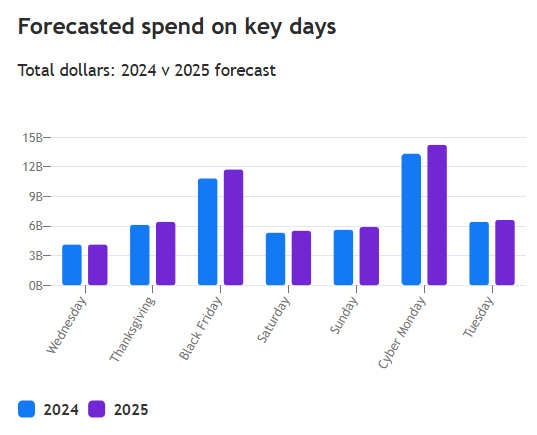
According to Adobe, the 2025 holiday season is shaping up to be the first to hit a quarter trillion dollars in spending. Adobe projects online sales will reach a record $253.4 billion between Nov 1 and Nov 23, marking a 5.3% increase compared to last year.
For Black Friday, US online spending hit $9.8B in 2023. In 2024, it is projected to reach around $10B, and based on the 2025 forecast in the chart, spending is expected to grow further to about $11B. This steady rise shows how strongly customers rely on online shopping for major discounts.
For businesses, this means an opportunity to prepare for higher traffic, fine-tune site performance, offer personalized promotions, and strengthen customer support to convert spikes in demand.
Cyber Monday saw an even bigger surge with $12.4B spent in 2023. In 2024, the estimate is close to $13B, and the 2025 forecast takes it even higher to around $14B.
This continued growth signals that shoppers still prioritize convenience and online deals even after Black Friday, giving brands an extended window to drive revenue through optimized digital experiences and post-sale engagement strategies.
Mobile continues to dominate holiday shopping. For 2025, mobile users are expected to spend around $128.1 billion, outpacing desktops and other devices at $112.7 billion. With mobile revenue already contributing 51.9% of total sales early in the season, it’s clear that shoppers prefer browsing and buying on their phones.
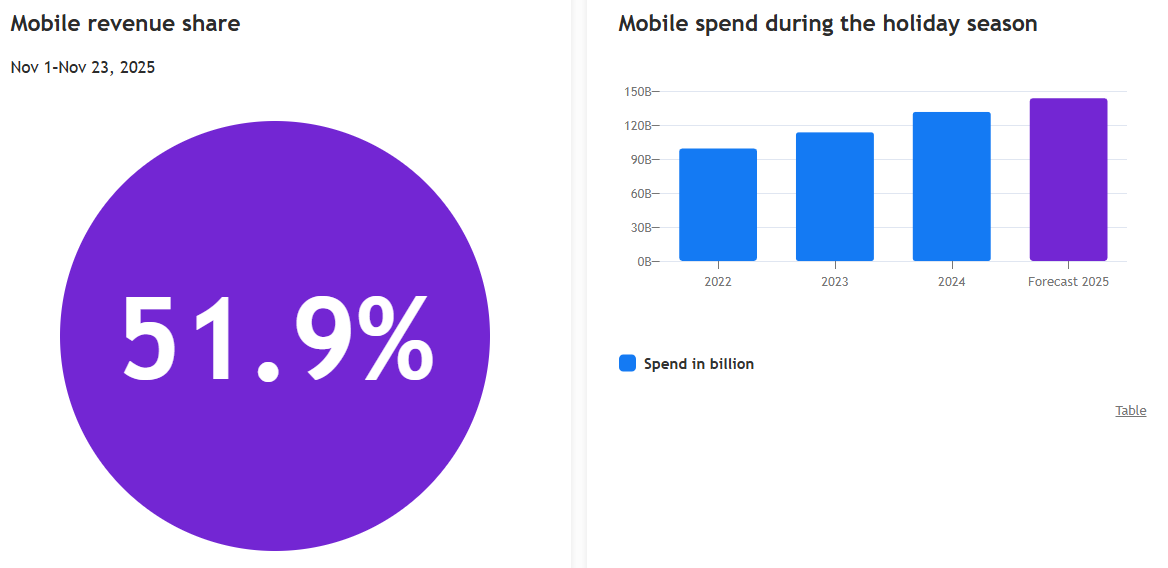
Black Friday and Cyber Monday are peak shopping events, drawing millions of online buyers. To capitalize on this surge, businesses must ensure their websites and mobile applications perform seamlessly under high traffic. Any glitches or slowdowns can lead to lost sales and damage the brand’s reputation. Testing ensures smooth performance, enhances user experience, and supports successful BFCM campaigns.
Scale Your Black Friday and Cybеr Monday Testing With TestMu AI
A feasible approach for testing here is to leverage cloud-based platforms like TestMu AI. It is an AI testing platform that allows developers and testers to perform manual and automation testing at scale across 3000+ real environments.
Here is the snap of the cross-browser tests run on the TestMu AI platform:
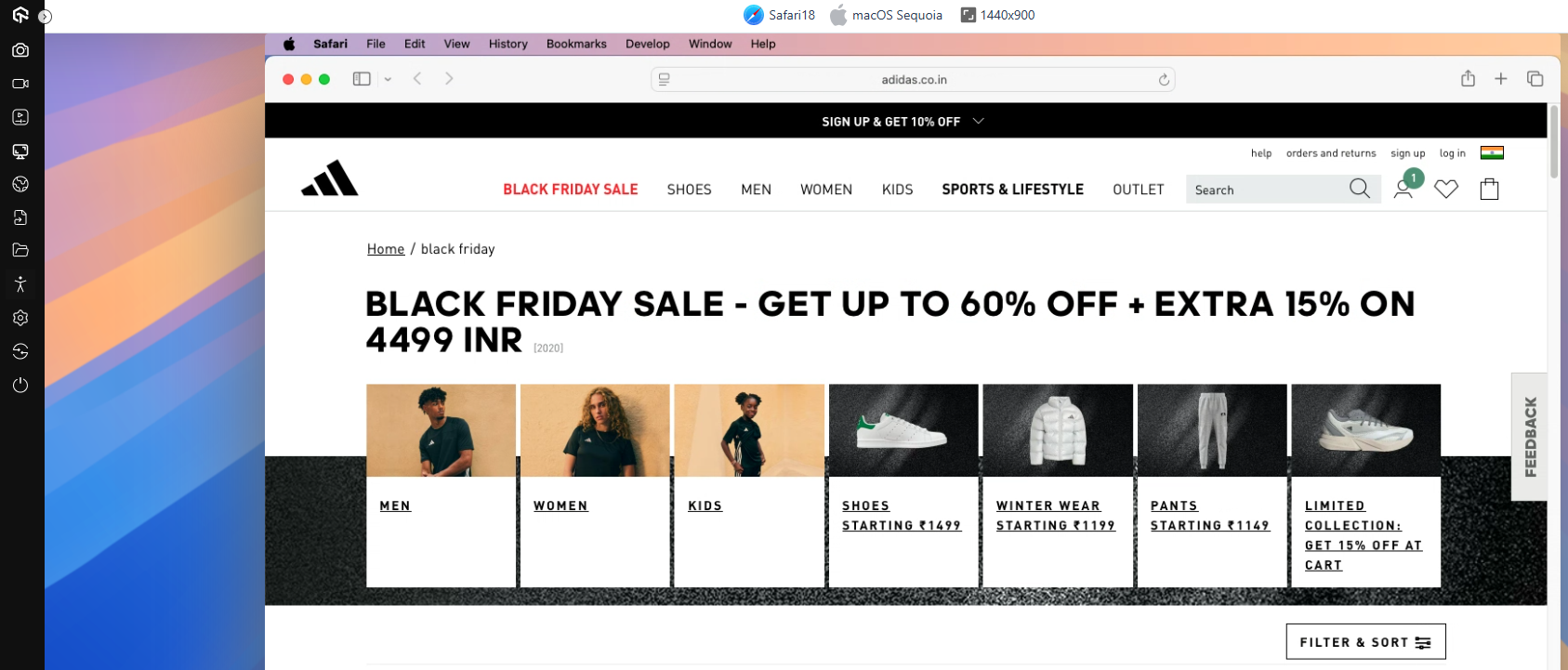
When it comes to performance testing, TestMu AI offers HyperExecute, an end-to-end test orchestration platform that lets you run performance tests using tools such as JMeter. HyperExecute offers test execution, which is up to 70% faster than any other cloud grid.
To get started, check out this guide on performance testing with HyperExecute.

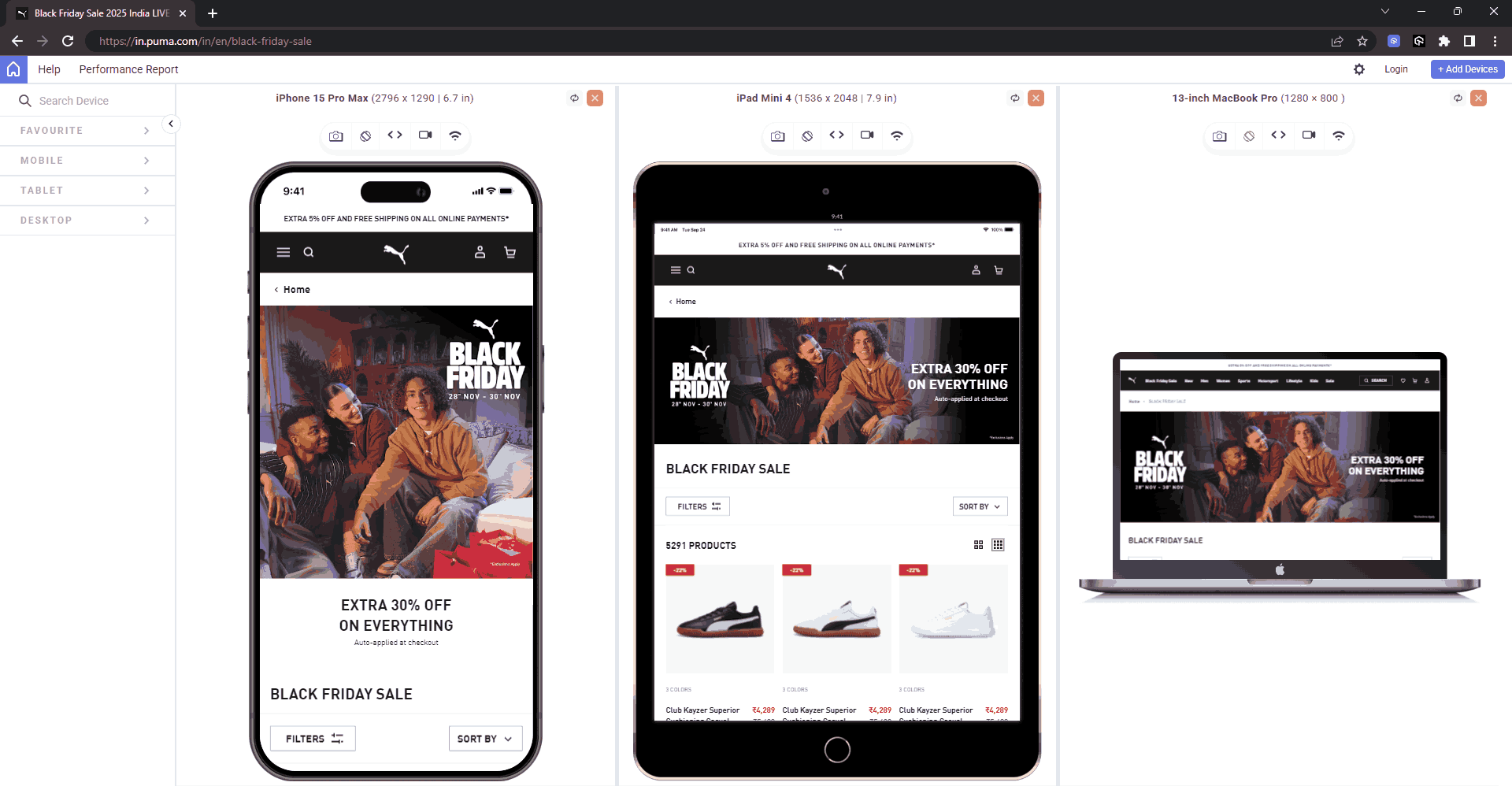
As we discussed above, prioritizing the mobile-first approach is crucial since most of the traffic comes from mobile devices. It ensures your websites are optimized for different screen sizes.
For this, TestMu AI offers a responsive testing tool known as LT Browser that allows you to run mobile-friendly tests across 53+ device viewports such as mobile, tablet, desktop and laptops.
Harness KaneAI for Black Friday and Cyber Monday
You can leverage AI in your BFCM testing using GenAI test agents such as KaneAI.
TestMu AI KaneAI is a Generative AI testing tool for high-speed quality engineering teams that lets you create, write and debug automated tests using natural language commands.
Features:
- Intelligent Test Generation: Automatically creates and refines test cases using NLP-based instructions.
- Smart Test Planning: Transforms high-level goals into clear, automated test plans.
- Multi-Language Code Export: Produces tests that work across multiple programming languages and frameworks.
- Show-Me Mode: Makes debugging easier by turning user actions into simple, natural language steps for better consistency.
- API Testing Support: Seamlessly adds backend testing to strengthen overall coverage.
- Wide Device Coverage: Enables testing across 3000+ browsers, devices, and operating systems.
To get started, head over to the documentation on getting started with KaneAI.

Testing Checklist for Black Friday and Cyber Monday
As eCommerce thrives, ensuring a smooth and secure shopping experience has never been more crucial. So, here is a testing checklist for BFCM to ensure a seamless shopping experience for your customers.
- Simulate Heavy Website Traffic With Load Testing: Simulate high visitor surges to measure system limits and prevent crashes, slow pages, and downtime.
- Have an Effective Server Configuration: Configure hardware and load balancers properly to manage heavy traffic and maintain stable uninterrupted service during peak.
- Test Website Updates for Seamless UX: Verify new banners, pages, and design changes function correctly without disrupting existing features or usability standards.
- Implement Cross-Platform Testing for a Hassle-Free BFCM: Ensure consistent performance and responsive design across mobile, tablet, and desktop shopping experiences during peak.
- Test Server-Side Synchronization for Managing Product Catalog Updates: Confirm accurate inventory updates prevent overselling and incorrect availability displays during intense shopping periods.
- Perform UI/UX Testing of Coupon Codes: Ensure discounts apply correctly without stacking errors or confusing customers during promotional checkout processes and payments.
- Test for Smoother Transactions: Validate payment gateways handle peak volumes reliably across networks and devices without failed charges or delays affecting sales.
- Run Security Tests: Identify vulnerabilities protect customer data prevent breaches and ensure safe encrypted transactions against fraud during high traffic shopping events.
- Test Geolocation to Ensure Global Reach: Verify regional compliance localized content correct restrictions and appropriate user experiences for international shoppers worldwide effectively.
Testing Techniques for Black Friday and Cyber Monday
Comprehensive testing is required to ensure the eCommerce experience is seamless. For this, there are different software testing techniques that you can perform to check various aspects like functionality, user experience, performance, security, and more.
- Functional Testing: Validate checkout flow accuracy from product selection through payment confirmation ensuring all steps function correctly without disruption during peak sales hours.
- User Experience Testing: Gather real user feedback identify friction points and refine design elements to improve engagement satisfaction and overall shopping journey efficiency.
- Performance Testing: Measure page speed manage load efficiently and ensure stable performance under high traffic conditions without slowing key user interactions.
- Security Testing: Assess system vulnerabilities simulate threats and confirm compliance standards to protect customer data and secure financial transactions during heavy demand.
- Error Handling and Monitoring: Detect system errors promptly monitor performance continuously trigger alerts and enable rapid resolutions ensuring stable reliable service during high traffic sales periods.
Impact of Black Friday and Cyber Monday on Stakeholders
During Black Friday and Cyber Monday, most purchases happen online, especially after 2020, as more consumers shifted to eCommerce, taking advantage of digital deals, convenience, and home delivery options.
- Impact on Customers: Customers increasingly prefer online shopping due to convenience and variety. They can browse thousands of products quickly, but limited stock creates urgency.
High traffic often causes website slowdowns or downtime, especially on Black Friday, making the shopping experience unpredictable.
- Impact on Sellers: Sellers on platforms like Amazon or their own sites face both opportunities and challenges.
They can move overstocked or unsold products quickly, gain new customer sign-ups from high traffic, risk losses due to steep discounts, handle logistical challenges with high order volumes, and need to restock popular items promptly.
- Impact on Developers: Developers must prepare websites and apps for predictable surges in traffic, unlike other events.
They may hire additional staff for demand spikes, manage unusual shopping patterns, allocate extra resources for operations and support, optimize system architecture for heavy loads, and expand testing to prevent disruptions.
- Impact on Testers: Testers ensure applications perform flawlessly under extreme conditions. Their role is critical for revenue protection.
They validate software handles massive traffic loads, test access across browsers, devices, and operating systems, verify API stability during spikes, ensure payment interfaces work seamlessly, and confirm rapid response to potential issues.


Frequently asked questions
Did you find this page helpful?
More Related Hubs
TestMu AI forEnterprise
Get access to solutions built on Enterprise
grade security, privacy, & compliance
- Advanced access controls
- Advanced data retention rules
- Advanced Local Testing
- Premium Support options
- Early access to beta features
- Private Slack Channel
- Unlimited Manual Accessibility DevTools Tests