LambdaTest is now TestMu AI.The Next Chapter Begins

Next-Gen App & Browser Testing Cloud
Trusted by 2 Mn+ QAs & Devs to accelerate their release cycles


What is responsive web design, and why is it important?
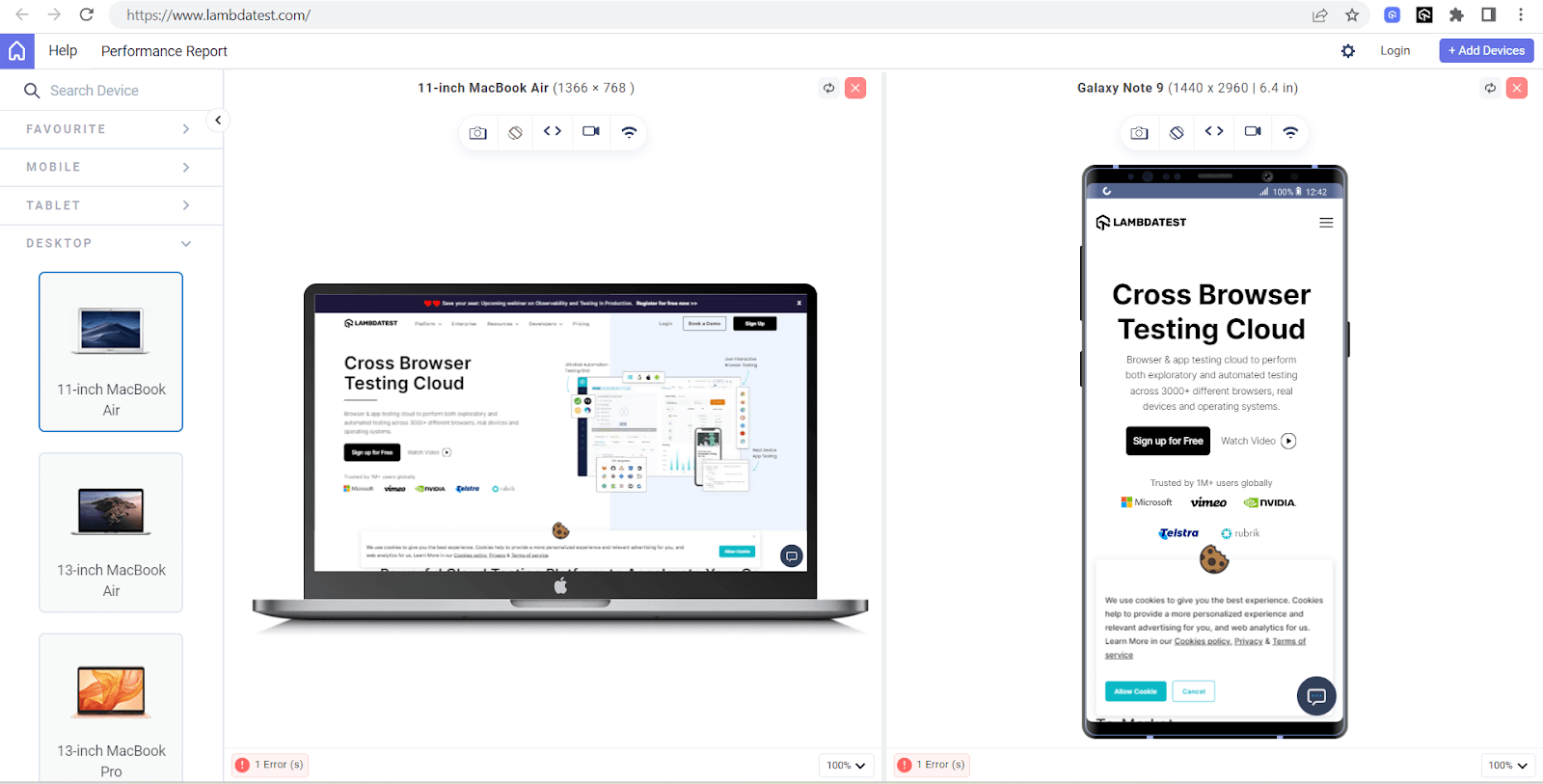
Responsive Web Design (RWD) is a web design method that automatically renders the website based on the screen size (or the viewport size). As a result, regardless of the device used to visit the website, the look and feel (i.e., design, layout, and experience) should stay the same. Here in this screenshot of the LT Browser, you can see an example of responsive web design.
Importance of responsive web design
- A responsive website is considerably easier to use on a mobile device since it is intended to accommodate the device's screen size. Visitors may access content without having to zoom in and out or scroll horizontally, making it easier to explore and find what they need.
- With the rise of mobile devices, an increasing number of individuals are accessing the internet via smartphones and tablets. A responsive website ensures that your site is available to all users, regardless of device.
- Google supports responsive web design as a best practice since it makes it easier for Google's algorithm to crawl and index your website. This can assist you in enhancing your search engine results, which will result in more visitors and visibility.
- It is far easier to manage a single responsive website than it is to manage many versions of your site for different devices. In the long run, this can save time and money.
You can also go through our dedicated blog, where you can learn about responsive web design in detail.

KaneAI - Testing Assistant
World’s first AI-Native E2E testing agent.



Start your journey with LambdaTest
Get 100 minutes of automation test minutes FREE!!