

Next-Gen App & Browser Testing Cloud
Trusted by 2 Mn+ QAs & Devs to accelerate their release cycles


A Comprehensive Guide to Test Execution for SMEs and Enterprises
From SMEs to Enterprises, know the impact of optimized test execution in fostering collaboration, mitigating risks, and ensuring superior software delivery.

Smeetha Thomas
December 27, 2025
Companies today are accelerating application development. We see more organizations adopting modern software engineering best practices and agile principles to empower their developers to prototype, test, and iterate on new features quickly.
Against this backdrop, the traditional approaches to managing IT infrastructure can impede the fast-paced delivery of digital solutions.
In the face of challenges posed by service-oriented infrastructure, the demand for resilient testing methodologies has surged. Test execution emerges as a critical driver in the overhaul of feature development for businesses, regardless of their size. By initiating tests in the early stages, businesses can effectively manage risks and ensure the delivery of a product that meets user-friendly standards.
Technological advancements have enabled the test automation efforts of both Small and Medium-Sized Enterprises (SMEs) and large-scale enterprises—significantly improving the efficiency and reliability of the process.
According to the Future of Quality Report 2023, 88.9% organizations use CI/CD tools to test or deploy their apps which is even higher in large scale organizations reaching up to 92.6% denoting high adoption of CI/CD tools. Employing cutting-edge testing tools automates different facets of testing, spanning from creating test cases to executing tests and generating reports. These tools not only enhance the efficiency of the testing process but also mitigate human error, ensuring results are more accurate and dependable. As we delve into this blog post, we will explore the finer details of optimizing test execution infrastructure for SMEs and enterprises.
What is Test Execution?
Before new software products hit the market, they must undergo a set of tests, including performance assessments, functionality tests, and smoke testing—to eliminate bugs. Test execution is the process of carrying out a range of specially designed test cases on a software product to determine its functional and non-functional parameters. This helps in ensuring that the product meets all of its pre-defined specifications and functionality. Test execution ensures the software consistently matches up to expected performance levels.
Efficient test execution helps in generating test reports and identifying bugs, their severity, and which features or functions were impacted. If bugs are identified, the product will be sent back to the development team for necessary corrections before undergoing another round of evaluations through retesting.
The Significance of Integrated Test Execution Environments
As modern infrastructures lean towards service-oriented architectures, the need for an integrated test environment becomes greater. It assists developers in navigating the many challenges posed by service-oriented infrastructure, providing a toolkit that ensures stability throughout the testing process. An integrated test execution environment transcends beyond a mere technical requirement—it is a strategic imperative that proactively tackles the challenges and offers a holistic solution, ensuring that software functions cohesively in the face of complex service dependencies.
The absence of integration is not merely a technical shortfall; it’s a potential minefield for testing bottlenecks. Integrated test execution environments act as gatekeepers against this impediment, streamlining the testing process for optimal efficiency.
Beyond technical efficiencies, integrated test execution environments foster collaboration and communication among development teams. By providing a unified platform for testing, it creates a shared space where developers can seamlessly collaborate, share insights, and collectively ensure the robustness of the software.
SMEs and Enterprises: The Common Need for Effective Test Execution
Software testing dynamics differ significantly between SMEs and large enterprises, yet both rely on robust test execution workflows to bridge the gap between development and deployment.
Understanding the distinctive testing needs of SMEs and enterprises is crucial for effectively addressing the testing challenges inherent in their varied setups.
Challenges in SMEs: Leveraging limited resources
According to the survey conducted by , smaller organizations tend to have a higher ratio of developers to QAs, with 25.60% reporting less than 1 QA per 10 developers. The focus here is on crafting cost-effective and scalable testing solutions. Test execution plays a pivotal role by ensuring maximum value from every resource invested. Efficient test execution is the key to maintaining software quality and reliability within the constraints of limited resources. For instance, with a small team and constrained budgets—comprehensive test coverage becomes a challenge.
The implications on test execution are evident, as SMEs must strategically allocate resources to ensure the quality and functionality of their applications. In this case, it becomes imperative to adopt focused testing strategies that prioritize critical functionalities, ensuring efficient use of the available resources.
Challenges in enterprises: Navigating technology stack complexity
Enterprises grapple with a unique set of challenges—complexities stemming from advanced technology stacks and extensive application landscapes. The integration of various technologies and legacy systems can lead to compatibility issues and intricate dependencies. This complexity directly impacts test execution, requiring robust strategies to validate the interoperability of different components.
For example, an E-commerce enterprise with multiple platforms may face challenges in ensuring a seamless user experience across web, mobile, and desktop applications. In this environment, enterprise-level automation and scalable testing solutions are paramount. Test execution at an enterprise level must be not only efficient but also adaptable to the myriad technologies and applications in play, ensuring comprehensive coverage across the enterprise landscape.
While the challenges may vary across businesses of different sizes, the essence of test execution remains a common denominator. In both SMEs and enterprises, the ability to execute tests effectively translates to reliability, efficiency, and ultimately—a successful product. Test execution environments ensure that software, regardless of scale or context, meets the required standards for functionality, performance, and user experience.

Implementing an Integrated Test Execution Environment
Establishing an integrated test execution environment is a foundational process that ensures that testing aligns seamlessly with technical requisites and organizational objectives, fostering a cohesive and efficient testing ecosystem.
Let’s run by a few approaches that contribute to the successful implementation of an integrated test execution environment.
1. Picking the right tools for test execution:
Crafting an integrated test execution environment is pivotal. This starts with meticulous tool selection, ensuring that it aligns with technical needs and the long-term vision of the organization. For SMEs, cost-effectiveness and scalability may steer tool choices, while enterprises might focus on handling a range of technology stacks.
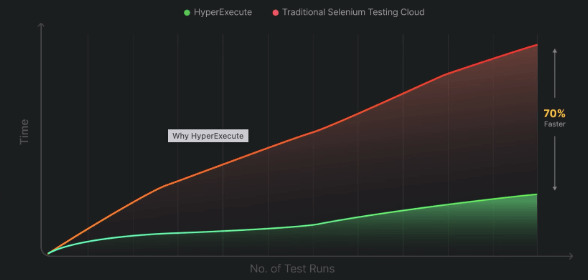
With powerful features for test automation, TestMu AI enables startups, SMEs, and large enterprises to accelerate their release cycles. TestMu AI’s HyperExecute is an advanced testing platform designed to empower businesses of all sizes to run end-to-end automated tests up to 70% faster than any traditional cloud grids.
2. Taking a phased test execution approach:
Recognizing the value of a phased implementation strategy, SMEs can start lean, ensuring a minimal viable environment before gradually expanding. For enterprises, a phased approach accommodates the complexity of their extensive application landscapes. This gradual expansion integrates automated testing tools, resilient test data management systems, and advanced reporting tools—ensuring a thorough and scalable testing framework for both SMEs and enterprises.
3. Empowering teams for effective test execution:
Continuous skills evolution is essential considering the pivotal role of team competence in implementing test executions successfully. SMEs can focus on cross-functional proficiency owing to smaller teams, while enterprises may prefer specialized roles. Regardless, proficiency within the integrated test execution environment is crucial. Specialized training in agile methodologies and DevOps principles are equally important in aligning seamlessly with the paradigms integrated into the testing environment.
4. Securing test execution processes:
Both SMEs and enterprises benefit from integrating tools and procedures to actively identify and neutralize potential security risks within the integrated test execution environment. These measures foster user trust and ensure compliance with regulatory standards.
5. Optimizing test execution for faster outcomes:
An integrated test execution environment becomes a catalyst not just for improved product quality but also for accelerated time-to-market. SMEs may emphasize efficiency gained from streamlined workflows, while enterprises might choose to focus on enhanced coordination across various teams. Minimized rework contributes to faster feedback loops, providing both SMEs and enterprises with a distinct competitive edge in the fast-moving landscape of software development.
6. Effective communication for integrated test execution:
Whether in the agile landscape of SMEs or the complex structures of enterprises—clear and concise communication is essential. In SMEs, transparency ensures swift adaptation, while in enterprises, it aligns dispersed teams with overarching organizational goals. Stakeholder engagement, personalized training, and regular feedback loops are pivotal approaches for both, ensuring that the integrated testing paradigm is comprehensively understood and efficiently implemented.
Shaping Future-Ready Test Environments
Optimizing test execution infrastructure is crucial for the success of both SMEs and large enterprises. A well-optimized test execution environment is instrumental in achieving heightened product quality and accelerating time-to-market, addressing the distinct challenges within each business landscape.
In this dynamic environment, TestMu AI’s platform stands out, seamlessly streamlining testing processes and proactively identifying critical performance issues early in the development cycle. This not only ensures optimal user experiences but also positions organizations to navigate the frontiers of software testing with agility and efficacy. Join our weekly demo to see TestMu AI in action.


Did you find this page helpful?
More Related Hubs
TestMu AI forEnterprise
Get access to solutions built on Enterprise
grade security, privacy, & compliance
- Advanced access controls
- Advanced data retention rules
- Advanced Local Testing
- Premium Support options
- Early access to beta features
- Private Slack Channel
- Unlimited Manual Accessibility DevTools Tests