

Next-Gen App & Browser Testing Cloud
Trusted by 2 Mn+ QAs & Devs to accelerate their release cycles


Gamification of Software Testing: Part 2
Explore gamification in Agile development, from planning poker and retrospectives to recruitment, onboarding, competitions, buggy apps, and pitfalls to avoid.

Prashant Hegde
December 24, 2025
Part 1 of this series covered gamification basics and some ideas to incorporate gamification into testing activities. We also discussed the benefits of gamification and how to build a strategy for gamification. In addition, we discussed gamification ideas for employee recognition.
You should read part 1 of gamification in software testing if you haven’t already.
We all get bored with our routine work. As a result, it reduces our efficiency, which affects our productivity. Gamification applies elements of game-playing to non-game activities making tedious tasks exciting.
Gamification focuses on driving engagement to influence business goals positively.
I continue to explore ways to gamify software testing in my two-part article. This blog discusses ideas to implement gamification in Agile activities, recruiting testers, and onboarding them.
Overview
How Gamification Adds Value to Agile Teams?
Gamification in Agile development helps teams stay engaged, improve collaboration, and make routine processes more interactive and effective. By introducing game-based techniques, testers and team members can encourage participation, simplify complex tasks, and drive continuous improvement.
- Planning Poker for Effort Estimation: A collaborative card-based method where team members estimate story points together, discuss differences, and agree on a final value through consensus.
- Story Discussion and Alignment: Encourages open communication by allowing team members to explain their reasoning behind high or low estimates, leading to better shared understanding.
- Sailboat Retrospective Game: Uses a visual metaphor to identify positives (winds), obstacles (anchors), risks (reefs), and goals (island), making retros more engaging and productive.
- Improved Team Participation: Game-based approaches help quieter members contribute while reducing dominance from a few voices.
- Action-Oriented Outcomes: Turns feedback into clear steps to reinforce strengths, remove blockers, and mitigate risks in future iterations.
How Gamification Improves the Hiring Process?
By replacing traditional interviews with challenges and game-based assessments, companies can evaluate candidates more effectively while offering a memorable and motivating experience.
- Competitions and Challenges: Hosting hackathons, coding contests, and bug hunts helps identify high-performing candidates while creating excitement through rewards and recognition.
- Buggy App Testing for Interviews: Instead of theoretical questions, candidates test intentionally flawed applications to demonstrate practical skills, problem-solving, and attention to detail.
- Game Elements in Assessments: Adding points, progress bars, and levels keeps candidates engaged and encourages them to perform at their best during evaluations.
- Skill-Focused Evaluation: Practical games and challenges provide a clearer view of real-world capabilities compared to standard Q&A interviews.
- Enhanced Candidate Experience: Interactive hiring methods create a positive impression and increase the likelihood of retaining strong candidates in the talent pool.
Gamification in Agile Development
To add value to their Agile teams, testers have to take on more responsibilities today. In addition to testing, testers can act as scrum masters or process improvisers to maximize the value delivered by the team.
Here are some ideas of how testers can gamify some Agile activities.
Idea 1 – Effort Estimation With Planning Poker
Effort estimation is one of the trickiest aspects of software development. Planning poker is a card game that makes software estimation simple and collaborative. Planning Poker uses a consensus-based estimation technique invented by James Grenning (founder of Wingman Software and one of the original authors of the Manifesto) in 2002. Mike Cohn (founder of Mountain Goat Software and an expert in Agile development) then popularized it.

Rules:
Planning Poker is a game for estimating the story points for backlog items. The game is called “Poker” since everyone uses card sets similar to playing cards. Card decks use a modified Fibonacci sequence: 0, 1, 2, 3, 5, 8, 13, 20, 40, and 100 or sometimes T-shirt sizes (XS, S, M, L, XL, XXL). These values represent each person’s estimation of the story points.
Planning poker decks include a question mark, an infinity sign, and a coffee cup.
- Infinity (-): Too big to estimate.
- ? –: I don’t understand the item and have questions for the Product owner.
- Coffee cup: I need a break.
How to Play?
The estimators are then given poker cards with the number sequence. The story/task/backlog item is then discussed. All the estimators assess the story and reveal their cards at the same time. If all the estimators hand out the same card, that number becomes the consensus. The group can now move on to estimating the next story.
This is not always the case. The estimates of the estimators can differ. If this occurs, the estimators discuss their estimates. Those who hand out the highest or lowest number explain why they chose it and attempt to persuade other estimators to consider their point of view.
After the discussion is finished, everyone will go through their decks and show the cards again. If an estimator continues to agree with their previous choice, they will repeat the card or choose a new one. The process is repeated until the team agrees on a single number.
Whether working remotely or in person, planning poker can be effective. There are tools available for remote teams to play planning poker online. In-person teams can use physical cards for conducting Planning Poker.

Idea 2 – Retrospective Games
Retrospectives are opportunities for the team to continuously inspect, adapt and improve. For retrospectives to be effective, everyone on the team must participate actively.
It can be challenging to get everyone to speak up at retros – a few people tend to dominate, while others don’t speak up at all.
Furthermore, retrospectives lack creativity, which makes them very dull. As a tester, you can conduct retrospective games to help you get the best out of your retrospectives.
Let’s take a look at a fun retro game called Sailboat. Luke Hohmann (Leading Agile expert) introduced it in his book Innovation Games.

- Sailboat is used as a metaphor for the team in this retrospective technique.
- The winds are the things that are propelling the team forward (positives).
- The anchors represent the impediments holding the team back (negatives).
- The reefs represent the risks that can prevent teams from reaching their goals.
- The island represents the goals or objectives the team aspires to achieve.
How to Play?
Let’s see how to play the Sailboat game:
- Draw a sailboat scene on a whiteboard, as shown in the image. Invite your team members to help during the process and have fun.
- Describe the sailboat concept to your team, explaining the various elements.
- Let participants brainstorm winds, anchors, reefs, and the island. Ask them to write it down on a sticky note. One idea per note. Each participant should have at least one anchor, wind, reef, and island identified.
- Then, the participants post the stickies in their respective areas and read them aloud.
- Decide what to do. In the end, organize and discuss the notes added by the team.
- Keep doing what works for you.
- Take steps to mitigate identified risks.
- Come up with a plan to remove impediments holding the team back.
Teams working in person, as well as remotely, will find this helpful activity. You can also experiment with other retrospective games. Funretrospectives features fantastic ideas for engaging Agile retrospectives.

Note: Tests mobile games on real Android and iOS devices. Try TestMu AI Today!
Gamify Your Recruitment
Organizations today strive to attract top talent and keep potential candidates in their talent pool by providing a superior candidate experience. Gamification can enhance the candidate experience.
Let’s take a look at some ideas.
Idea 1: Conduct Competitions and Challenges to Attract Top Talent
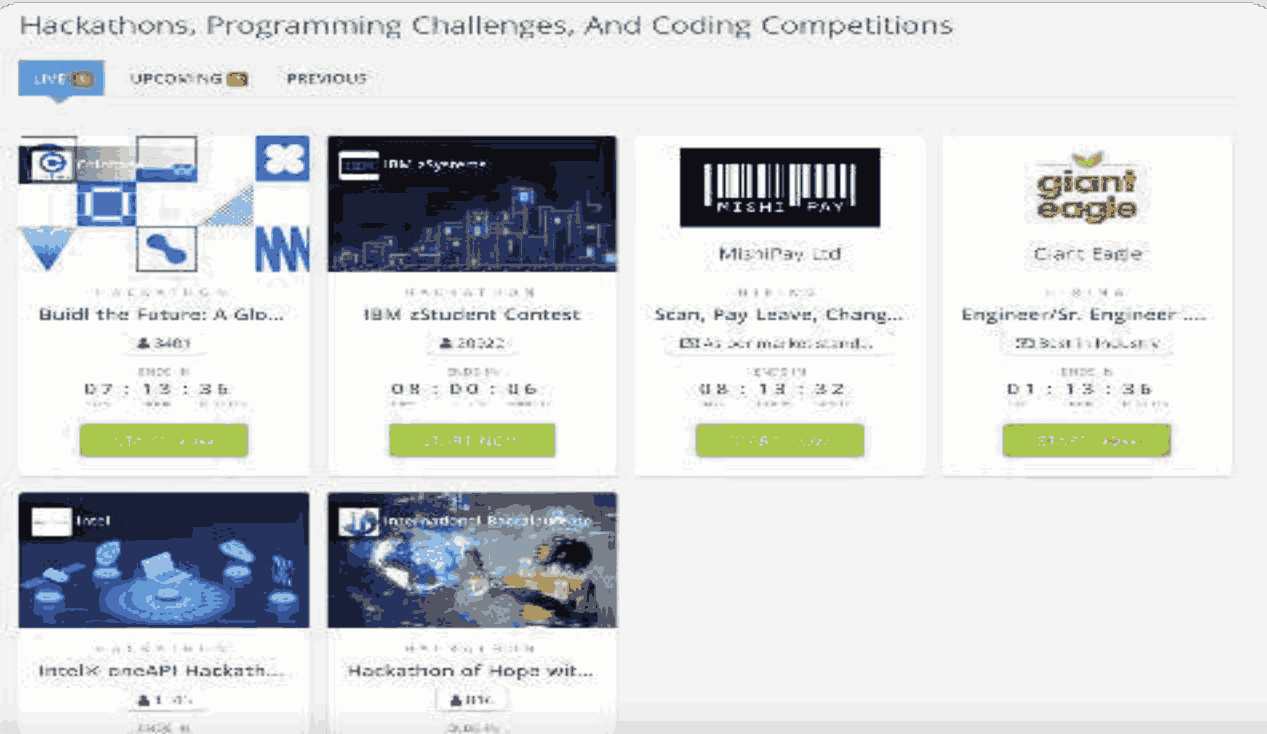
To attract and hire the best talent, several organizations conduct events like hiring hackathons, coding challenges, bug hunts, etc. There are also big rewards associated with such challenges.
Organizing these events can significantly aid you and your team in identifying the best talent in the market. The competitive aspect and rewards make it appealing for the candidates to participate in challenges. Taking part in such events can help candidates land their dream jobs. It’s a win-win situation for both organizations and job seekers.
Idea 2: Create Intentionally Buggy Apps for Interviews
Testers should be asked to test as part of an interview instead of asking for definitions of testing terms or buzzwords. Definitions do not help evaluate the competency of a tester. It is also possible to replace the screening phase with gamification.
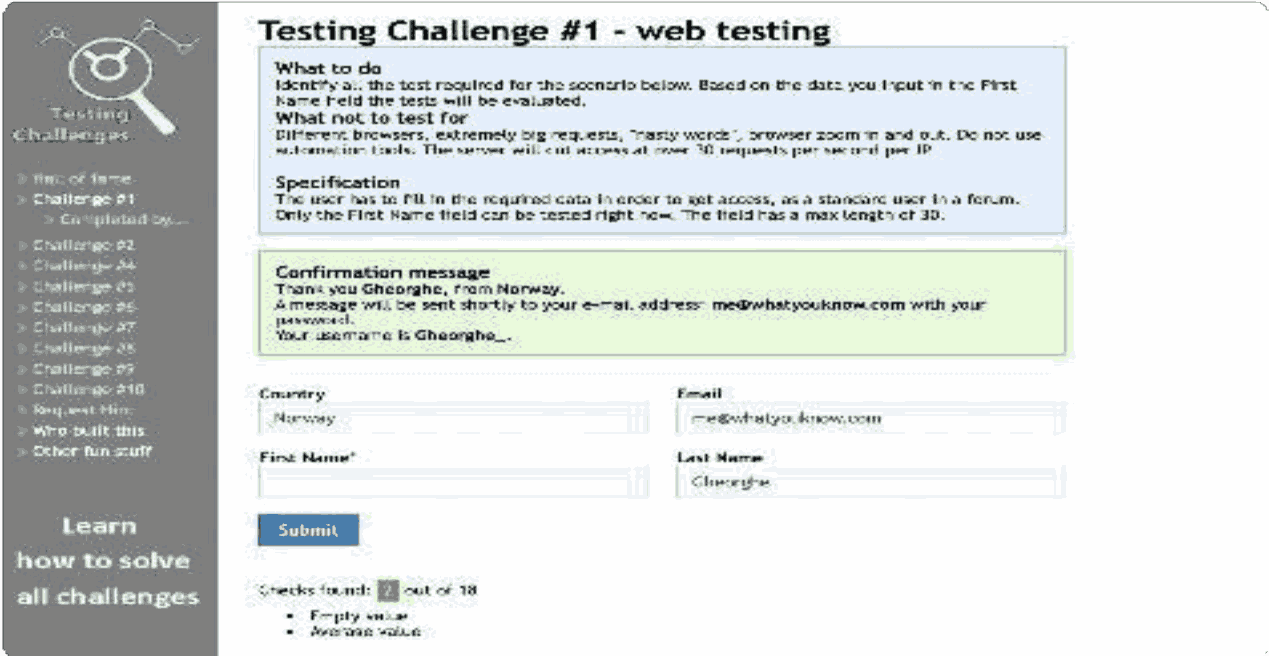
Additionally, it can improve your face-to-face interview. Play a game instead of asking candidates to complete assignments or answer multiple questions to assess their skills and abilities. You need to create a sample application that intentionally introduces bugs and adds game elements, like points, progress bars, counters, coins, etc., to motivate and engage candidates.
For instance, the testing challenge for web testing created by Claudiu Draghia have several challenges for testers. Creating such challenges is a great way to evaluate the competency of testers.
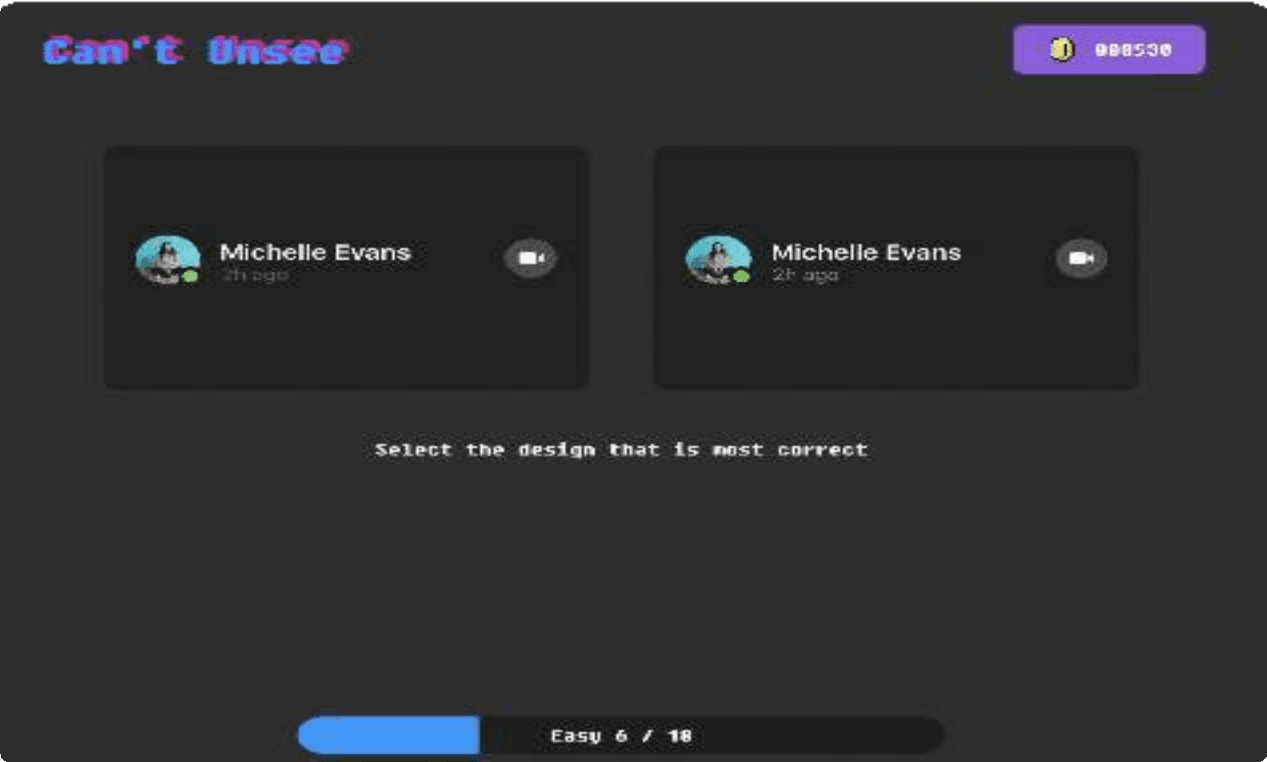
Similarly, Can’t Unsee is a game you can ask your candidates to play to gauge their attention to detail.
Another example is the Google XSS Game, which is developed to practice XSS. The goal of each level is to execute the alert function in JavaScript through an XSS vulnerability.

Utilize similar applications to evaluate exploratory testing, security testing, automation, etc., by adding some elements of gamification. Here are some demo websites that will give you some food for thought.
Gamification of Onboarding and Training
Incorporate gamification into training and onboarding testers. Gamification can be used to make training and onboarding more engaging and interactive.
- For instance, you could create a game that helps new testers to know their colleagues, learn about the company’s values, understand processes, practices, tools, etc.
- Make your newbie testers go on a scavenger hunt. Use apps to create journeys with interactive challenges for employees to complete. Testers earn points and progress through levels by completing these challenges.
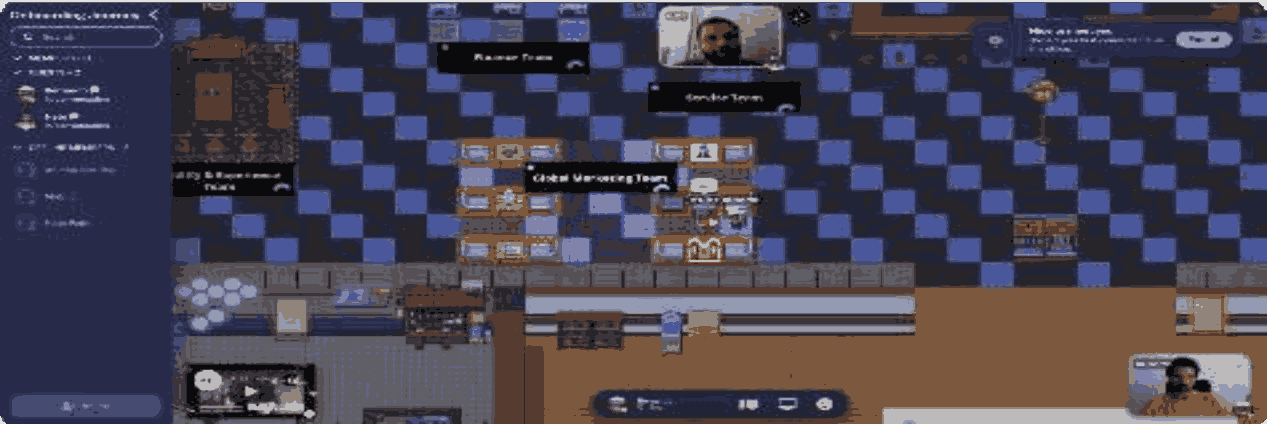
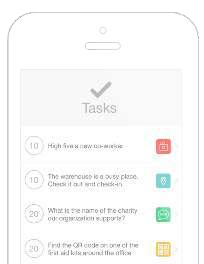
- Training testers in interactive environments keeps testers engaged and improves learning outcomes.
Gamification is an effective way to encourage continuous learning.
- Create some learning paths for your testers and let them choose one that interests them. A learning path consists of tasks, courses, certifications, etc., that testers must complete in a particular order.
- Enable them to track progress and reward them for completing it. Implement internal leaderboards, allocate points, badges, reward with Gift cards or an executive lunch with the CEO/CTO, a shout-out at the town hall, tickets to a testing conference, whatever works best for you.

Pitfalls to Avoid
By this time, you have figured out that the common gamification elements are points, badges, and leaderboards (PBLs). Other elements include avatars, leveling, competitions, quests, collaborations, stories, strategy, counters, community, etc.
The most popular are PBLs, though. A game has four defining characteristics: a goal, a set of rules, a feedback system, and voluntary participation. – Jane McGonigal, Director of Game Research at Institute for the Future.
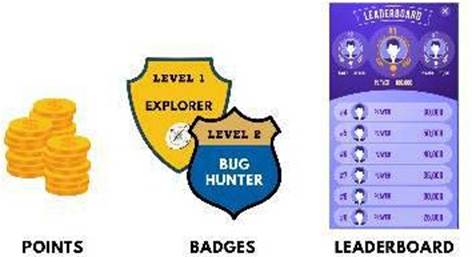
- PBLs are just a part of gamification. But it isn’t the essence of gamification: You cannot turn a tedious task into something intriguing by allotting points, adding badges, and creating a leaderboard. Motivation is a crucial goal of gamification; Gamification should motivate behavior and push people toward their goals.
Gamification isn’t about granting badges or points; it’s about enriching testing activities with game elements. Ultimately, it’s about the sense of engagement and accomplishment associated with doing something meaningful.
- Get the team’s buy-in: Do not force gamification on unreceptive teams.
- Don’t gamify just for the sake of gamification: Recognize the problem that you want to solve before you gamify. Your gamification initiative should align the goals of the testers with those of the organization.
- Take into account both intrinsic and extrinsic motivations: Gamification strategies should balance intrinsic and extrinsic motivations; Extrinsic motivation occurs when the reward motivates the participant. Intrinsic motivation arises from excitement and fun without any reward attached.
In a game, the player plays out of genuine interest. This game would still be attractive without the points, badges, or leaderboards. It is essential that players feel accomplished after completing the gamified activity, even without rewards.
- Keep an eye out for reward obsessions: Players can sometimes become obsessed with rewards (points, badges, leaderboards) rather than the game’s core purpose. In an attempt to top the leaderboard, players engage in undesired behaviors.
- Celebrate participation and achievement: Sometimes, only the best performers feel motivated by gamification. Your goal should be to make everyone feel that participating is worthwhile.
Gamification is not about winners or losers. The goal of gamification should be to motivate and engage team members, not to create a stressful environment to win.

Austin Siewert
CEO, Vercel
Discovered @TestMu AI yesterday. Best browser testing tool I've found for my use case. Great pricing model for the limited testing I do 👏
2M+ Devs and QAs rely on TestMu AI
Deliver immersive digital experiences with Next-Generation Mobile Apps and Cross Browser Testing Cloud

Conclusion
Make your software testing and Agile activities exciting by applying gamification. Encourage testers to complete KPIs to earn points, level up, win rewards, and get a deeper sense of purpose at work. Game elements can make everyday life and reality more engaging and exciting for your team.
However, consider the possible risks and downsides of gamification, such as the potential for unhealthy competition or reward obsession. This and the previous article have given you some creative ideas for gamification in testing. The fact remains that we have a lot to learn.


Did you find this page helpful?
More Related Hubs
TestMu AI forEnterprise
Get access to solutions built on Enterprise
grade security, privacy, & compliance
- Advanced access controls
- Advanced data retention rules
- Advanced Local Testing
- Premium Support options
- Early access to beta features
- Private Slack Channel
- Unlimited Manual Accessibility DevTools Tests