

Next-Gen App & Browser Testing Cloud
Trusted by 2 Mn+ QAs & Devs to accelerate their release cycles


On This Page

22 Best Code Review Tools for Developers [2026]
Explore 22 best code review tools in 2026 to enhance code quality, streamline collaboration, and boost productivity in your development process.

Zikra Mohammadi
February 8, 2026
Code reviews are an important part of the software development process as they help maintain code equity, find bugs, maintain coding standards, and improve the performance of software as a whole. As software projects become large and complex where the codebase becomes difficult to manage, making use of code review tools to enhance the process and reduce manual intervention becomes the key.
From the huge list of code review tools, choosing the right tools becomes very important for developers as it helps streamline the review process and enhance team productivity.
What Are Code Review Tools?
Code review tools help identify errors and potential issues in source code, ensuring quality and security before deployment. Features include syntax error detection, code quality analysis, and inline commenting for collaboration. These tools automate repetitive checks, provide actionable suggestions, and enhance accuracy.
Most modern code review tools are web-based and integrate seamlessly with version control systems like Git and IDEs, streamlining workflows.
Code review tools are essential in the software development process. They help improve quality, stability and reliability through early diagnosis of issues, ensure conformity to coding standards and facilitate collaboration throughout automation tasks.
Below are a few reasons why it is important to have code review tools:
- High-Quality Code: Detects bugs early, preventing major defects in production.
- Time-Saving Automation: Automates syntax checks, error detection, and formatting corrections.
- Enhanced Collaboration: Enables real-time feedback, inline comments, and discussion threads.
- Implement Coding Standards: Ensures consistency and adherence to best practices.
- Risk Mitigation: Identifies critical bugs early, reducing security risks.
- Efficiency in Deployment: Speeds up reviews and approvals for faster releases.
- Scalability and Maintainability: Promotes clean, consistent code for long-term projects.
Best Code Review Tools
Below are a few code review tools that are designed to streamline your development process, enhance code quality, and encourage seamless team collaboration.
Review Board
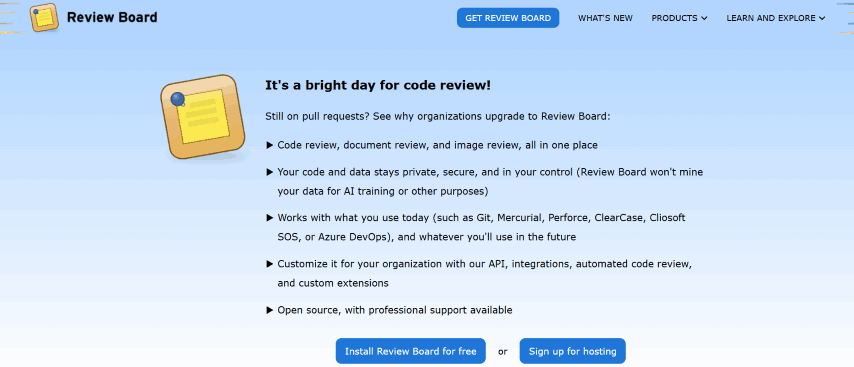
Review Board is one of the leading open-source code review tools. It aims to facilitate collaboration and the reviewing process. The tool allows teams to review not only code but also images and documents, making it versatile for various project types.
It offers flexibility and customization, with additional professional support available for enterprise-level needs. Its robust privacy features ensure that your code and data remain secure throughout the review process.
Key features:
- Multi-File and Multi-Repository Support: Allows you to review multiple files and repositories at the same time, thus making it easier to go through large changes.
- Inline Commenting: Enables reviewers to comment inline on specific lines of code for clear, context-rich discussions.
- Diff Viewer: Offers an extensive diff viewer that identifies changes between versions, making the modifications easier to spot
- Support for Several File Types: Multiple files can be supported along with images and documents. This makes a review possible beyond just code integration in version control systems.
- Customizable Workflows: Provides customizable workflows in order to fit the specific review processes of your team and enhance flexibility and efficiency.
- Automated Code Review: Automatically identify syntax errors and potential bugs, providing suggestions for improving the quality of the code.
- Document and Image Review: This allows you to review images, documents, and other file types, making it versatile enough for the various needs of the project.
Crucible
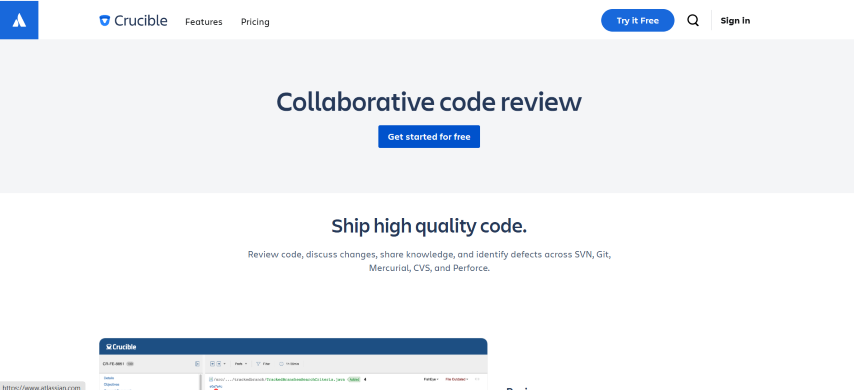
Crucible is a collaborative code review tool offered by Atlassian; it helps increase code quality through peer reviews. It is one of the leading code review tools that allows teams to conduct complete and efficient code reviews. It helps teams review code, discuss changes, share knowledge, and identify defects across SVN, Git, Mercurial, CVS, and Perforce.
Key features:
- Formal and Quick Reviews: Helps create both structured, workflow-based reviews and quick, informal assessments to suit different project needs.
- Inline Discussions: Facilitates detailed conversations by commenting directly on specific lines of code, files, or entire changesets.
- Unified Activity Tracking: Monitors commit, review, and comment in a centralized view to stay informed about code activity.
- Comprehensive Reporting: Provides access to data on code review status and identifies areas lacking sufficient review to improve code quality.
- Audit and Compliance: Maintains a complete audit trail of all code review details, ensuring transparency and accountability.
CodeScene
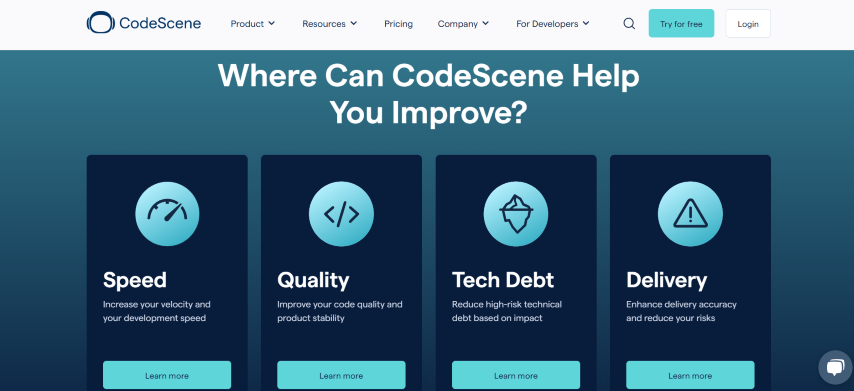
CodeScene is a code analysis and review tool that goes beyond the other static analysis, providing deep insights into both code quality and team dynamics. Unlike traditional code review tools, it helps developers manage technical debt by analyzing code health, identifying high-risk areas, and giving priority to refactoring efforts while also allowing you to integrate with a pull request workflow so that teams get actionable feedback on the quality of their code during the review process.
Key features:
- Automated Code Reviews: Integrates with pull requests to provide feedback and detect code quality issues via an automated code review.
- Code Health Metrics: Provides an aggregated metric that takes multiple contextual factors of code quality into consideration, helping teams understand and improve their codebase.
- Technical Debt Management: Offers insights to effectively reduce technical debt by identifying and prioritizing refactoring targets.
- Team Dynamics Analysis: Provides insights into team performance, including personalized dashboards and trends per team and understanding knowledge ownership and system mastery.
- Software Delivery Metrics: Offers tools for software delivery metrics, ensuring complete oversight of developer output and understanding how team performance is impacted by factors like unplanned work and organizational trends.
GitHub
GitHub offers a powerful collaboration platform for developers, with features designed to streamline code reviews and improve team efficiency. As one of the most widely used code review tools, it improves project management and supports CI/CD through strong version control and collaboration tools. In addition, GitHub easily integrates with numerous third-party applications, which is why many use it as a primary platform for code reviews and team collaboration.

Key features:
- Pull Requests: Allows developers to propose, discuss, and review changes before merging them into the main codebase.
- Inline Code Comments: Enables clear, context-specific feedback by allowing comments directly on lines of code.
- Branching and Merging: Simplifies parallel development and allows for smooth integration of different code versions.
- Code Insights: Provides detailed insights into code quality and potential security vulnerabilities.
- Security Features: Scans code for known vulnerabilities and offers security alerts.
- Project Management: Integrates project boards, issues, and milestones to keep tasks organized.

Note: Streamline your review process by integrating CI/CD tools in your SLDC or STLC process effectively. Try TestMu AI Now!
GitLab
GitLab is a comprehensive platform that helps you stream your deployment process with security. It enables teams to accelerate software delivery by automating workflows and providing real-time security and compliance checks.
As one of the leading code review tools, it helps in an easy code management process and With its AI-driven capabilities, it helps optimize processes and improve the efficiency of development and security operations.

Key features:
- Merge Requests: Allows seamless code review and collaboration with inline comments and discussions.
- Version Control: Uses Git repository management for efficient versioning and branching.
- Real-time Collaboration: Enables live collaboration, offering instant updates on code changes and discussions.
- Security and Compliance: Identifies vulnerabilities in the codebase and ensures compliance with security standards.
Subscribe to the TestMu AI YouTube Channel to get more videos around CI/CD tools and more.
Bitbucket
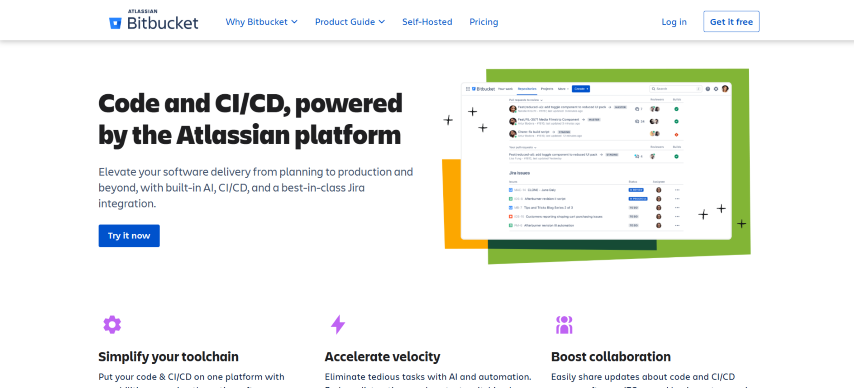
Bitbucket is a code management tool designed to streamline collaboration and enhance development workflows from planning to deployment. As one of the leading code review tools, it allows teams to automate their deployments, making the software delivery process more efficient.
Its collaboration feature manages the code changes and tracks the issues, then enforces security measures on it; hence, the product supports both cloud and on-premises development requirements.
Key features:
- Pull Requests: Streamlines collaboration with pull requests, which allows developers to propose, discuss, and review changes in code.
- Jira Integration: Integrates perfectly with Jira to associate changes in code with relevant tasks to enhance traceability and visibility.
- Inline Commenting: Allows team members to comment directly within the code, facilitating real-time discussions and review feedback.
- Branch Permissions: Lets teams control who can merge changes to specific branches, ensuring that code is only merged by authorized contributors.
- Merge Strategies: Offers various merge strategies such as merge commits, squashing, or rebasing to accommodate team workflows.
- Security Features: Includes built-in security tools to monitor and address vulnerabilities in code during the review process.
- Inline Diff Viewer: Provides a visual interface to easily compare code changes side by side, making it easier to spot issues.
Azure DevOps
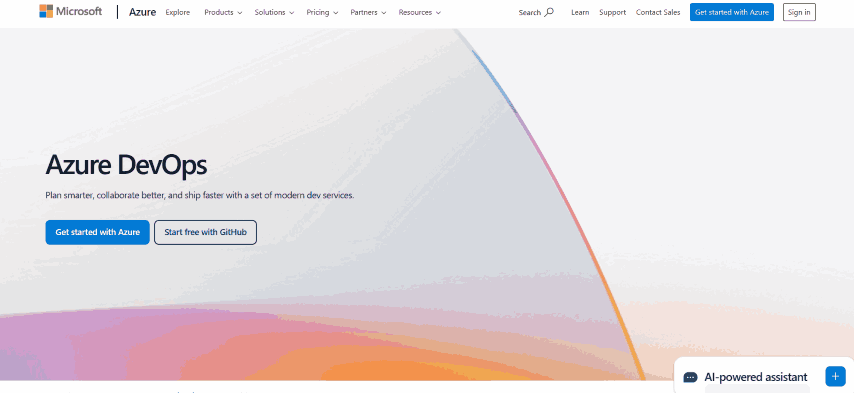
Azure DevOps is an end-to-end software development service designed to support teams for smooth planning, developing, testing, and deploying their software. This contains a set of tools that enable DevOps practices, including continuous integration, project management, and collaboration.
It is one of the most used code review tools; it allows you to integrate with a variety of cloud and on-premise technologies to ensure streamlined workflows across teams.
Key features:
- Pull Requests: Allows developers to propose, discuss, and review code changes before accepting them into the main code base.
- Inline Comments: Allows team members to give feedback in line to promote real-time discussions and feedback reviews.
- Branch Permissions: Allows teams to restrict who can merge changes into specific branches, ensuring code is only merged by an authorized contributor.
- Automated Code Quality Checks: Merges code after allowing automated tools to ensure quality standards as defined are met prior to that.
- Merge Strategies: Allows teams to employ various merge strategies, which include squashing, rebasing or merging commits for the process.
- Security Features: Includes built-in security tools to monitor and address vulnerabilities in code during the review process.
- Inline Diff Viewer: Provides a visual interface to easily compare code changes side by side, making it easier to spot issues.
CodeQL
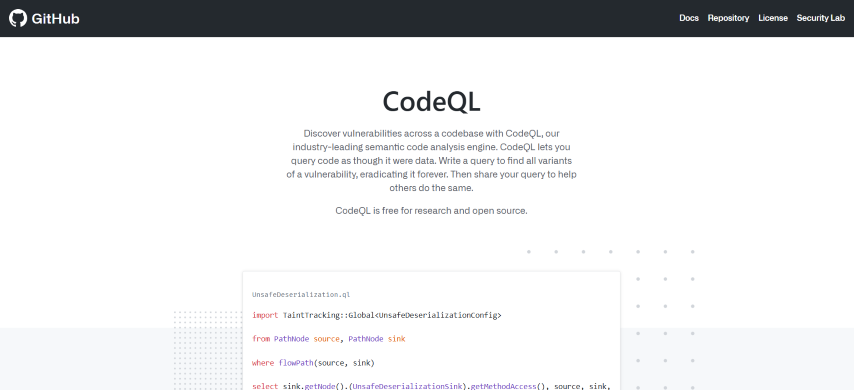
CodeQL by GitHub is a semantic code analysis engine intended to find bugs and vulnerabilities in their code for developers. As one of the advanced code review tools, it represents code as a database to be queried, allowing developers to write queries to identify security problems and programming mistakes.
With its capabilities of evaluating code as data, this tool simplifies the process of spotting vulnerabilities that might otherwise go unnoticed. Integrated with GitHub, it allows developers to receive actionable security alerts directly in their repository. Broad support for multiple programming languages will enhance this solution and bring comfort to every organization.
Key features:
- Semantic Code Analysis: Enables deep analysis of code by treating it as data, allowing for complex queries to detect vulnerabilities and errors.
- Custom Query Writing: Allows users to write custom queries tailored to specific security concerns or coding standards, enhancing the detection of unique patterns or issues.
- Automation Capabilities: Integrates into CI/CD pipelines to automate code analysis during the development process.
- Support for Multiple Languages: Supports a wide range of programming languages, making it versatile for analyzing diverse codebases.
- Community and Shared Queries: Provides access to a community-driven repository of queries, enabling users to leverage existing work for common vulnerabilities and coding issues.
Codiga
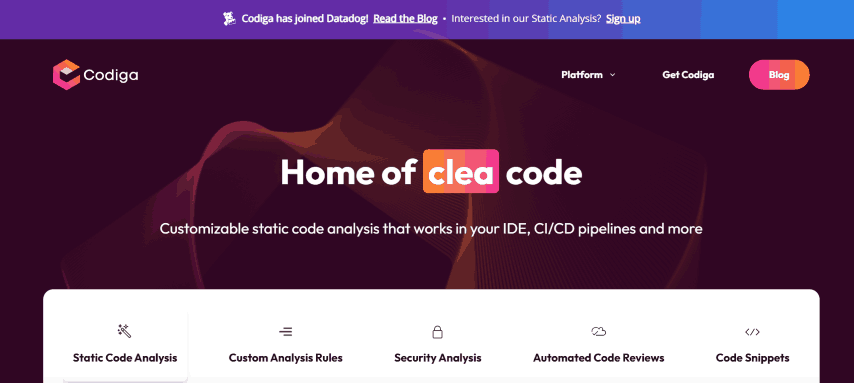
Codiga allows you to automate your code review process; it is formally known as CodeInspector, acquired by the Datadogs platform in April 2023; this tool helps developers find and fix code issues and security vulnerabilities within the application.
This code review tool can be integrated into your IDE for code quality checks; it helps flag potential bugs in your source code editor, allowing you to do the fixes right there; it also checks your code with a pre-commit hook when automated. As an automated code reviewer, Codiga will comment on your PRs and inform you of errors and warnings.
Key features:
- Advanced Code Analysis: Detects code issues and security vulnerabilities using sophisticated techniques.
- Multi-Language Support: Compatible with Java, C, C++, Python, and more.
- Customizable Rule Sets: Define coding standards and security policies as per project requirements.
- Automated Code Review: Reduces manual effort by automating key review processes.
- Automated Issue Tracking: Track issues found in code changes and provide a report of all issues.
- Automatically comments on PRs: Allows you to write comments on the PR directly, giving you hints on how to improve the code.
Visual Expert
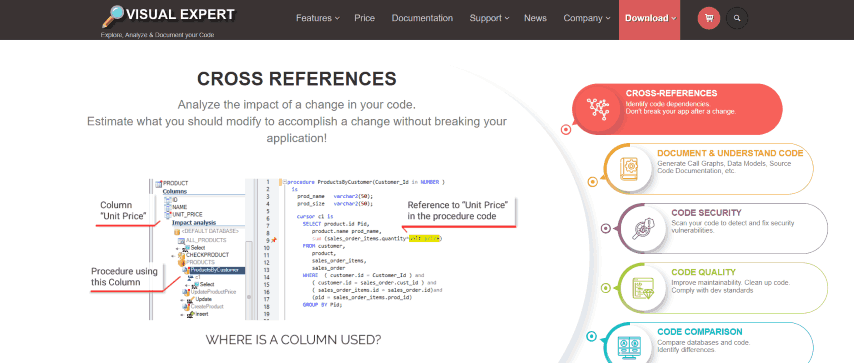
Visual Expert is a static code analysis tool designed to enhance code quality, security, and performance for applications built with PowerBuilder, Oracle PL/SQL, and SQL Server T-SQL. It offers comprehensive code analysis features that help developers identify code dependencies, detect security vulnerabilities, and generate detailed documentation.
Key features:
- Cross-References Analysis: Identifies code dependencies to estimate the impact of changes and modify code without breaking the application.
- Code Security Scanning: Automatically scans code to detect and fix security vulnerabilities, helping to safeguard applications against potential threats.
- Code Quality Inspection: Checks code against hundreds of rules to improve maintainability, clean up code, and ensure compliance with development standards.
- Code Documentation Generation: Generates comprehensive HTML documentation of source code, facilitating better understanding and knowledge sharing among team members.
- Code Comparison: Offers tools to compare different versions of code or databases, identifying differences to assist in version control and code management.
- Performance Analysis: Combines application and database statistics to identify slow pieces of code, analyze processes, and remove bottlenecks, thereby enhancing overall performance.
Gerrit Code Review
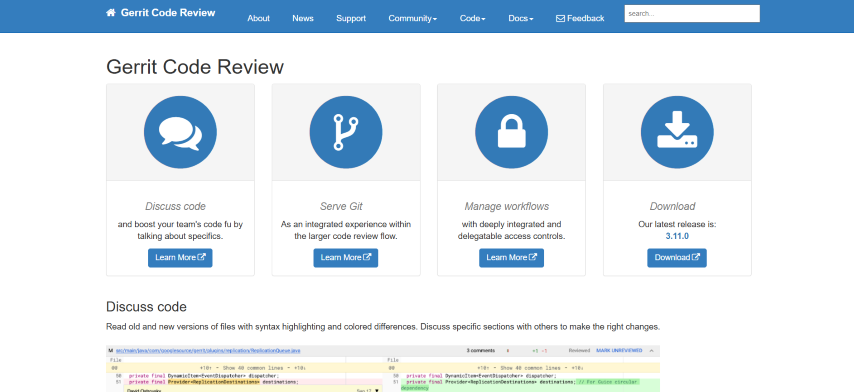
Gerrit Code Review is a free, web-based team code collaboration tool that integrates closely with Git, allowing developers to review each other’s modifications using a web browser. It is one of the effective code review tools that facilitates online code reviews, enabling teams to discuss code, manage workflows, and serve Git repositories within an integrated experience.
Its robust design supports both pre-commit and post-commit reviews, enabling developers to catch issues early and reduce the risk of bugs entering production. Gerrit’s focus on transparency and collaboration ensures all team members stay aligned, with changes tracked and discussed in a centralized system.
Key features:
- Inline Comments: Allows reviewers to add comments directly within the code, facilitating targeted feedback and discussions.
- Access Control: Provides a powerful access control model, enabling fine-grained permissions for pushing code directly into the central repository.
- Integration with Git: Includes Git-enabled SSH and HTTPS servers compatible with all Git clients, simplifying management by hosting multiple Git repositories together.
- Extensibility through Plugins: Extends and customized by installing server-side plugins, allowing teams to tailor the tool to their specific needs.
- Project Navigation: Facilitates easy navigation of projects, aiding in efficient code review and repository management.
- Branch Updates: Ensures that codebases remain current and synchronized.
RhodeCode
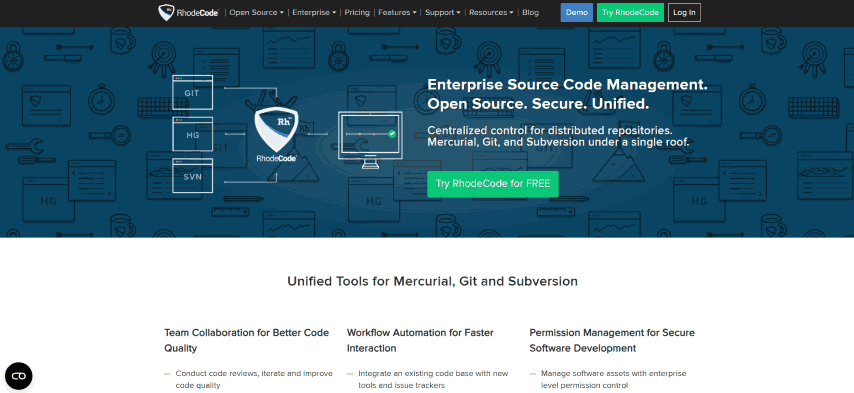
RhodeCode is a robust code collaboration and review tool designed to support enterprises in managing and securing their software development processes. As one of the comprehensive code review tools, it offers an all-in-one solution for hosting, managing, and reviewing Git, Mercurial, and Subversion repositories.
The platform focuses on improving collaboration among team members while ensuring code quality through detailed review processes. With its advanced permission management and integration capabilities, it is ideal for organizations requiring strict control and compliance in their development workflows.
It gives users a unified interface for code hosting and review, making it easier to manage multiple version control systems.
Key features:
- Version Control Support: Supports Git, Mercurial, and Subversion repositories, providing a centralized platform for hosting and managing diverse version control systems.
- Advanced Permission Management: Allows granular access control to ensure that only authorized users can access specific repositories or perform certain actions.
- In-line Discussions and Annotations: Enables detailed in-line discussions and file annotations for improved collaboration during the review process.
- Side-by-Side Code Comparisons: Provides side-by-side code comparisons to enable efficient and deep analyses and reviews of changes.
- Centralized User Management: Simplifies user management with centralized controls, ensuring consistent access and compliance across the platform.
- Enhanced Security Features: Includes features like repository encryption and activity monitoring to maintain the integrity and security of the codebase.
- Scalability for Enterprises: Makes it suitable for organizations of all sizes, including those with extensive development needs.
Codacy
Codacy is one of the leading code review tools designed to automate the process to help developers and teams maintain high-quality code and secure their applications by making static code analysis with respect to security vulnerabilities, duplication of code, complexity, and coding style violations. It integrates seamlessly with workflows in Git, which can be GitHub, GitLab, or Bitbucket. It gives detailed insights on issues directly within the pull requests and commits. With this, developers will know how to address them.

Key features:
- Quality Monitoring: Ensures proper check in coding standards upon the incoming pull requests by holding their consistency for code quality.
- Security Analysis: Identifies and helps fix application security issues using Static Application Security Testing (SAST), Software Composition Analysis (SCA), secret detection, Infrastructure as Code (IaC) analysis, and more.
- Test Coverage: Expands and enforces test coverage to prevent breaking changes, promoting robust and reliable codebases.
- Engineering Performance Metrics: Provides data-driven insights to improve engineering team performance, facilitating better decision-making and process optimization.
SonarQube Server
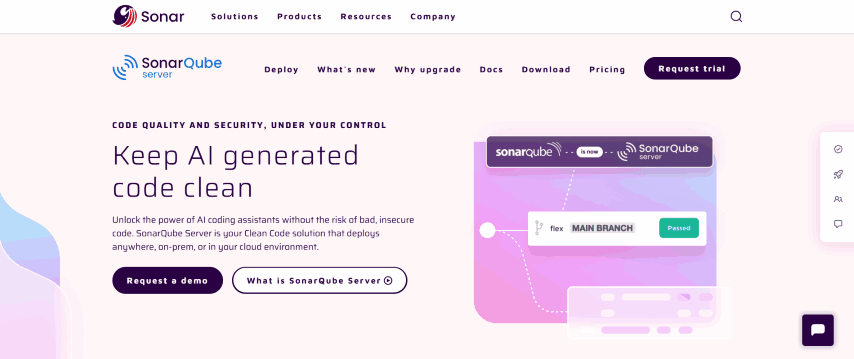
SonarQube Server is a widely known platform for continuous code quality and security inspection. Being one of the most popular code review tools, it helps developers improve their code by detecting bugs, vulnerabilities, and code smells across multiple languages.
By integrating SonarQube into the development workflow, teams can ensure the delivery of reliable and maintainable software. The tool automates code reviews, streamlining the process and enabling early identification of issues.
Key features:
- Comprehensive Analysis: Delves deep into the codebase, inspecting each layer from module to class level.
- Code Quality Testing: Provides code quality testing, static code analysis, clean code, and checking the level of security of the code developed in the company.
- Secrets Detection: Includes a powerful secrets detection tool, one of the most comprehensive solutions for detecting and removing secrets in code.
- Support for Multiple Languages: Supports dozens of popular and classic programming languages, frameworks, and tools.
CodeRabbit
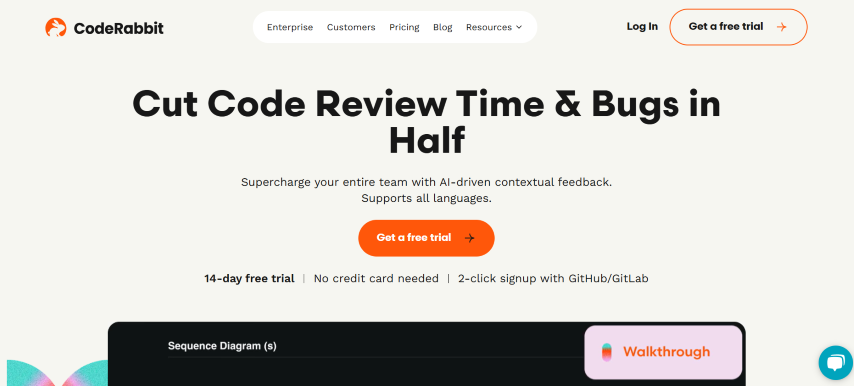
CodeRabbit is an AI-powered tool designed to streamline the code review process by providing intelligent, context-aware feedback. As one of the innovative code review tools, it analyzes pull requests line by line, offering actionable suggestions that developers can directly apply to their code.
It has the feature of automatically creating clear summaries of pull requests and offers interactive, real-time chats so that the developers get quick, detailed insight and clarification about the items they are to review.
Key features:
- Line-by-Line Code Change Suggestions: Review the changes line by line and provide code change suggestions that can be directly applied.
- Real-Time Chat: Allows developers to interact directly with the bot within the code, offering additional context, asking questions, or even having the bot generate code.
- Pull Request Summaries: Generates crisp summaries of code changes, whether changing a line or adding a feature.
- Integration with Git Platforms: Integrates with GitHub, GitLab, and Azure DevOps repositories to deliver continuous and incremental reviews for each commit in a pull request or merge request.
- Privacy and Security: Ensures that your data stays confidential with ephemeral review environments that leave no trace of your code and end-to-end encryption protecting your code during reviews with zero data retention post-review.
Code Climate
Code Climate is one of the most comprehensive code review tools designed to automate code review and software engineering intelligence to help teams improve code quality and maintainability. Being the most used tool, it integrates with various version control systems, providing actionable insights on code health, test coverage, and complexity. This empowers developers with the information needed to make informed decisions and optimize their development workflows.

Key features:
- Automated Code Review: Continuously analyzes code for style, security, and maintainability issues, providing immediate feedback to developers.
- Test Coverage Monitoring: Tracks test coverage to ensure that code changes are adequately tested, helping to maintain robust and reliable codebases.
- Maintainability and Complexity Analysis: Assesses code complexity and maintainability, offering insights to improve code readability and reduce technical debt.
- Duplication Detection: Detects duplicate code blocks so teams can refactor and eliminate redundancy, resulting in more efficient codebases.
- Security Analysis: Detects potential security vulnerabilities in the code, allowing teams to address issues proactively and enhance application security.
- Integration with Development Workflows: Integrates with GitHub, Bitbucket, and GitLab, fitting natively into existing Git workflows and enhancing compatibility and workflow efficiency.
Reviewable
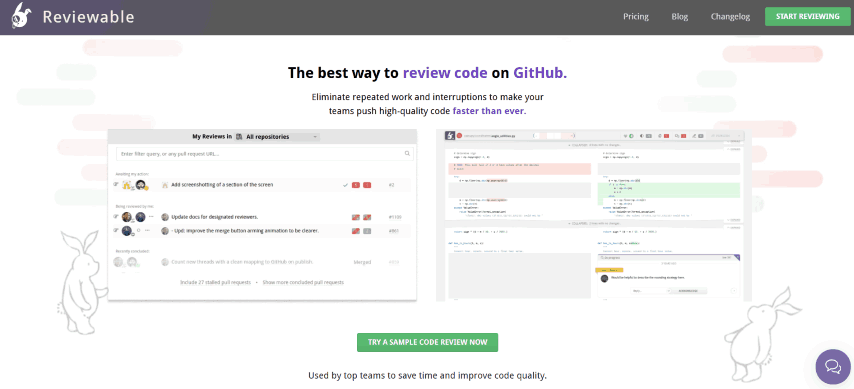
Reviewable integrates seamlessly with GitHub, providing a streamlined and efficient code review experience tailored for modern development workflows. As one of the popular code review tools, it supports multi-repository reviews and simplifies complex changes by enabling threaded discussions directly on the code. Reviewable prioritizes collaboration and ensures that all stakeholders can engage effectively in the review process without the overhead of redundant work.
These functionalities empower teams to handle large-scale projects with ease, offering enhanced traceability and clarity throughout the review lifecycle.
Key features:
- Review Dashboard: Allows developers to manage code reviews on their own schedule, reducing the need to react to constant notifications and interruptions.
- Intelligent Line-Mapping: Ensures that code is not reviewed multiple times unnecessarily, even when rebased, by accurately tracking changes and preserving comments.
- Flexible Mergeability: Provides powerful control over when changes can be merged, allowing teams to enforce code ownership, assign reviews, and implement custom workflows.
PullRequest
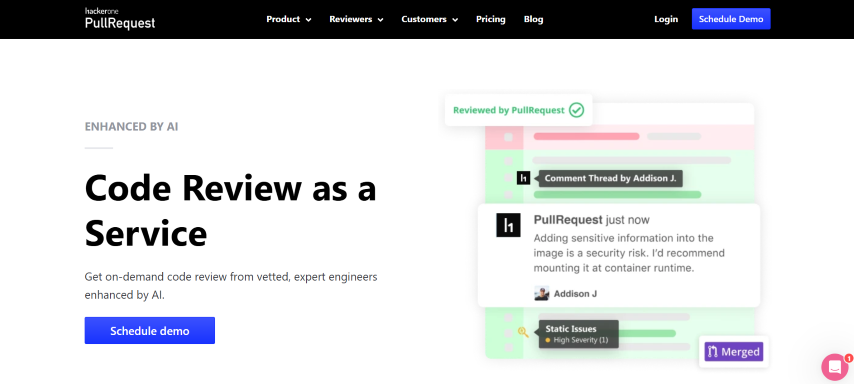
PullRequest is a service-based code review platform built to streamline and improve development through the combination of human expert reviews and AI-powered insights. As one of the effective code review tools, it helps you connect directly with popular development environments such as GitHub, GitLab, Bitbucket, and Azure DevOps so that it can easily get incorporated into existing workflows.
Key features:
- AI-Powered Code Review: Combines expert human reviewers with AI analysis to identify high-risk security hotspots and provide deeper insights.
- Expert Reviewer Network: Provides access to a network of rigorously vetted, specialized professionals with experience at top engineering organizations, including maintainers of widely used programming languages and frameworks.
- Smart-Review Selection: Offers ongoing pull request code review of the most important code, ensuring critical areas receive focused attention.
- Code Security Review: Conducts comprehensive audit reviews of entire repositories or sets of repositories to identify potential security vulnerabilities and compliance issues.
DeepSource
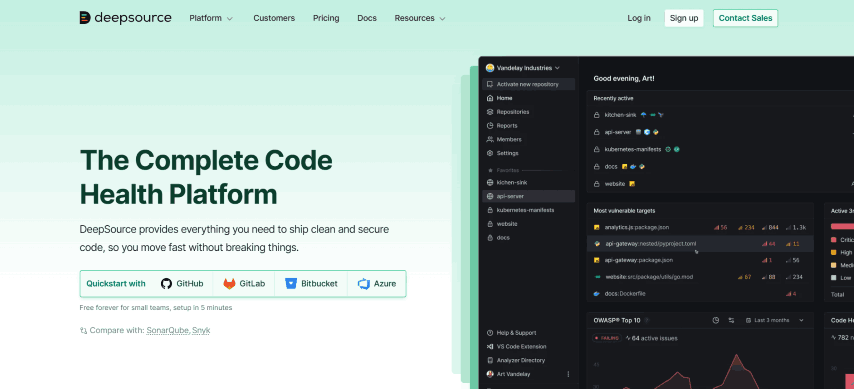
DeepSource is the code health platform that helps development teams detect and fix issues in their codebase at an early point in the development lifecycle. As one of the efficient code review tools, it ensures detection of potential vulnerabilities and anti-patterns before they get merged. This maintains a cleaner, more secure, and more maintainable codebase.
The platform provides features such as autofix capabilities, which automatically resolve specific issues detected during analysis, and custom quality gates to enforce coding standards. It also tracks code coverage and highlights untested areas, enabling better test coverage and reliability.
Key features:
- Static Code Analysis: Runs static analysis on every commit to detect code quality and security issues before the code is merged.
- Code Formatting: Applies popular code for matters like Black, Prettier and gofmt automatically on every commit to maintain the code style.
- Code Coverage Tracking: Visualizes line and branch coverage, helping identify untested parts of the codebase.
- Quality Gates: Allows the creation of custom quality and security gates to enforce team standards and block pull requests that don’t meet specified criteria.
- Integrations: Provides first-class integrations with tools like Jira, GitHub Issues, Slack, and Vanta to automate workflows.
Axolo
Axolo is a GitHub Slack bot designed to enhance the code review process by creating dedicated channels for pull requests. It is one of the most commonly used code review tools that help teams streamline communication and make the review process more organized, enabling teams to collaborate more efficiently. With Axolo, teams can set up automated reminders for stale pull requests, receive updates on CI/CD statuses, and manage reviews through Slack notifications, keeping the development workflow smooth and responsive.

Key features:
- Daily GitHub PR Reminders: Sets reminders for stale pull requests, with notifications sent only if the pull request has not been recently reviewed.
- CI/CD and GitHub Actions in Slack: Updates for branch conflicts, pull request checks, GitHub Actions, and deployments in their specific channels, with the ability to select only the statuses you’d like to receive (success, error, etc.).
- Pull Request Recap for Efficient Stand-ups: Sets up daily PR recaps in specific channels to organize stand-ups, keeping the team informed and accountable.
- Team-Specific Notifications: Receives new GitHub pull request notifications in team channels, with updates on actions such as reviews added or PR status changes (draft, awaiting review, work in progress, mergeable, etc.).
- Code Review Time Slots: Organizes dedicated times for code reviews, allowing Axolo to notify you only when you’re available, helping to minimize distractions and maintain focus during development sessions.
Helix Swarm
Helix Swarm is a Perforce-developed code review tool. With the development team in its focus, it ensures perfect collaboration, streamlines the code review process for teams, and provides access to version control.
As one of the specialized code review tools, it delivers unified code management and review within the system. It supports collaborative design environments and enterprise development methodologies, enabling teams to build, test, iterate, and release products more efficiently.
Key features:
- Automated Formal Code Review: Automates the code review process, ensuring consistency and efficiency across the development lifecycle.
- Collaborative Design Support: Supports collaborative design environments, allowing team members to engage in discussions and provide feedback directly within the code review interface.
- Enterprise Development Methodologies: Provides tools and workflows that support large-scale development projects.
Veracode
Veracode is an all-in application security platform that helps to build and scale secure software at speed and with trust in the code and cloud. As one of the most used code review tools, it offers real-time feedback and actionable insights from developers.
It helps teams in the early identification and remediation of vulnerabilities by embedding them in the development process, thereby reducing the security breaches’ risk and providing applications securely. The platform offers features ranging from static application security testing which offers SCA, DAST, and AI-assisted flaw remediation.

Key features:
- Static Application Security Testing (SAST): Helps find and fix flaws as you write code, providing real-time feedback and integration into developer workflows.
- Software Composition Analysis (SCA): Identifies and manages open-source components with known vulnerabilities to secure the software supply chain.
- Dynamic Application Security Testing (DAST): Detects and remediates runtime vulnerabilities in web applications to protect against attacks.
- AI-Assisted Flaw Remediation: Utilizes AI-powered tools to find and fix security flaws, reducing friction and delays in the development process.
How to Choose a Code Review Tool?
Choosing the most proper code review tool matters; that is how effective collaboration, code quality retention, and integration with existing processes would be achieved. More appropriate, well-suited software ensures a smooth procedure as it creates a developer culture of continuous improvement on good codes.
Think about these selection criteria to choose an excellent code review tool :
- Compatibility with Version Control Systems: Ensure the tool supports the version control systems (e.g., Git, Mercurial, or Subversion) your team uses. It should also handle branching and merging workflows efficiently.
- Customization and Flexibility: Opt for tools that allow customization of workflows, templates, and permissions to match your team’s unique processes. The ability to create custom review rules can further enhance adaptability.
- Scalability: Ensure the tool can handle the scale of your projects, whether you’re a small team or a large enterprise. Verify its performance with large codebases and multiple simultaneous reviews.
- Automation Capabilities: Prioritize tools with automated features like code quality checks, static analysis, and integration with testing frameworks to speed up reviews. Automated flagging of potential issues adds an extra layer of precision.
You can also leverage cloud-based platforms to further enhance the code review process within the development lifecycle. Some tools integrate automated testing and performance analysis to ensure that code changes do not introduce regressions. One such platform is TestMu AI.
Although TestMu AI is an AI-Native test execution platform designed for manual and automated testing at scale across 5,000+ browser and OS combinations, it complements the code review process by verifying functionality across different environments. Teams can integrate such platforms into their workflow to ensure both code quality and application stability before deployment.
- User Interface and Usability: Evaluate the tool’s user interface for intuitiveness and ease of navigation to minimize the learning curve for your team. Consider if it offers dark mode or other customization options for usability.
- Performance and Reliability: Choose tools known for their performance, reliability, and minimal downtime to avoid disruptions in your workflows. Verify if it can handle peak usage periods effectively.
- Security and Compliance: The tool should have strong security features such as data encryption, access controls and compliance with industry standards support. It should also track audit trails for regulatory purposes.
- Collaboration Features: Check for features like in-line comments, side-by-side code comparisons, threaded discussions, and notifications to facilitate effective collaboration. Ensure it supports tagging or assigning tasks to reviewers.
- Community and Ecosystem: Explore tools backed by an active community or ecosystem to benefit from continuous updates, plugins, and third-party integrations. A strong developer community can also provide valuable feedback and tips.
- Support and Documentation: Consider tools with robust customer support and extensive documentation to assist with setup, troubleshooting, and best practices. Look for forums or community support for additional guidance.
- Ease of Integration: Look for tools that seamlessly integrate with your existing CI/CD pipelines, developer tools, and project management software. Integration with popular IDEs is an added advantage.
- Cost and Licensing: Compare pricing models, such as per-user or enterprise licenses, and evaluate if the tool fits within your budget without compromising on features. Check for hidden costs like storage or API usage fees.

Conclusion
Choosing the right code review tool is critical for ensuring high-quality software and promoting seamless cooperation across development teams. The above-mentioned code review tools do more than just discover flaws; they also simplify workflows, increase productivity, and foster an environment in which teams can collaborate to produce better software. The right tool enhances the entire process, not just the code.
As you go through the alternatives, keep in mind your team’s special needs, such as integration with existing workflows, automation of repetitive operations, or support for specific languages or frameworks. A wise decision now can set the path for a more efficient and secure development process tomorrow. With the correct code review tool in place, your team can stay ahead, providing software that stands out in terms of quality and stability.


Frequently asked questions
Did you find this page helpful?
More Related Hubs
TestMu AI forEnterprise
Get access to solutions built on Enterprise
grade security, privacy, & compliance
- Advanced access controls
- Advanced data retention rules
- Advanced Local Testing
- Premium Support options
- Early access to beta features
- Private Slack Channel
- Unlimited Manual Accessibility DevTools Tests