

Next-Gen App & Browser Testing Cloud
Trusted by 2 Mn+ QAs & Devs to accelerate their release cycles


On This Page
- The Benefits of Applying Machine Learning to Software Testing
- Detection of Anomalies
- The Need for Better Anomalies and Defects Detection Approaches
- Leveraging Machine Learning for Defect and Anomaly Detection
- Impact of Incorporating Machine Learning in Testing
- Machine Learning’s Transformative Role in Test Automation

Machine Learning in Testing: A Game Changer for Anomaly and Defect Detection
In this article, we explore the transformative power of machine learning in software testing. Learn how it detects anomalies and defects—improving efficiency, accuracy, and overall testing quality.

Smeetha Thomas
December 27, 2025
In the last ten years, Machine Learning (ML) has grown exponentially enabling organizations to unlock transformative use cases. The machine learning market is expected to reach $210 billion by 2030. It’s safe to say that this technology has taken over our day-to-day lives—powering self-driving cars and the intelligent assistants we use in our homes.
Machine learning algorithms are being employed in analyzing vast sums of data to uncover patterns, trends, and actionable insights.
By leveraging advanced techniques to analyze contextual information, machine learning approaches present a massive opportunity to detect unknown and dynamically evolving fraudulent patterns.
While test automation has made the entire process of testing a lot more efficient and fast, the combination of machine learning with test automation takes the quality assurance process to the next level. Right from the point of simplifying test creation to reducing the need for manual test case modifications, machine learning in test automation delivers improved results.
Against this backdrop, 80% of companies have reported increased revenue due to their investments in machine learning technology. Machine learning algorithms such as supervised, unsupervised, and semi-supervised are transforming software testing processes in ways we could not have imagined a decade ago. It can be harnessed to uncover anomalies and defects within testing results, log files, and system behavior. These algorithms sift through extensive datasets, to identify potential defects and reveal underlying causes, speeding up the debugging process and problem resolution workflows.
In this blog post, we will explore how machine learning provides unmatched value in detecting anomalies and defects within testing data.
The Benefits of Applying Machine Learning to Software Testing
Machine learning algorithms can be trained to improve your software testing efforts in many ways. Let’s quickly run through the benefits of machine learning in testing before we look at how ML applications are being leveraged for anomaly and defect detection in testing.
- Efficiency boost: By automating repetitive tasks, machine learning enables testers to focus on the more complex aspects, in turn, significantly increasing testing process efficiency.
- Adaptability to change: Machine learning systems can adapt to evolving conditions and learn on the job. Flexible algorithms known as ‘liquid networks’ alter underlying equations to learn from new data. This could aid faster adaptations and responses based on changing data streams, ensuring greater flexibility in today’s dynamic tech landscape.
- Empowered decision-making: ML algorithms provide deep insights and predictive analysis, enabling data-driven decision-making throughout the testing process.
- Enhanced accuracy: By analyzing data swiftly and accurately, machine learning reduces human error, resulting in more reliable test outcomes and higher-quality software.
Detection of Anomalies
Among the more common use cases of machine learning is anomaly detection. Enterprises today deal with massive amounts of data including transactions, images, text, video content, and more. Anomaly detection or the identification of outliers from data sets becomes crucial to prevent fraud and adversary attacks that could hamper the organization’s future.
Anomalies can be broadly categorized into three distinct types:
- Outliers: These are small, brief anomalies that manifest in a non-systematic manner during data collection, setting them apart from the norm.
- Change in events: This category includes systematic or abrupt deviations from the previous standard behavior in the dataset.
- Drifts: Drifts denote slow, one-directional, and long-term shifts within the data—gradually taking it away from the established normal patterns.
The Need for Better Anomalies and Defects Detection Approaches
Organizations are under immense pressure to deliver software products at break-neck speed. Owing to the pace and scale at which software is being released, the need to minimize defects is on the rise. Continuous defect identification is needed to develop good-quality software products.
On the other hand, a system capable of identifying anomalies and unexpected outcomes during testing proves invaluable for maintenance, debugging, and in-depth analysis
Given the mounting complexity of modern software applications, there is a growing necessity for the implementation of better algorithms and software tools to facilitate effective anomaly and defect detection.
Leveraging Machine Learning for Defect and Anomaly Detection
Machine learning techniques are implemented to enable non-destructive quality assurance, thereby improving defect classification and anomaly detection significantly.
- Defect detectionIdentifying and classifying software defects manually takes up way too much time. Moreover, the cost of detecting and fixing defects increases exponentially the more you progress in the software development workflow.
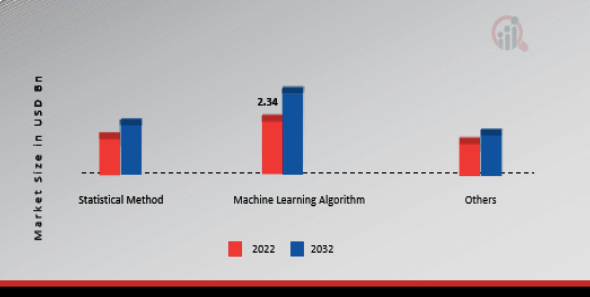
As a result, organizations are applying machine learning algorithms to automate defect detection and classification. In 2022, the machine learning algorithms category under the Fault Detection and Classification (FDC) market generated the maximum revenue. FDC solutions have helped the likes of General Electric experience substantial enhancements in defect reduction.
- Identifying anomaliesImplementing machine learning to anomaly detection calls for a good understanding of the problems, especially when you are working with unstructured data. Unlike the seemingly straightforward task of identifying outliers within simple 1-dimensional datasets, machine learning excels at uncovering anomalies in even the most intricate data structures. What’s interesting is that machine learning can be used to detect anomalies in images, empowering computers to match up to the diagnostic skills of top human specialists.
Additionally, machine learning models can be trained to detect and report anomalies not only post-factum but also in real time. The anomalies can either be removed from the data set before further processing is done or flagged to initiate an analysis from a business perspective.
Considering how machine learning techniques can be used to process large data sets, it further helps to automate and streamline the process of anomaly detection, making it more effective. The more commonly used ML methods in anomaly detection include autoencoders, Bayesian networks, and Local outlier factor (LOF).
Impact of Incorporating Machine Learning in Testing
Adopting new technologies helps businesses to launch new products, bug-free and with minimal use of resources.
Here are the key advantages of leveraging the power of machine learning techniques for the detection of anomalies and defects in testing:
- A switch from reactive to proactive models: Unlike rule-based legacy systems, machine learning algorithms excel at identifying anomalies and defects. This sets the stage for organizations to take a proactive approach to software testing and meet the accelerating pace of innovative demands with quality software.
- Enhanced UI testing: Machine-powered image recognition techniques can identify and validate UI anomalies, improving fault detection and improving UI testing considerably.
- Efficient test suite: Machine learning-driven unit tests require minimal developer efforts. This gives developers more time in hand to concentrate on code creation while maintaining a valuable script repository.
- Streamlined API testing: By recording events and traffic data for analysis and scenario design, the integration of machine learning techniques simplifies complex API testing processes.
- Smart test scripting: Artificial Intelligence’s (AI’s) predictive capabilities anticipate necessary script changes, minimizing wasteful test case executions and ultimately saving time and resources.
- Data-driven testing: Machine learning-generated datasets closely resemble production data, enhancing the testing quality and facilitating robust anomaly detection.
- Regression testing efficiency: Robotic Process Automation (RPA) automates system tasks and data collection, reducing manual efforts required for regression testing. This further enhances efficiency and resource management.
Machine Learning’s Transformative Role in Test Automation
The integration of machine learning in test automation marks a significant leap forward for businesses, greatly improving their testing processes. An essential aspect is the ability to proactively detect anomalies and defects, empowering organizations to address issues efficiently.
Looking ahead, machine learning will continue reshaping test automation, ultimately replacing manual testing. A few of the many promising outcomes include higher quality and more cost-effective results. For heightened performance, companies can seamlessly integrate tools like TestMu AI into their chosen testing solutions, automating bug management and task handling, and perfectly aligning with their CI/CD pipelines.



Did you find this page helpful?
More Related Hubs
TestMu AI forEnterprise
Get access to solutions built on Enterprise
grade security, privacy, & compliance
- Advanced access controls
- Advanced data retention rules
- Advanced Local Testing
- Premium Support options
- Early access to beta features
- Private Slack Channel
- Unlimited Manual Accessibility DevTools Tests