

Next-Gen App & Browser Testing Cloud
Trusted by 2 Mn+ QAs & Devs to accelerate their release cycles


On This Page
- About the Speaker
- Generative AI
- Generative Adversarial Networks
- Generative Pre-trained Transformer
- How can we leverage Generative AI to improve productivity?
- AI as a force multiplier
- Co-pilot impact on Dev productivity
- Gen-AI benefits come with challenges
- Software Engineering Productivity
- Generative AI for Productivity
- AI-Assisted Software Engineering
- Experimenting Across Disciplines
- Area Specific Use Cases: Testing
- Multi-tier measurement: Testing
- Leveraging Different Techniques
- Innovating with Gen-AI tools
- Security Concerns
- Future trends in AI-Assisted Engineering.
- Q & A Session

Generative AI for Software Productivity: Hype or Hyper Acceleration? [Testμ 2023]
Generative AI transforms technology, empowering machines to create, learn, and innovate. Ethics guide its evolution for universal benefits.

TestMu AI
January 27, 2026
Business leaders are increasingly intrigued by the transformative capabilities of generative AI. As they delve into this cutting-edge technology, a pressing question emerges: How can generative AI effectively harm the revolutionize enterprises and drive advancements?
What is the true impact of generative AI on the productivity and efficiency of software teams? The emergence of tools like ChatGPT and GitHub Copilot has enabled developers to produce code, transcending programming languages swiftly. Yet a question arises- Does automated code generation introduce more complexities than solutions, especially for businesses or companies struggling with challenging-to-maintain codebases? Can various phases of the SDLC surrounding product management, quality assurance, testing, security, and operations effectively keep speeding with the rapid development cycle and increasing business?
In this session, Tariq King gave a walkthrough into leveraging generative AI to improve software productivity. The speaker has also highlighted separate generative AI hype from its potential for hyper-acceleration within the software industry.
About the Speaker
Tariq King has over 15 years of experience in software engineering and testing. He has formerly held positions as Chief Scientist, Head of Quality, Director of Quality Engineering, Manager of Software Engineering, and Test Architect. Tariq holds Ph.D. and M.S. degrees in Computer Science from Florida International University and a B.S. in Computer Science from Florida Tech. His research expertise is software testing, artificial intelligence, autonomic and cloud computing, model-driven engineering, and computer science education.
He has published over 40 articles in peer-reviewed IEEE and ACM journals, conferences, and workshops. He has been an international keynote speaker at leading software conferences in industry and academia.
If you couldn’t catch all the sessions live, don’t worry! You can access the recordings at your convenience by visiting the TestMu AI YouTube Channel.
Generative AI
Generative AI is reshaping our perspective on technology, granting machines the ability to generate, learn, and evolve, expanding innovation and problem-solving horizons. Amidst this transformative phase, it’s essential to uphold ethical principles and conscientious advancement to guarantee the widespread advantages of AI for everyone.
Generative Adversarial Networks
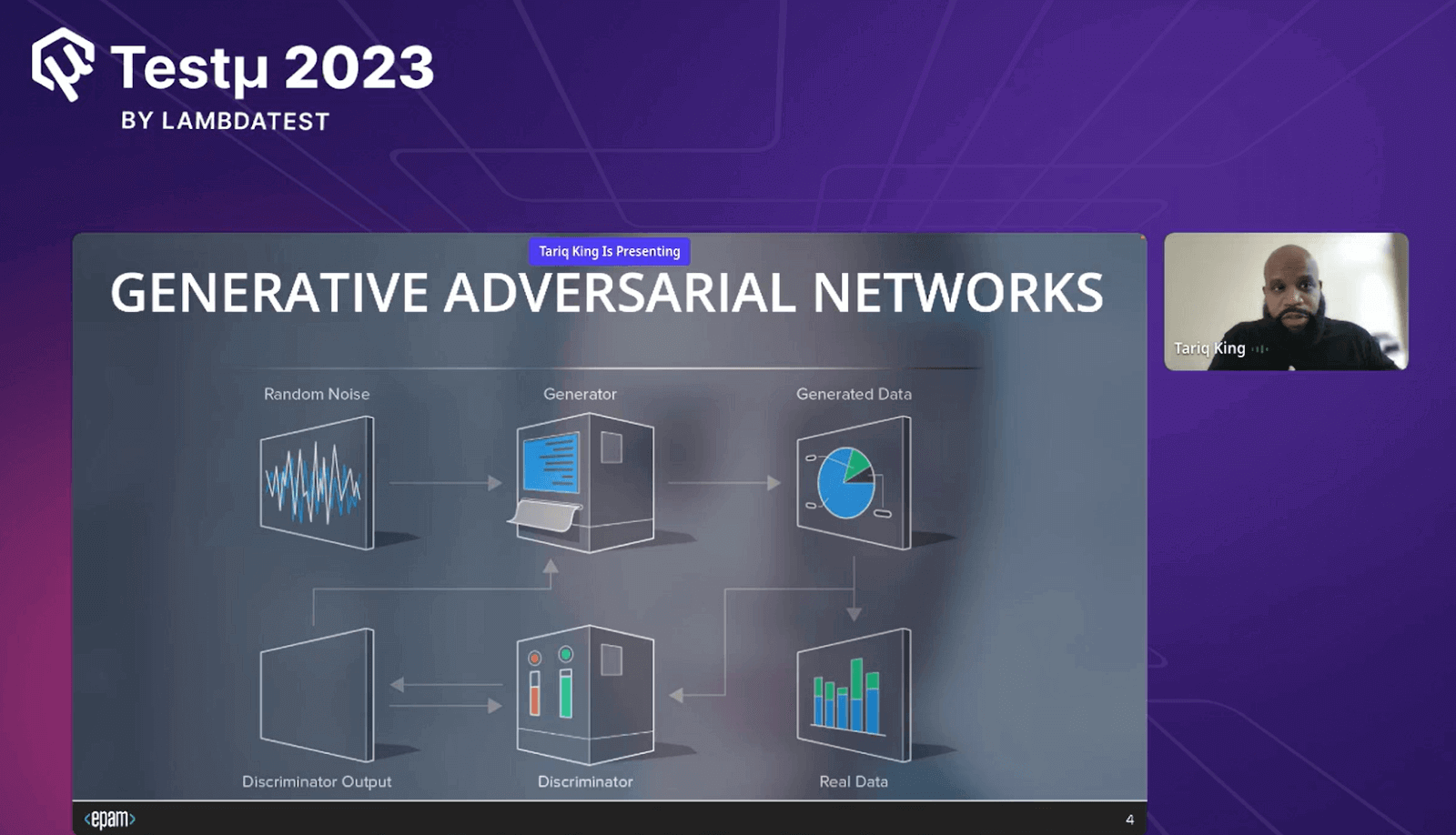
Generative Adversarial Networks are a big step forward in AI. They use two neural networks to create and improve different kinds of data. This new method lets us make realistic content, and it also makes us think about finding the right balance between AI-created stuff and real authenticity.
Major Components of GANs
Tariq further elaborated on the components of GANs. He highlighted the actual working of the generator and discriminator as components of GANs and what GANs have achieved so far.
- Generator: Think of the Generator as an artist creating fake things that look real. It gets good at making fakes that trick the detective. Once it succeeds, we have an intelligent GAN ready to go!
- Discriminator: Picture the Discriminator as a detective who figures out what’s genuine and fake. It learns from real things and gives a hand to the Generator.
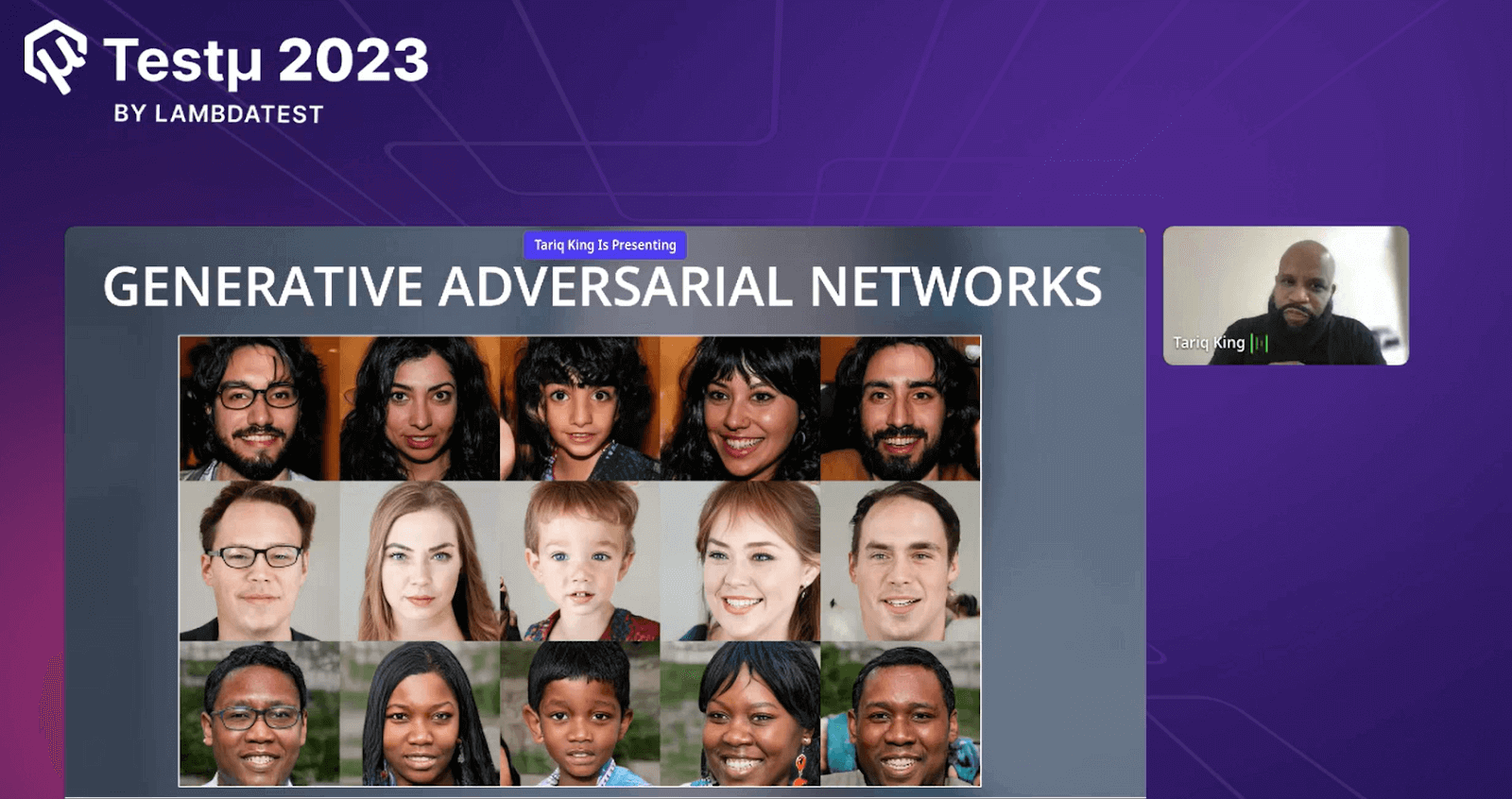
GANs have shown remarkable outcomes in different areas, like making images, writing text, and even producing videos. They’ve been used to create real-looking images, make deep fakes, improve blurry pictures, and more. GANs have pushed ahead in making things and have given us new ways to use creativity in AI.
Generative Pre-trained Transformer
Generative Pre-trained Transformers, or GPT, are like intelligent machines that use a unique design called a transformer. They’re a big deal in AI and help create things like ChatGPT. These models let apps make text that looks human and even chat with us. Companies in many fields use GPT and similar AI to make chatbots, summarize text, create stuff, and find things quickly.
Tariq mentioned how the world was pleased to witness ChatGPT functioning, which had reversed the situation and made the tasks of content writers more convenient.
GPT-3 – GPT-4
Tariq explained to the audience how the architecture of GPT-4 is much more improvised when compared to GPT-3. He also mentioned the difference between.
| Aspect | GPT-3 | GPT-4 |
|---|---|---|
| Dissimilarities | Not immediately apparent | Enhanced reliability, creativity, intelligence |
| Demonstrated by | Benchmark assessments | Superior outcomes in benchmark tests |
| Main Contrast | Limited to text inputs | Multimodal capability (text and images) |
How can we leverage Generative AI to improve productivity?
Generative AI can boost productivity by helping create content, designs, and ideas faster. It’s like having an AI assistant that generates things, freeing our time for more critical tasks.
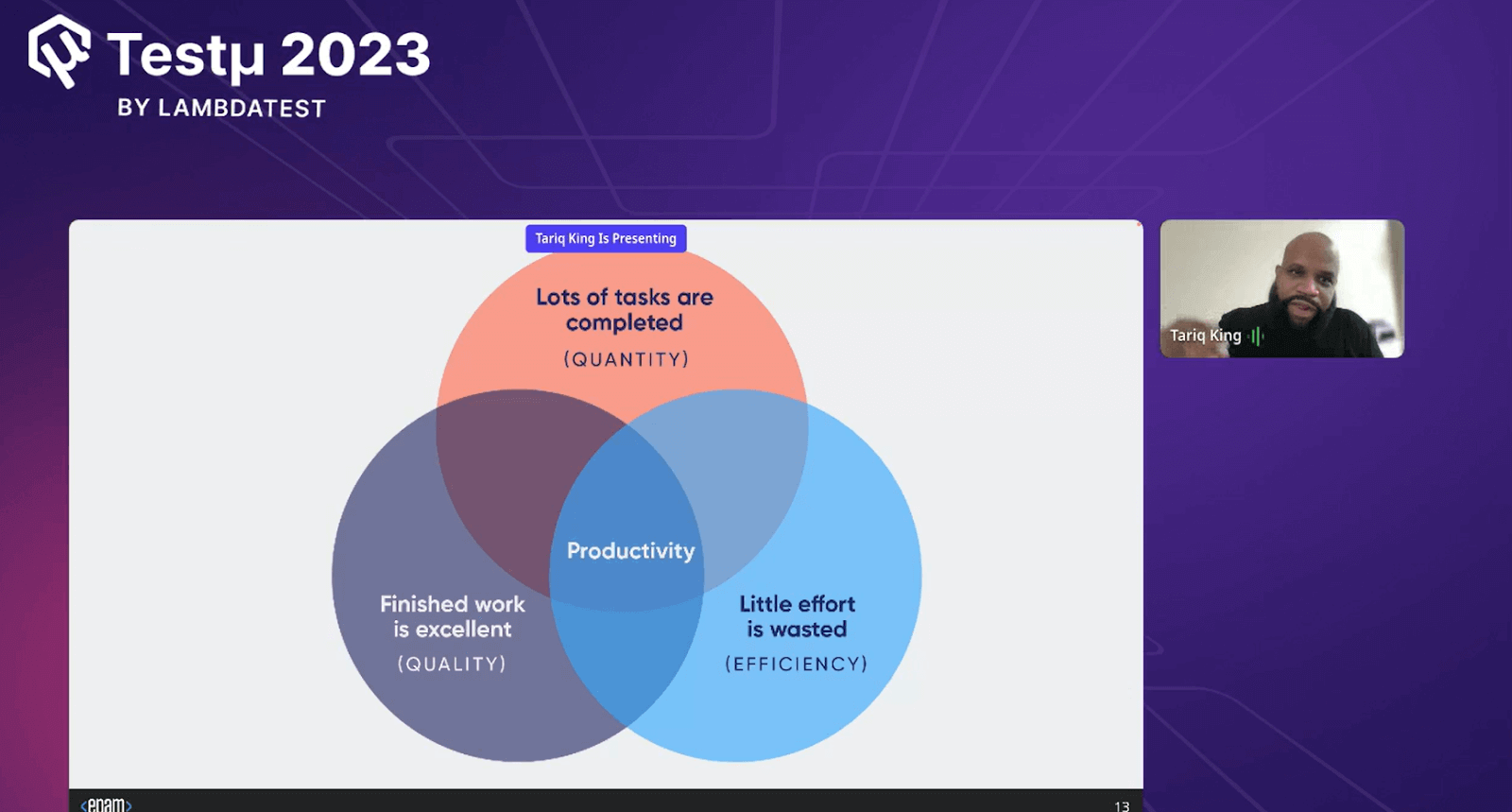
Tariq mentioned improving and managing productivity with three simple processes to maintain Quantity, Quality, and Efficiency. He also briefed a little on three aspects of productivity.
- Quantity: Quantity is good—it means we’re getting things done. But don’t forget, too much can tire us out and affect quality.
- Quality: It’s about doing things well from the start, which saves time and builds our reputation.
- Efficiency: Working smarter, not harder. Finding better ways to do things saves time and lets us focus on what truly matters.
AI as a force multiplier
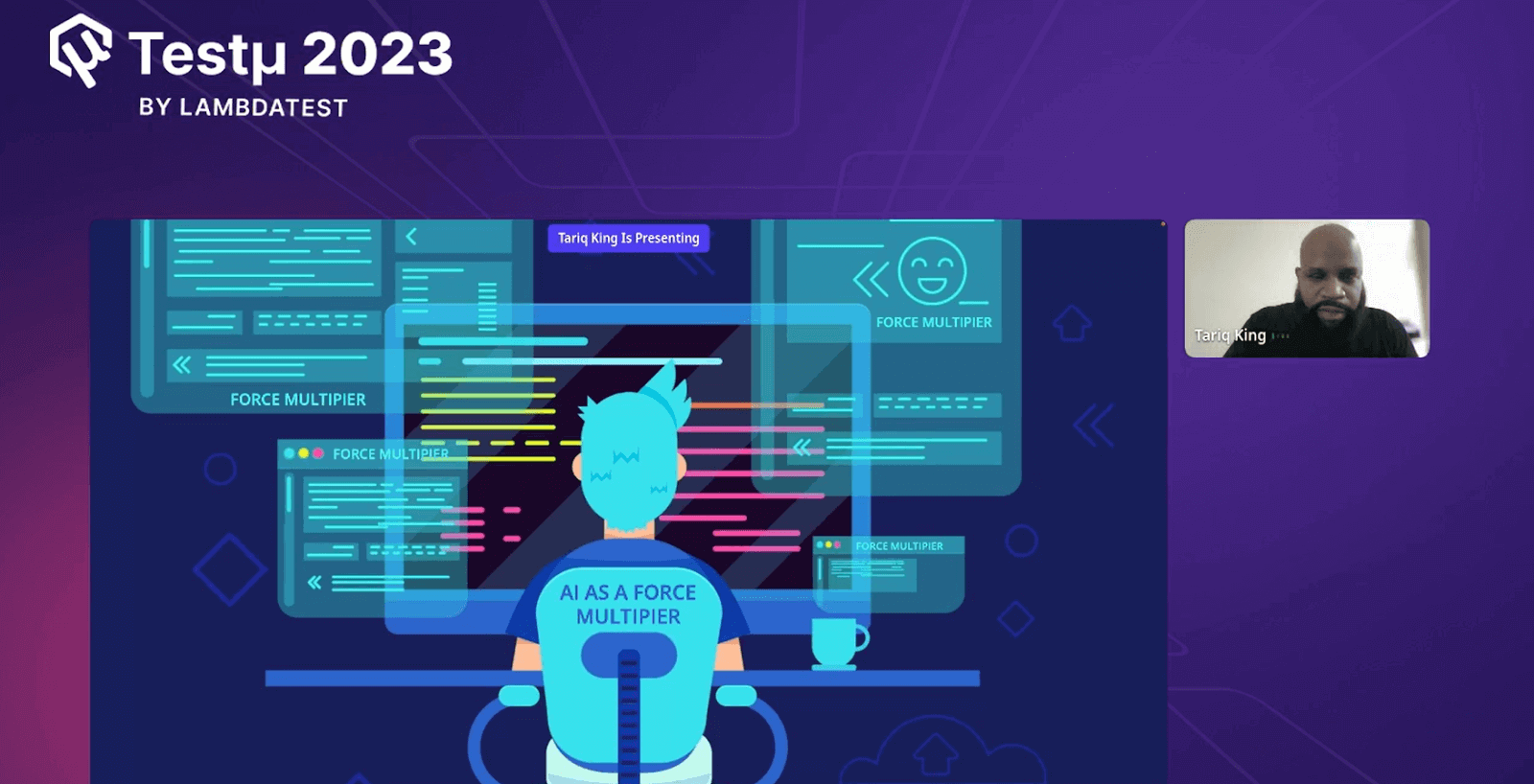
AI is a force multiplier, enhancing our capabilities and impact. It amplifies what we can achieve by automating tasks, providing insights, and enabling innovation at an unimaginable scale.
Co-pilot impact on Dev productivity
Tariq shared insights based on his past experiences regarding how the AI-native coding assistant has transformed developer productivity significantly. This tool expedites code generation, elevates quality assurance by providing best practice suggestions and early error detection, shortens debugging periods, and supports skill growth through clear explanations and documentation.
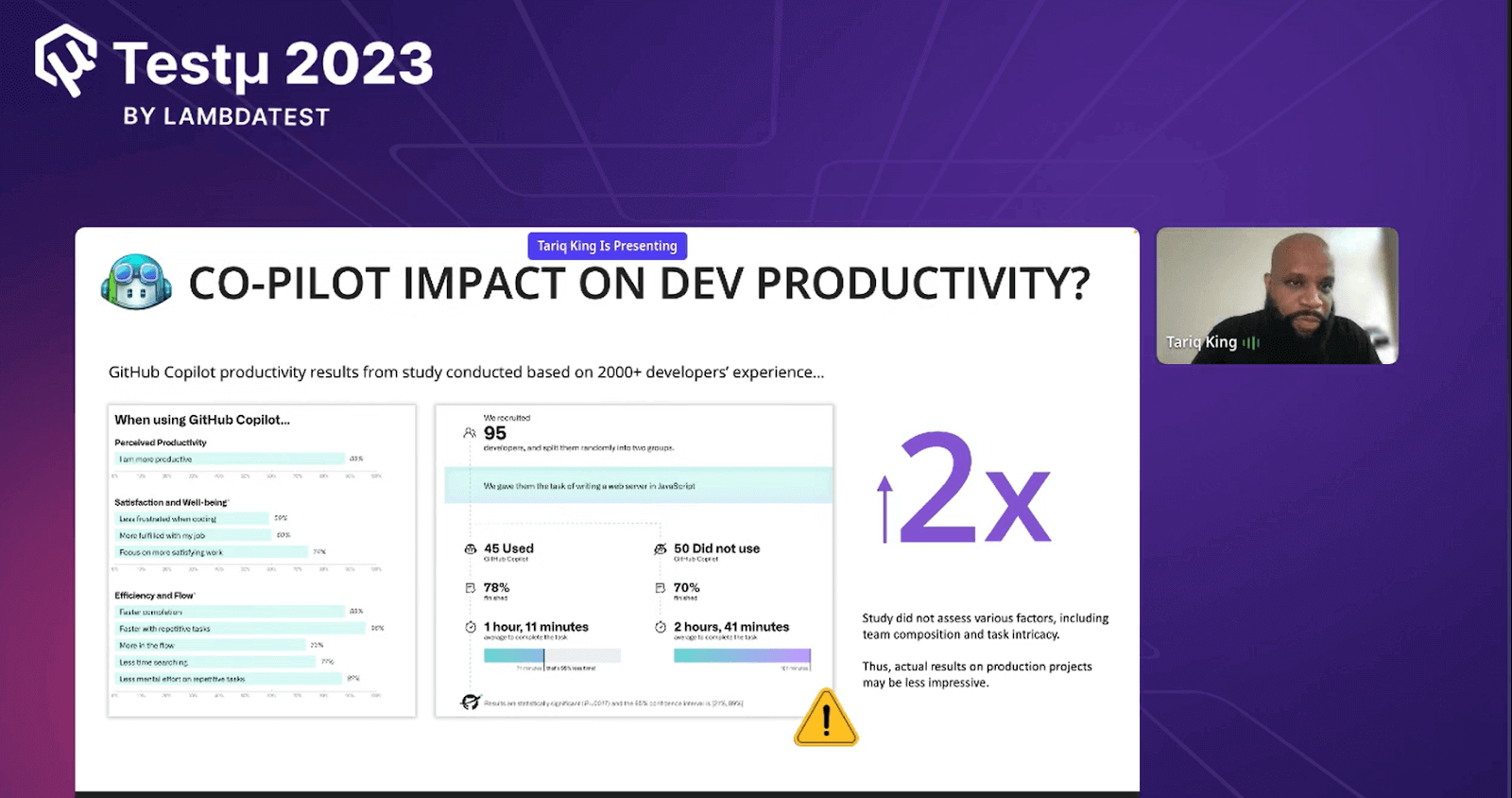
Copilot also plays a crucial role in fostering collaboration among developers, expediting the prototyping phase, ensuring code consistency, and ultimately amplifying overall productivity. It’s worth noting that Copilot doesn’t replace human creativity but instead empowers developers to streamline their work, concentrate on vital development aspects, and has emerged as a pivotal innovation in the software development realm.
Gen-AI benefits come with challenges
Tariq highlighted several benefits of Gen-AI, but these advantages came with their own set of challenges, as observed in past experiences.
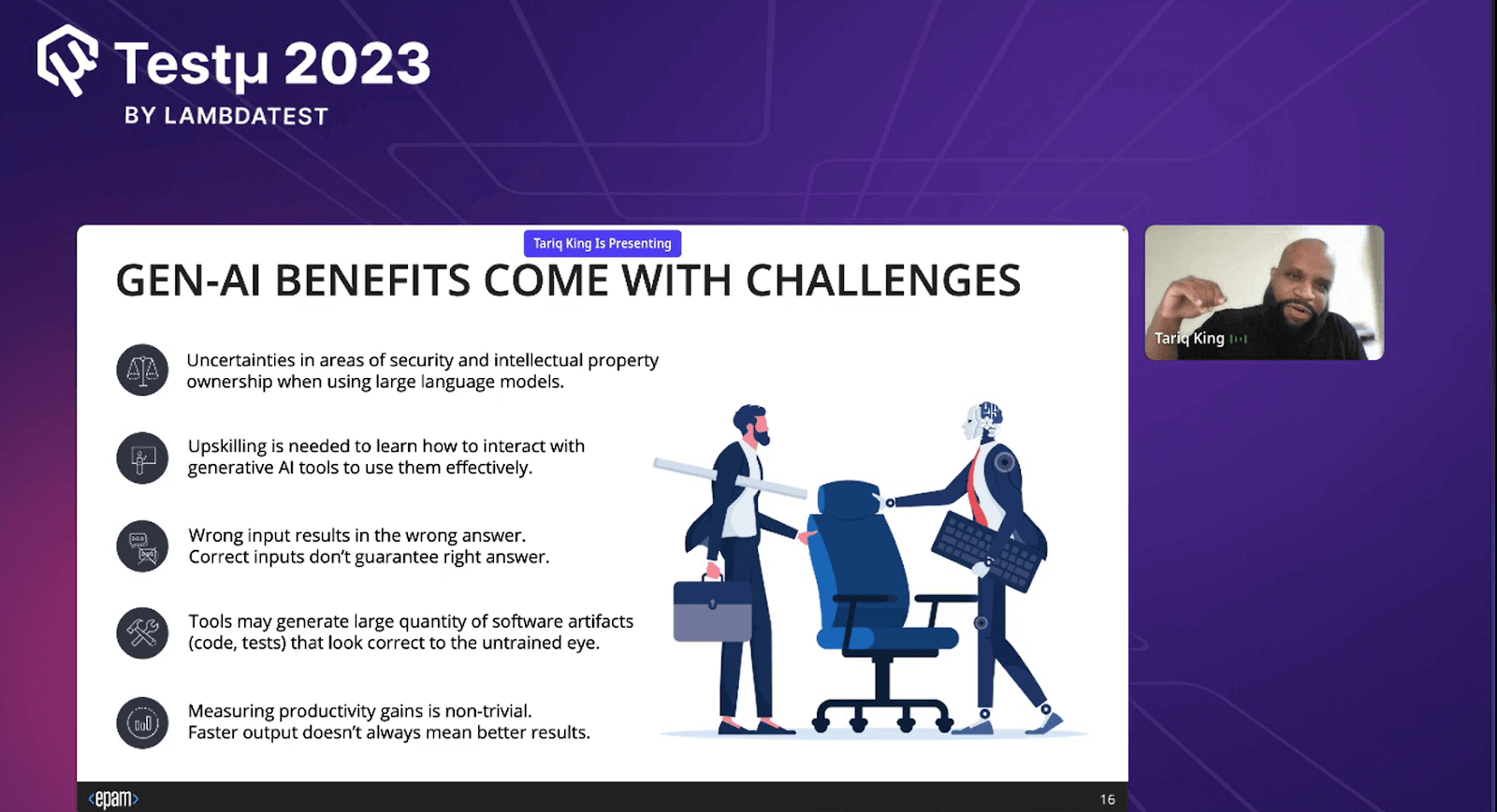
- Uncertainties in security and intellectual property ownership when using large language models.
- Upskilling is needed to learn how to interact with generative Al tools to use them effectively.
- Wrong input results in the wrong answer. Correct inputs don’t guarantee the right answer.
- Tools may generate large quantities of software artifacts (code, tests) that look correct to the untrained eye.
- Measuring productivity gains is non-trivial. Faster output only sometimes means better results.
Software Engineering Productivity
While reflecting on the evolution of software engineering productivity, Tariq pointed out that his journey had witnessed several significant developments in the past. These advancements encompassed various facets of the field, with one notable aspect being the transition towards agile methodologies, which replaced traditional, linear development processes with iterative and collaborative approaches. Additionally, integrating DevOps practices, automation tools, and establishing continuous integration/continuous deployment (CI/CD) pipelines played a pivotal role in streamlining software development and deployment processes.
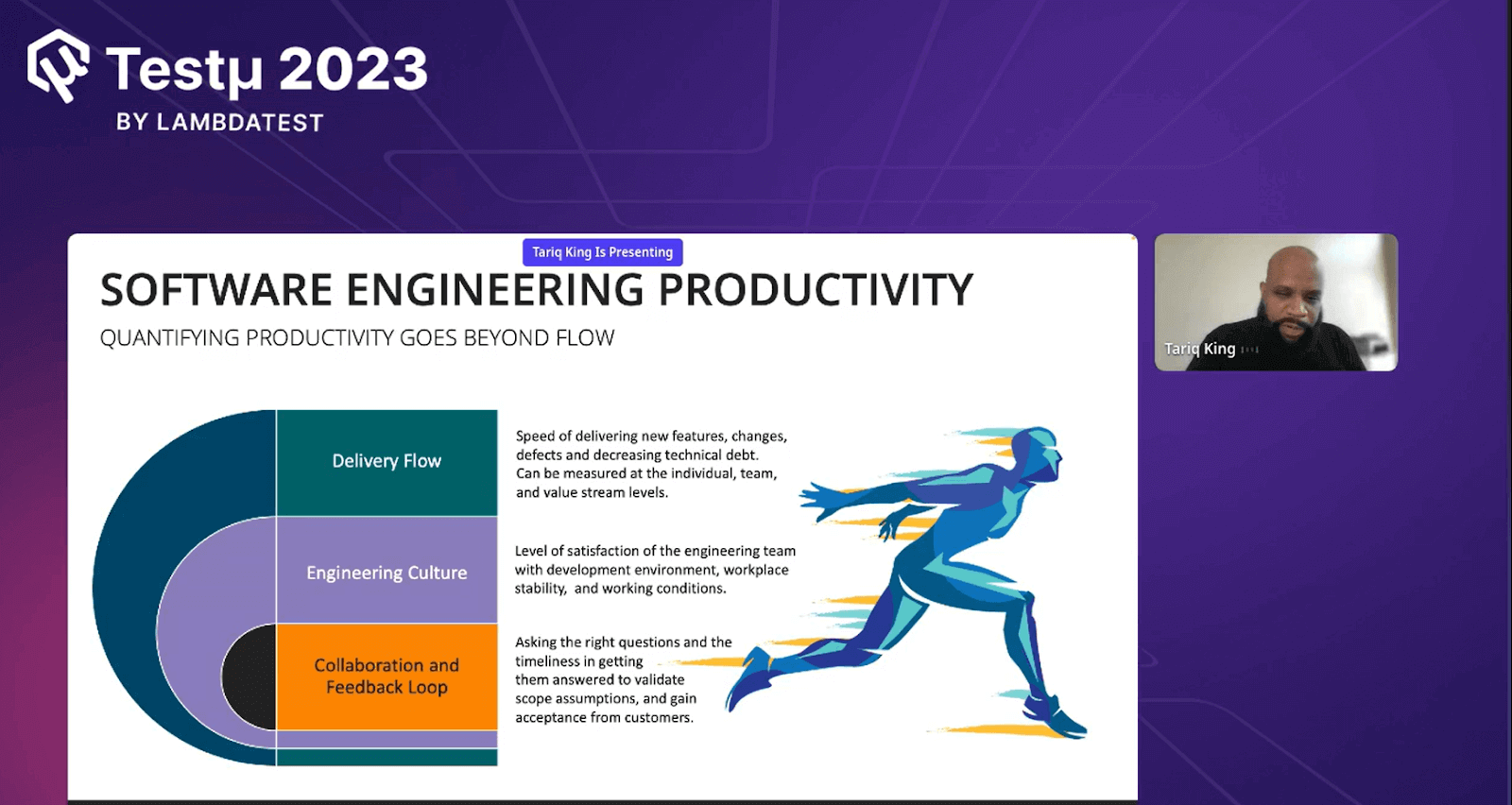
Based on Tariq’s past experiences, it was clear that the emergence of cloud computing and containerization technologies had revolutionized how software applications were hosted and scaled, leading to improved efficiency and scalability. Incorporating artificial intelligence and machine learning has also made a profound impact, as AI-powered tools assist in tasks such as code generation, automated testing, and predictive maintenance, ultimately enhancing developer productivity.
Furthermore, the open-source movement significantly transformed the landscape, allowing developers to leverage extensive libraries and frameworks, thus expediting development cycles. Recognizing the growing importance of code quality, security, and robust testing methodologies became increasingly prominent as the software development field continued to evolve.
Throughout this transformative journey, Tariq acknowledged the need for constant upskilling and adaptation to remain competitive and effective in the ever-changing landscape of software engineering productivity.
Tariq discussed some significant aspects. First, the Delivery Flow concept represented how they can manage the work, from planning through the building process and up to delivering software. The goal was to make this process smoother and more efficient.
- Engineering Culture: This was about how they collaborated and what values they upheld as a team. The focus in the past was on strengthening and nurturing the team culture, making it more supportive.
- Collaboration: This revolved around how they cooperated, shared ideas, and assisted when what was needed. The efforts were aimed at enhancing teamwork to achieve better results.
- Feedback Loop: This means learning from mistakes and continually improving. They looked back at past actions, gathered feedback, and used it to enhance processes and outcomes.
Generative AI for Productivity
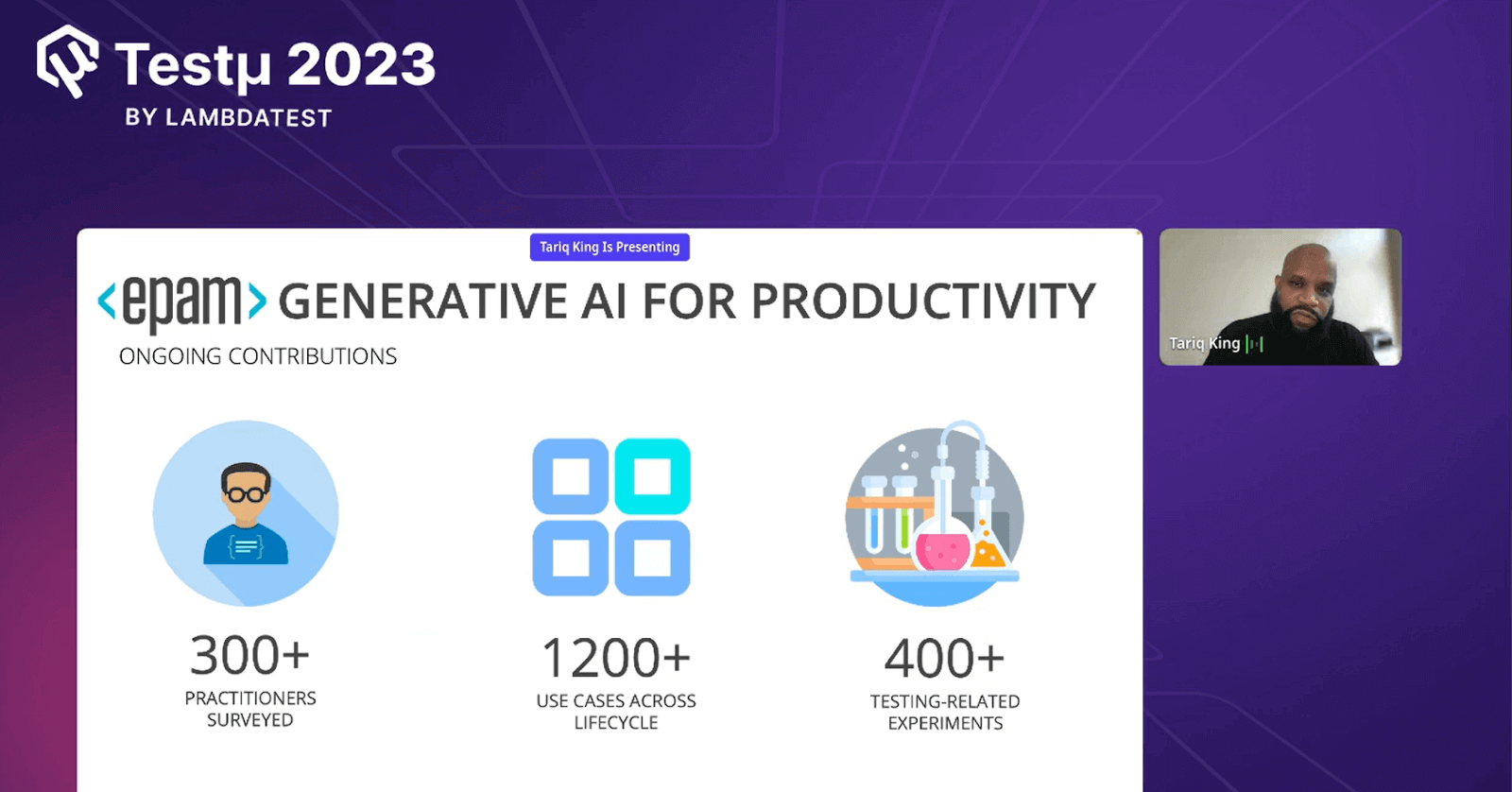
Tariq explained how Gene-AI has greatly impacted people using it. He explained Generative AI emerged as a potent tool for simplifying tasks across various fields. It could automatically generate content, streamline repetitive activities, and aid creative endeavors. Users of Generative AI noted that it accelerated their work, making it more efficient and leading to improved results and smoother work processes.
AI-Assisted Software Engineering
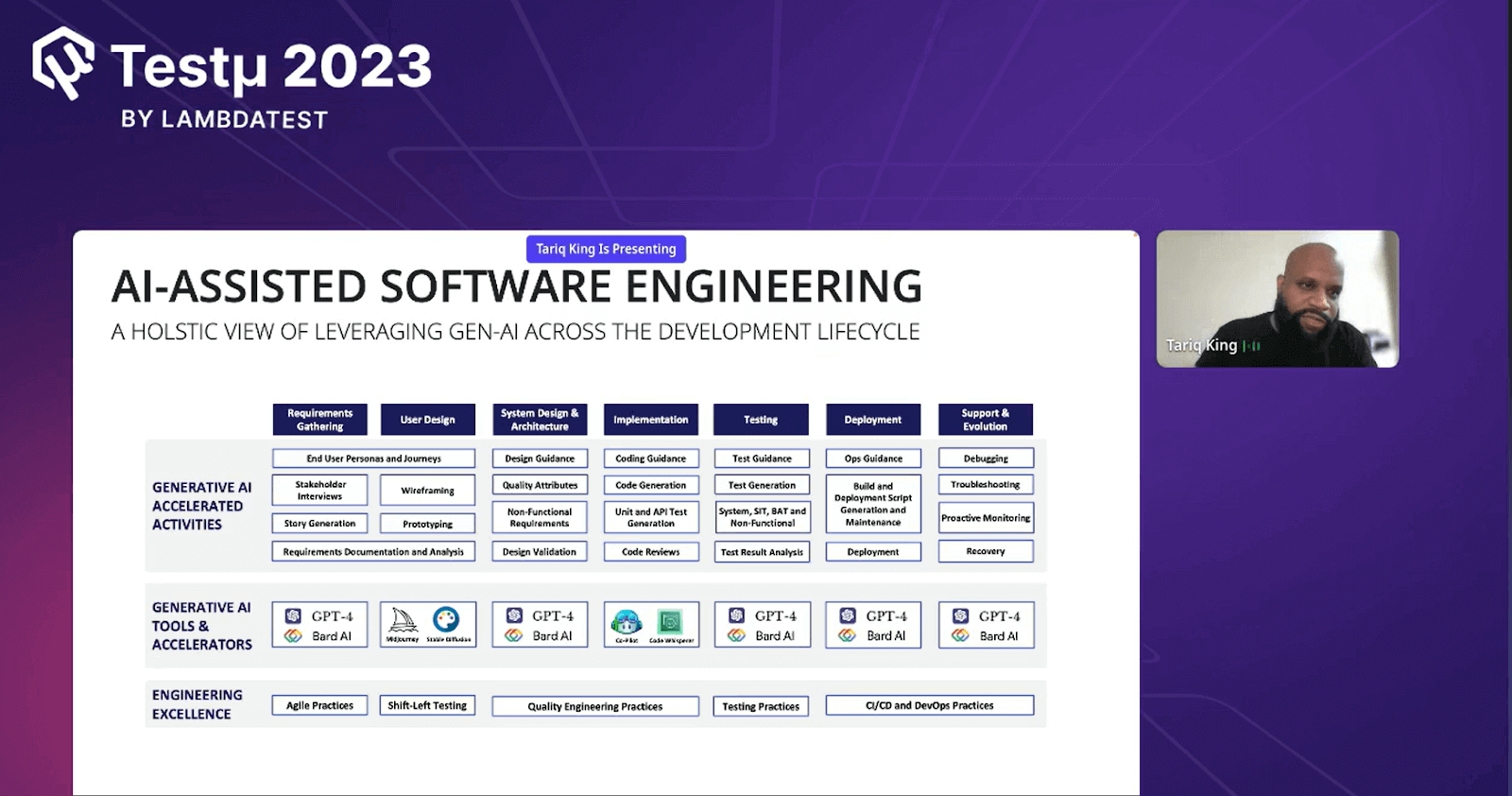
Tariq provided a detailed explanation of AI-assisted software engineering, which involved incorporating artificial intelligence (AI) technologies into the software development process in the past. The primary goal was to boost efficiency, productivity, and the overall quality of software products. To achieve this, AI tools and algorithms were deployed to automate tasks, offer insights, and aid developers across various software engineering tasks. This encompassed various applications, including code generation, automated testing, code review, bug detection, and project management. The overarching objective was to empower software development teams by reducing manual work, detecting potential issues early, and ultimately delivering enhanced software solutions in the past.
Experimenting Across Disciplines
Tariq explained that experimenting across disciplines referred to conducting experiments or exploring ideas in areas of study or expertise not typically related to one’s primary field. This approach involved crossing boundaries between different disciplines, such as science, technology, arts, and humanities, to encourage innovation, foster creativity, and discover new perspectives.
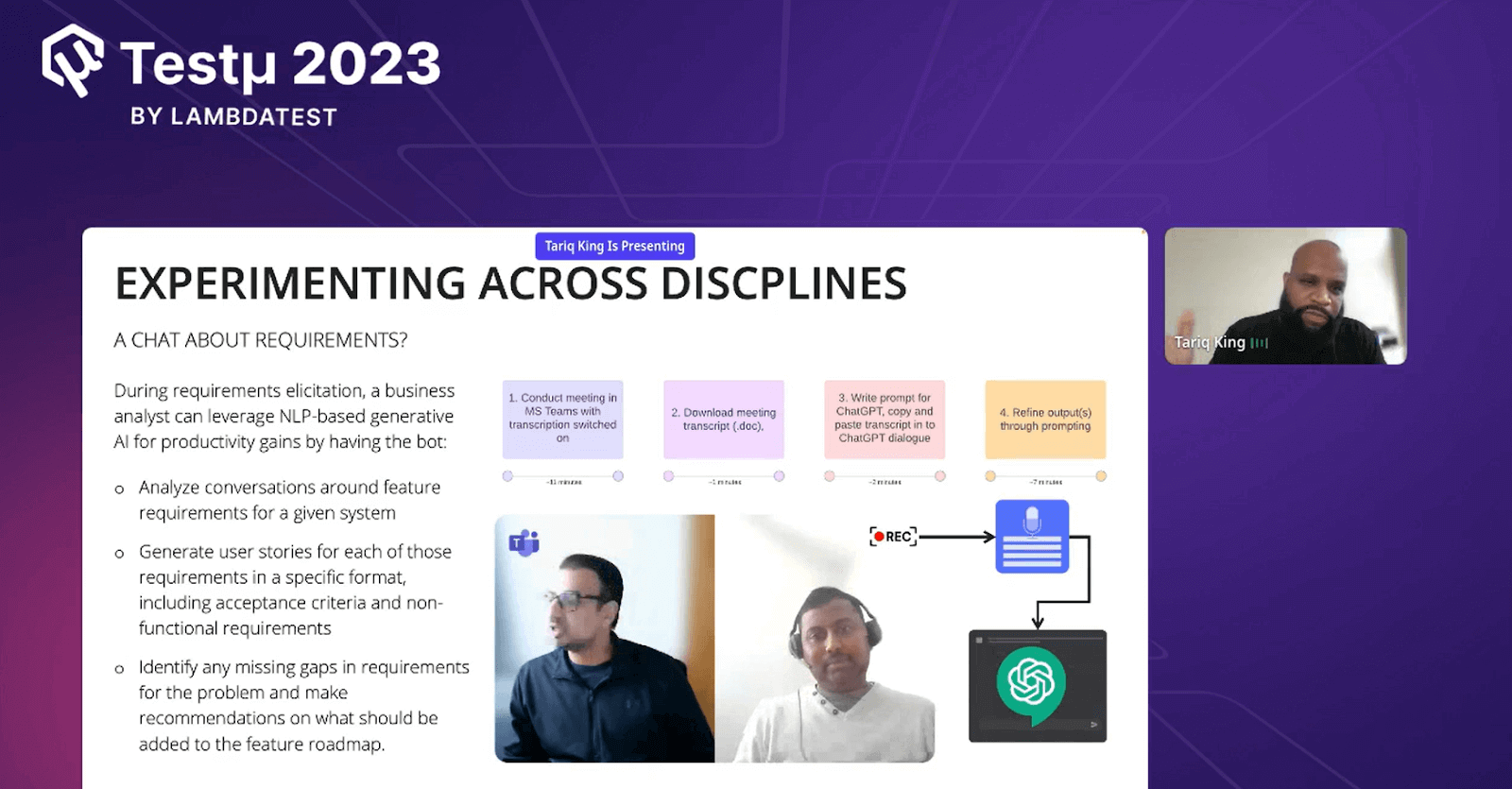
By venturing into diverse domains, individuals and teams could gain fresh insights, apply unique approaches, and potentially uncover solutions that might not have been apparent within the confines of a single discipline. This interdisciplinary experimentation often resulted in the development of novel ideas, products, and solutions that benefited various fields and industries.
Area Specific Use Cases: Testing
Tariq with his testing experience gave insight into the use cases he encountered along with examples for better understanding.
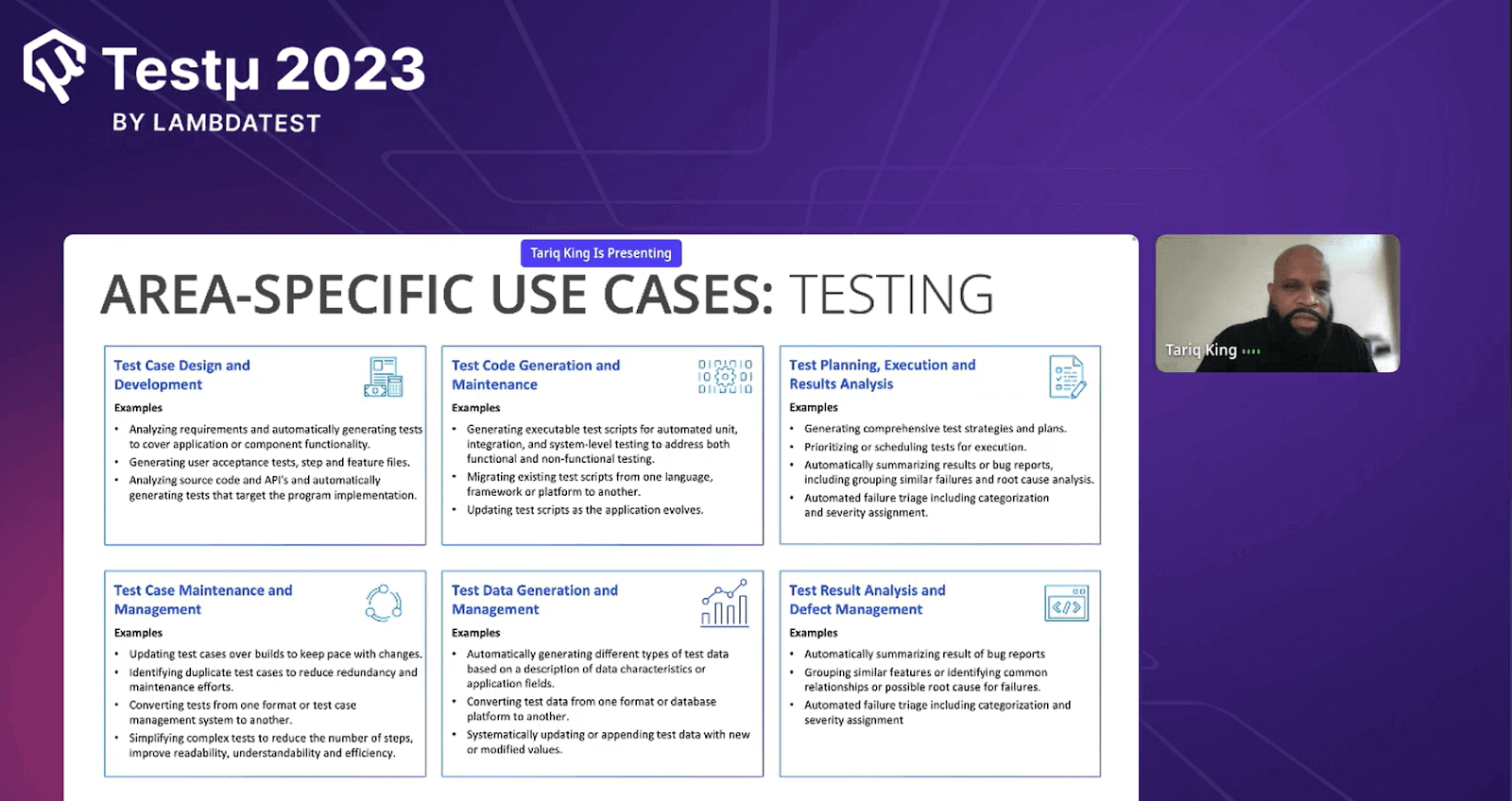
Test Case Design and Development: Test case design and development involved creating detailed instructions for testing software. These instructions outlined what inputs to use, what outcomes to expect, and how to evaluate the software’s performance. It was essential to ensure the software worked as intended and met quality standards in the past.
Example:
- Analyzing requirements and automatically generating tests to cover application or component functionality.
- Generating user acceptance tests, steps, and feature files.
- Analyzing source code and API’s and automatically generating tests targeting program implementation.
Test Code Generation and Maintenance: Created and managed special code for testing software. This code ran different tests, pretended to be a user, and ensured the software worked correctly. It was important to ensure the software was good quality and didn’t have problems. We had to keep updating this code when the software changed to keep testing it properly.
Example:
- Generating executable test scripts for automated unit, integration, and system-level testing to address functional and non-functional testing.
- Migrating existing test scripts from one language, framework, or platform to another.
- Updating test scripts as the application evolves.
Test Planning, Execution, and Results Analysis: Test planning entailed creating a strategy for software testing, outlining what to test and how. Test execution was the phase where tests were performed, results were recorded, and defects were identified. Results analysis assessed software quality, checked for issues, and informed decisions about readiness for release. These steps were vital for ensuring high-quality software.
Example:
- Generating comprehensive test strategies and plans.
- Prioritizing or scheduling tests for execution.
- Automatically summarizing results or bug reports, grouping similar failures, and analyzing root causes.
- Automated failure triage, including categorization and severity assignment.
Test Case Maintenance and Management:
Example:
- Updating test cases over builds to keep pace with changes.
- Identifying duplicate test cases to reduce redundancy and maintenance efforts.
- Converting tests from one format or test cases management system to another.
- Simplifying complex tests to reduce the number of steps and improve readability, understandability, and efficiency.
Test Data Generation and Management: Managing and maintaining test cases was about keeping them organized, up-to-date, and well-documented for software testing. This meant ensuring test cases still worked as the software changed, keeping track of different versions, and recording any modifications or enhancements. Proper test case maintenance and management were crucial to effective software testing, allowing teams to identify and resolve issues efficiently during the software development.
Example:
- Automatically generating different types of test data based on a description of data characteristics or application fields.
- Converting test data from one format or database platform to another.
- Systematically updating or appending test data with new or modified values.
Test Result Analysis and Defect Management: The focus was on analyzing software testing results and managing any defects or issues discovered. This involved closely examining test outcomes, documenting and categorizing defects, setting priorities, and tracking their resolution. These practices were essential for upholding software quality and ensuring that problems were dealt with promptly, contributing to developing a dependable final product.
Example:
- Automatically summarizing results of bug reports.
- Grouping similar features or identifying common relationships or possible root causes for failures.
- Automated failure triage including categorization and severity assignment.
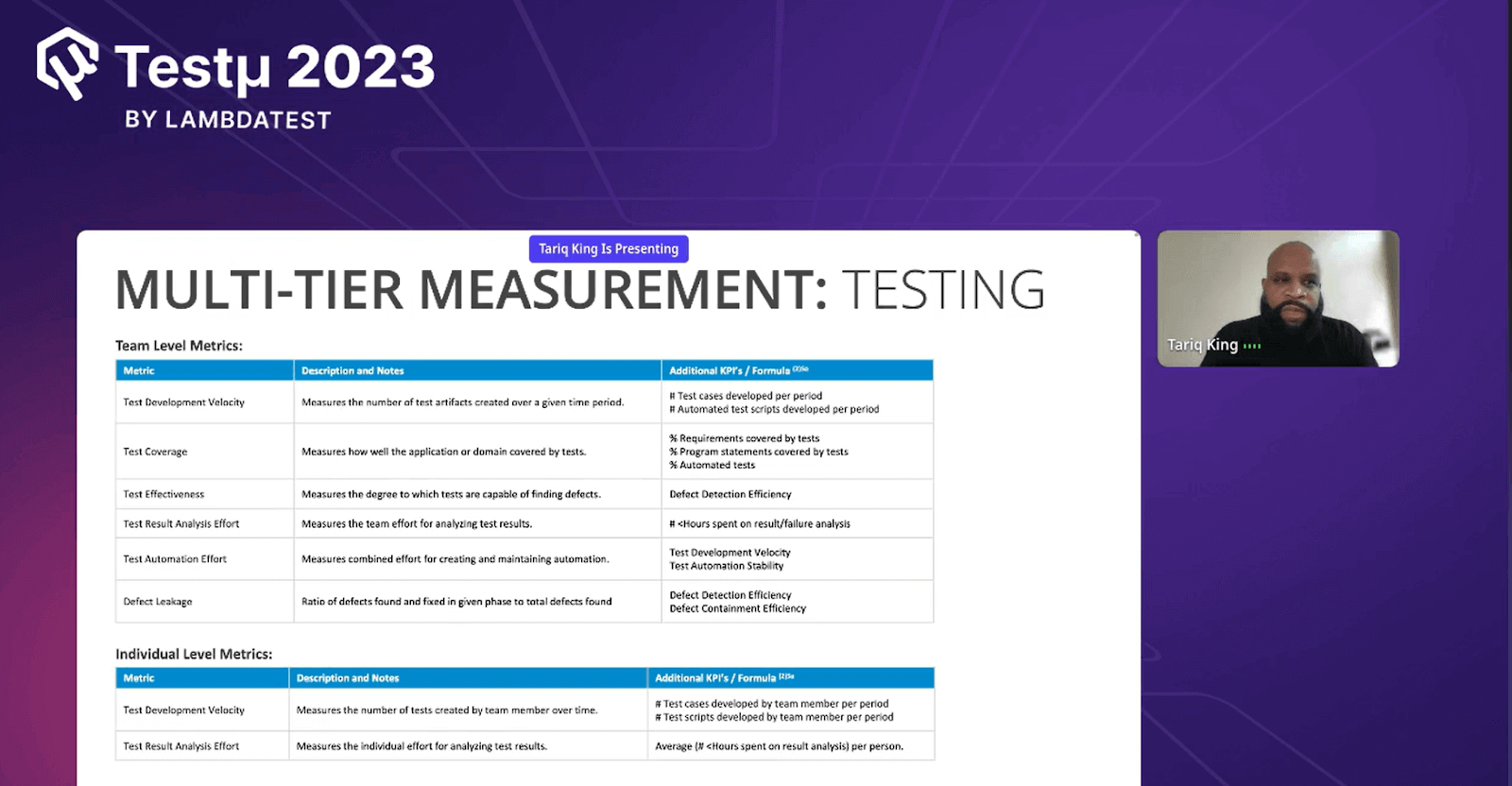
Multi-tier measurement: Testing
Tariq provided an engaging explanation of multi-tier measurement in testing, highlighting its importance and the techniques it encompassed. This testing approach, employed in the past, utilized a layered assessment to evaluate different facets of software quality and performance. It allowed for a comprehensive examination of various levels within a software application, spanning from the user interface to the backend systems. This approach was instrumental in identifying potential issues and optimizing the software to enhance the user experience and overall functionality.
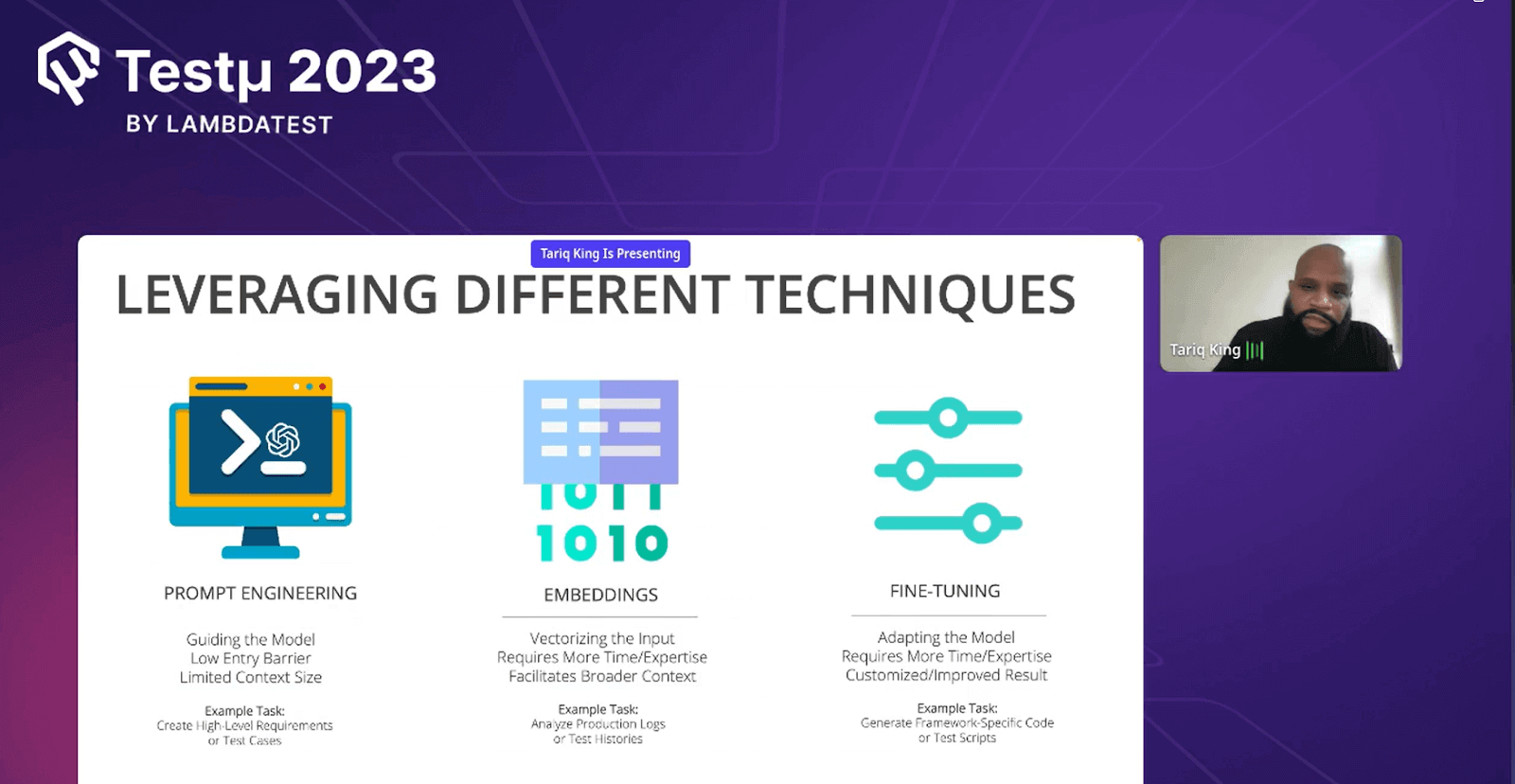
Leveraging Different Techniques
Tariq expertly explained leveraging techniques such as prompt engineering, embeddings, and fine-tuning. He emphasized that these techniques played a pivotal role in enhancing the capabilities of artificial intelligence models.
- Prompt engineering: Prompt engineering involves crafting precise instructions or queries to guide AI models in generating desired outputs.
- Embeddings: Embeddings represent words or concepts numerically, enabling AI models to effectively understand and work with language.
- Fine-tuning: Fine-tuning, on the other hand, allows for customizing pre-trained AI models to perform specific tasks, making them more adaptable and proficient in various applications.
Tariq highlighted that combining these techniques was instrumental in achieving impressive results in the AI field.
Innovating with Gen-AI tools
Tariq conveyed the concept of innovating with Gen-AI tools. He emphasized how these tools opened up exciting possibilities for innovation in various fields. By harnessing the power of Generative AI, professionals could explore creative solutions, automate complex tasks, and unlock new avenues for problem-solving.
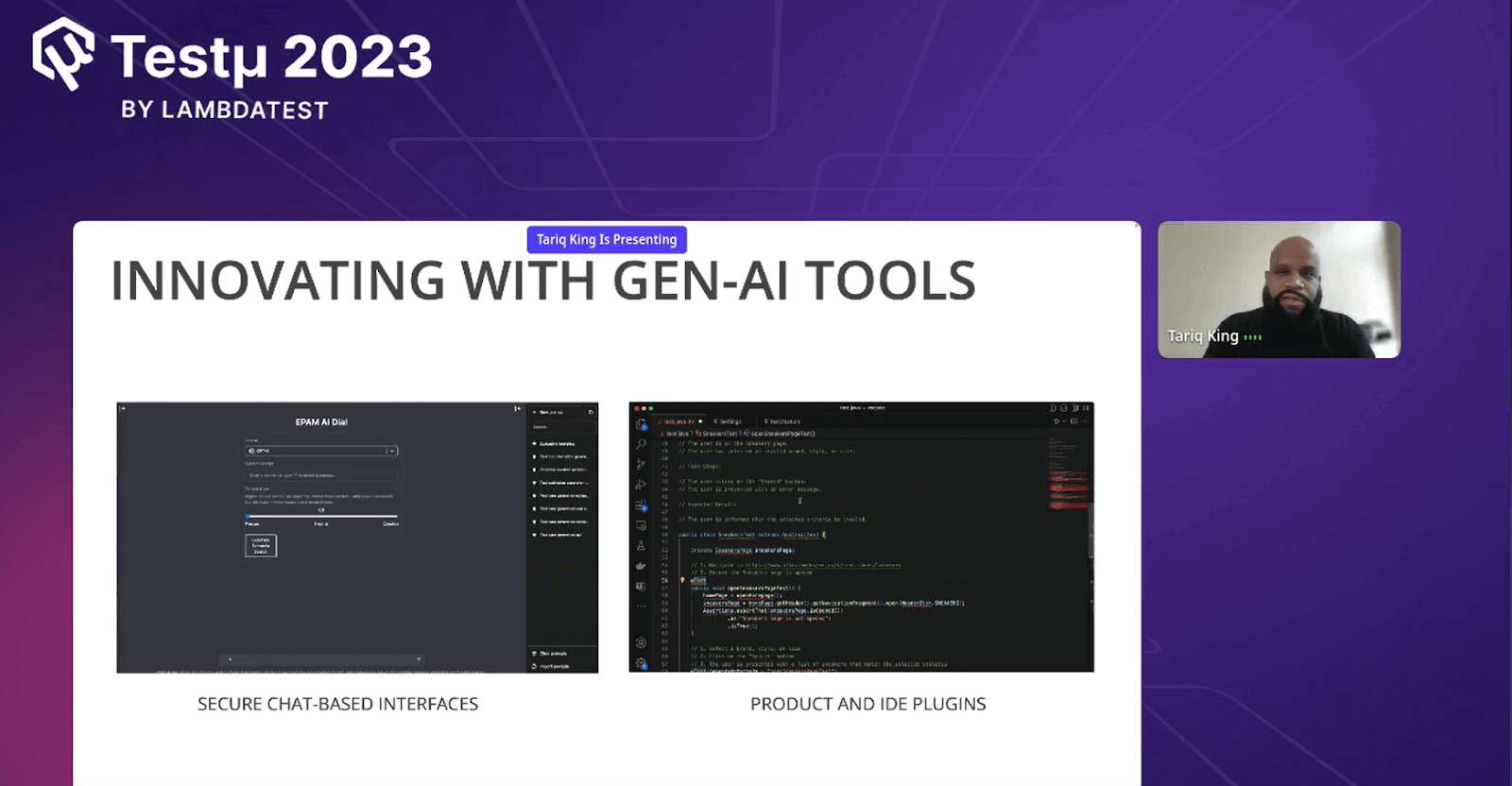
Tariq highlighted that combining human ingenuity and AI capabilities was driving groundbreaking innovation, transforming industries, and reshaping how we approach challenges in a rapidly evolving technological landscape.
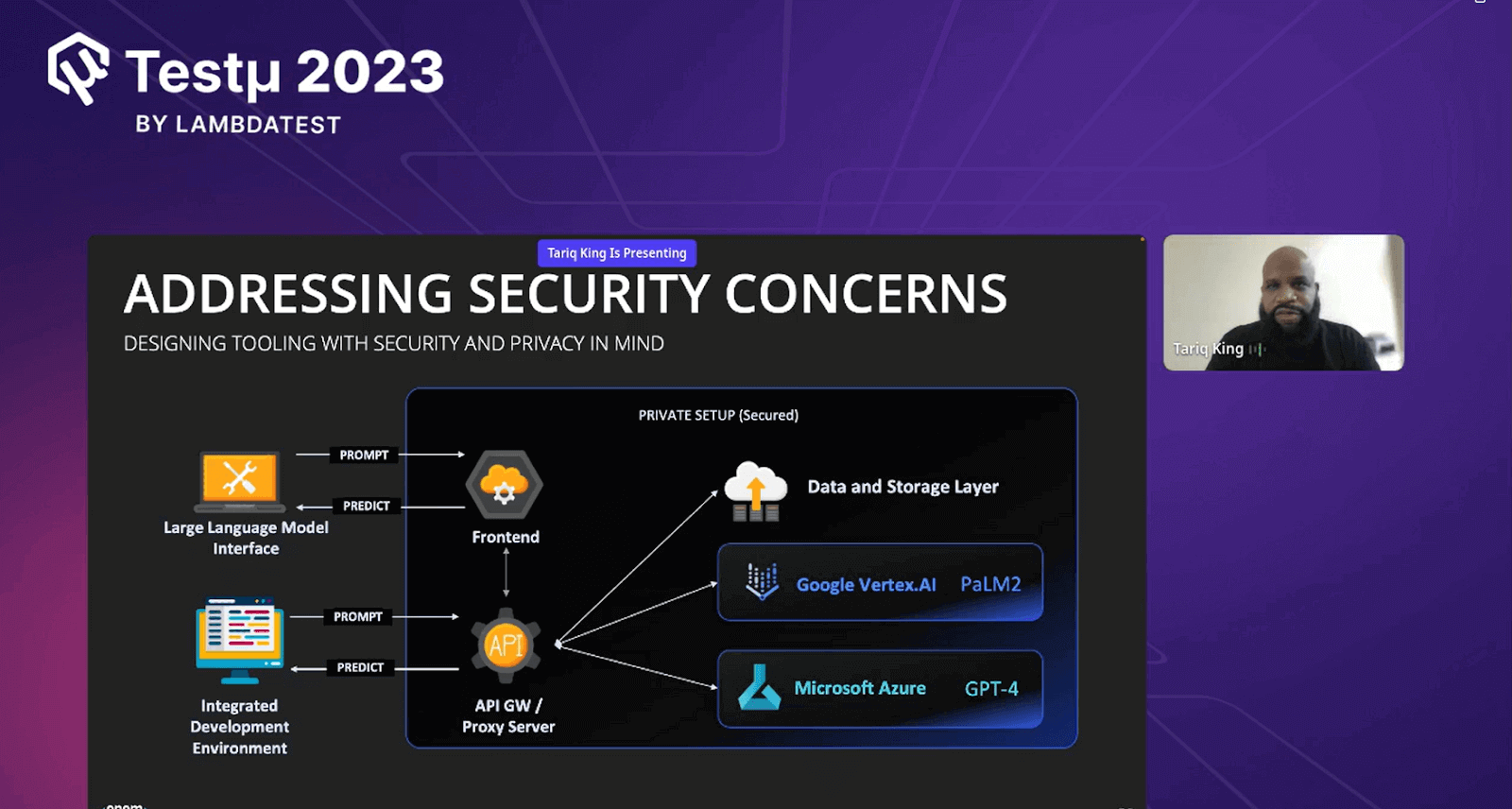
Security Concerns
Tariq provided insights into security concerns, underlining their significance in various contexts. He addressed the security issues as a critical aspect of technology and information protection. Tariq stressed that understanding and mitigating these concerns was essential to safeguarding data, systems, and individuals from potential threats and vulnerabilities. His insights highlighted the importance of prioritizing security measures in our digital age.
Future trends in AI-Assisted Engineering.
Tariq offered valuable insights into future trends in AI-assisted engineering. He said AI would increasingly play a pivotal role in optimizing and automating engineering processes, from design to testing and maintenance.
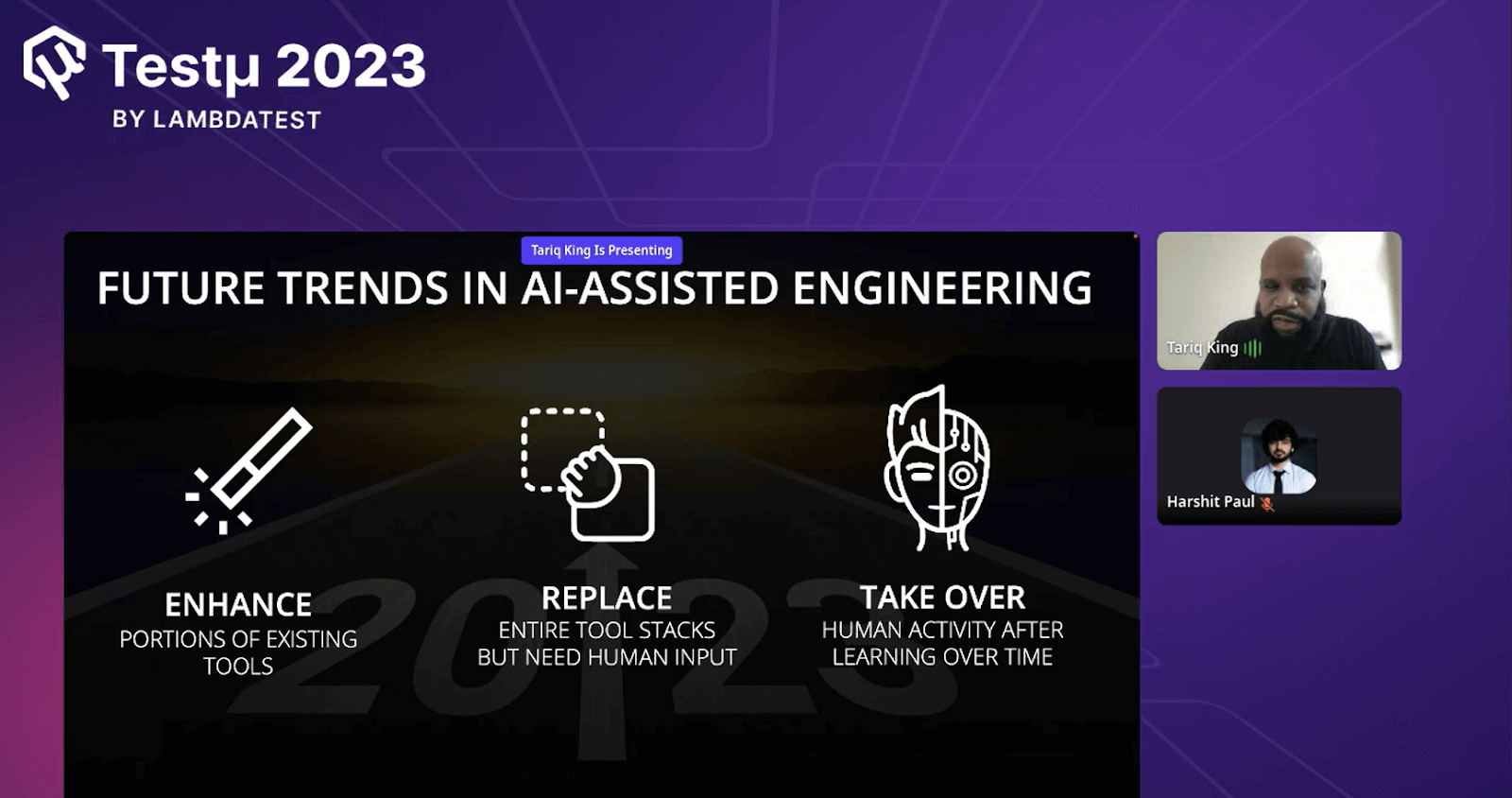
He also highlighted the potential for AI to enhance decision-making, improve efficiency, and enable innovative solutions across various engineering domains. His insights underscored the exciting prospects that AI-assisted engineering holds for shaping the future of technology and innovation.
With the rise of AI in testing, its crucial to stay competitive by upskilling or polishing your skillsets. The KaneAI Certification proves your hands-on AI testing skills and positions you as a future-ready, high-value QA professional.
Tariq gave a fantastic session on how AI can Hype accelerate the future. He winded up his session by answering some questions from attendees.
Q & A Session
- In your experience, what are the realistic expectations for the actual acceleration that generative AI can provide in software development?Tariq: Generative AI can accelerate software development by automating tasks and suggesting code improvements. However, it’s important to understand that it complements human developers rather than replacing them, and its impact may vary depending on the specific project and its complexity. Realistic expectations involve harnessing AI as a productivity booster while acknowledging its limitations.
- What’s the best way to introduce AI into an engineering and QA team?Tariq: The most effective approach to introducing AI to an engineering and QA team is through gradual steps. Begin with education and training, identify practical use cases, pilot AI tools, gather feedback, and involve team members in decision-making. This collaborative approach fosters a culture of AI adoption and ensures alignment with the team’s goals.
- How do we test AI using AI in Automation?Tariq: Testing AI with AI in automation entails using trained AI models to validate and assess the performance of other AI systems. This approach involves creating test datasets, simulating real-world scenarios, and utilizing AI algorithms to detect anomalies. It ensures more thorough evaluations while adapting to evolving AI capabilities.
- What challenges or limitations have you encountered when integrating Generative AI into software development workflows?Tariq: Integrating Generative AI into software development workflows often presents challenges related to code alignment, biases, and quality. Managing the learning curve and finding skilled AI practitioners are also limitations to consider when implementing AI in these workflows.
Have you got more questions? Drop them on the TestMu AI Community.


Did you find this page helpful?
More Related Hubs
TestMu AI forEnterprise
Get access to solutions built on Enterprise
grade security, privacy, & compliance
- Advanced access controls
- Advanced data retention rules
- Advanced Local Testing
- Premium Support options
- Early access to beta features
- Private Slack Channel
- Unlimited Manual Accessibility DevTools Tests