Inbound Phone Agent Testing With TestMu AI
An inbound phone agent answers calls. To test one, the TestMu AI Agent Testing Platform places a real call to the agent's phone number, and a simulated caller drives the scenario. Typical use cases are IVR menus, inbound support, appointment scheduling, and billing.
Inbound testing runs in two modes: pre-evaluation with live simulated calls, and post-evaluation on recordings from real production calls.
Pre-Evaluation: Live Test Calls
In pre-evaluation, the platform simulates customers calling your voice agent, then evaluates the resulting conversations.
Phone Number Management. Register the numbers your agent answers on, with country code selection (20+ countries), a default number, masked display, and edit or delete.
Scenario Management. Generate up to 20 inbound scenarios with configurable personas, languages, and special instructions, or create them manually. Choose from available personas or create custom ones.
Voice Configuration (per scenario). Select a voice from the library with audio preview, enable one of 15 background-noise presets, set the response timing (0.5 to 5.0 seconds) and a maximum call duration (60 to 1800 seconds), and choose who speaks first.
Agent Profiles. Create reusable caller personas with name, phone number, voice, and background noise, stored in an organization-level library with an active or inactive toggle.
Test Suites. Group scenarios with per-scenario voice and phone configuration, associate test and agent profiles, and run the whole suite with one action.
Call Execution and Monitoring. Initiate live test calls, track status in real time, watch a live duration counter, and terminate a call in progress.
Custom Metrics. Define plain-language checks for your own business rules. Each check is graded Yes / No or on a 0 to 100 rating from the call transcript and returns an explanation, a quote as evidence, and timestamps. See custom metrics for phone agents.
Voice Platform Integrations. For agents on ElevenLabs, Retell, or Vapi, connect the platform in the Integrations tab to import the agent's prompt and tool catalog and to mark each expected tool Called or Not Called after every test call. See the integration setup for ElevenLabs, Retell, or Vapi. For Salesforce Agentforce voice agents, see the Agentforce integration.
Performance Testing. Hold a target number of concurrent calls to your agent and see where response latency and reliability degrade as load rises. See phone agent performance testing.
Post-Evaluation: Recording Analysis
In post-evaluation, you upload recordings from real production calls and score them with the same metrics, without placing new calls.
Voice Analytics. Upload production recordings (MP3, WAV) and transcripts, analyze them in parallel batches, select which metric categories or individual metrics to run, and bookmark, tag, search, and filter recordings.
Recording Playback. Play any call with play, pause, and duration controls, follow a speaker-identified transcript, see DTMF keypad inputs (0 to 9, star, pound) captured in the transcript, and download the audio and transcript.
Shared Across Both Modes
Go-Live Assessment. Get a Green (score at least 80), Yellow (65 to 79), or Red (below 65) verdict, with confidence based on call volume, dimension scores, scenario coverage, failure pattern analysis, validation-criteria compliance, and prioritized action items.
Metric Configuration. Select which metric categories or individual metrics to run per project.
Scheduled Runs. Automate runs with cron-based scheduling, IANA timezones, pause and resume, and run history.
Metrics
Phone agents are evaluated across 8 metric categories with 30+ individual metrics.
A. Conversation Flow and Interaction Dynamics
| Metric | Unit | What it measures |
|---|---|---|
| Average Latency | ms | Time to respond after the user stops speaking |
| Words Per Minute | wpm | Agent speaking speed |
| AI Talk Ratio | % | Share of call time the agent is speaking |
| User Talk Ratio | % | Share of call time the user is speaking |
| AI Interrupting User | % | How often the agent interrupts the user |
| User Interrupting AI | % | How often the user interrupts the agent |
B. Accuracy and Effectiveness
| Metric | Unit | What it measures |
|---|---|---|
| First Call Resolution | % | Whether the issue was resolved in a single call |
| Intent Recognition Accuracy | % | How accurately the agent understood intent |
| Task Completion Success Rate | % | Share of assigned tasks completed |
| Instruction Following | % | Adherence to configured instructions |
| Response Consistency | % | Consistency of responses to similar inputs |
C. User Experience and Satisfaction
| Metric | Unit | What it measures |
|---|---|---|
| CSAT | % | Overall customer satisfaction score |
| CSAT Reason | Text | Explanation for the satisfaction score |
| User Sentiment | Text | Detected emotional sentiment from user speech |
| Early Termination | % | Share of calls not terminated prematurely |
D. Business Operational Metrics
| Metric | Unit | What it measures |
|---|---|---|
| Containment Rate | % | Issues resolved without human escalation |
| AI to Human Handoff Rate | % | Frequency of escalation to a human agent |
E. Audio Voice Quality
| Metric | Unit | What it measures |
|---|---|---|
| Average Pitch | Hz | Voice pitch (normal: 85 to 300 Hz) |
| Voice Quality Index | 0 to 5 | Composite voice quality score |
| Signal-to-Noise Ratio | % | Audio clarity versus background noise |
F. Speech-to-Text Evaluation
| Metric | Unit | What it measures |
|---|---|---|
| STT Accuracy | % | Transcription accuracy |
| STT Verdict | Pass/Fail | Overall transcription quality judgment |
| STT Summary | Text | Detailed transcription quality notes |
| Mismatch Examples | List | Instances where transcription differed from speech |
G. Validation Results
| Metric | Unit | What it measures |
|---|---|---|
| Compliance | % | Compliance rate against custom validation criteria |
| Pass/Fail/Unable to Verify | Count | Per-criterion validation breakdown |
H. Detected Issue Tags (automated). Every recording is auto-scanned for: latency issues, hallucination in call flow, transcript issues, patchy audio, running in a loop, incorrect STT, interruption handling, number issues, background noise, no response, and blank or empty STT.
Threshold reference
| Metric | Excellent | Good | Poor |
|---|---|---|---|
| Average Latency | at most 1000 ms | at most 2500 ms | over 2500 ms |
| Words Per Minute | at least 160 (fast) | 131 to 160 | under 110 (slow) |
| Voice Quality Index | at least 2.5 / 5 | n/a | under 2.5 / 5 |
| Average Pitch | 85 to 300 Hz | n/a | under 85 or over 300 Hz |
Related TestMu AI Guides
- See the phone agent testing overview for both testing modes.
- See how to test an outbound phone agent.
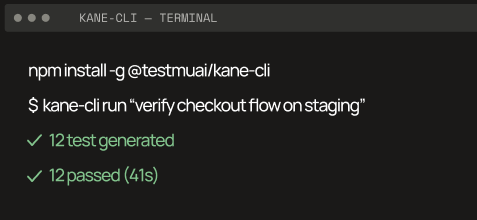
- See how to run these tests from the terminal with the A2A CLI.
- See how to grade your own business rules with custom metrics.
- See how to connect ElevenLabs, Retell, Vapi, or Salesforce Agentforce agents for tool call validation.
- See how to load test a phone agent with concurrent calls.

 Chat with Us